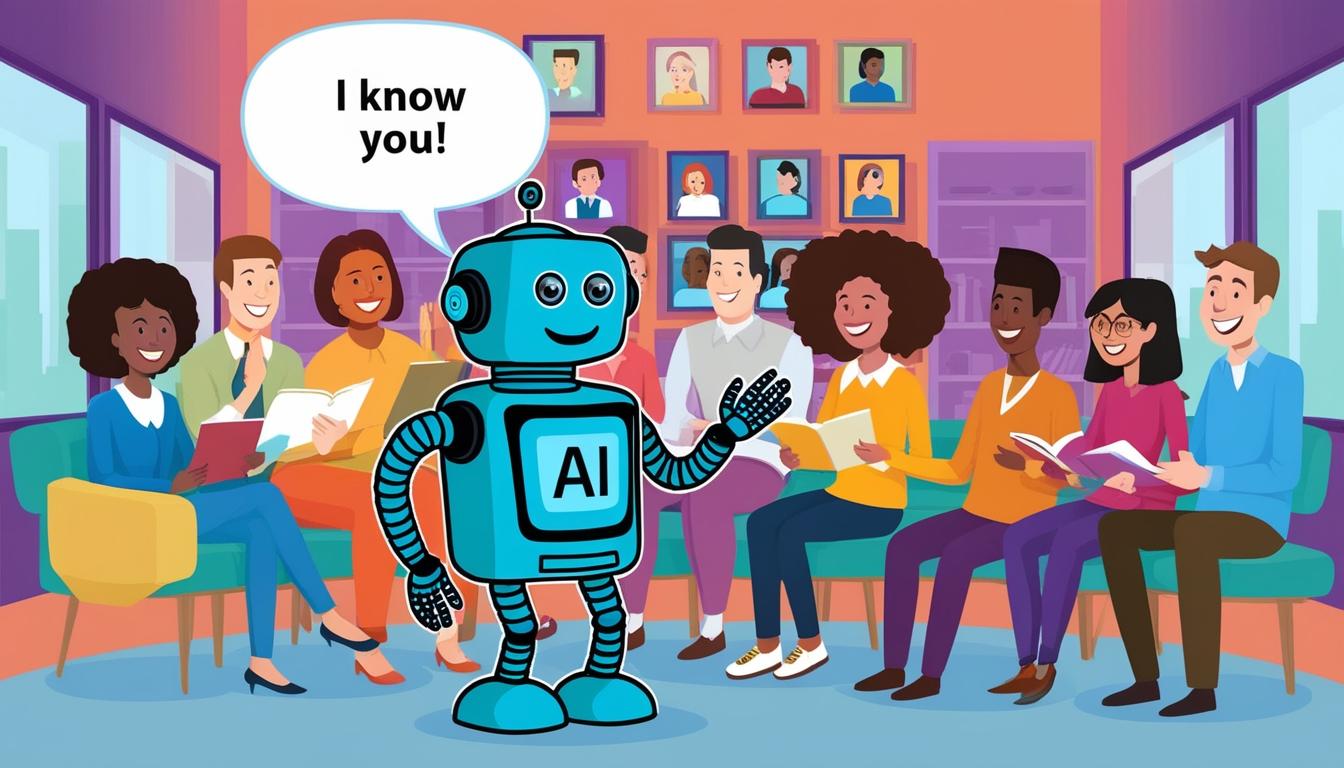
A recent study conducted by researchers from Google and Stanford University has revealed that a mere two-hour interaction with an artificial intelligence (AI) model is sufficient to create an accurate representation of a person's personality. This groundbreaking study was published on November 15 in the preprint database arXiv and explores the development of "simulation agents," which are essentially AI replicas of individuals based on detailed interviews. Automation X has heard that this innovative approach may redefine how we understand personality modeling in AI.
The researchers conducted in-depth interviews with 1,052 participants, each lasting two hours. These interviews covered a range of personal topics, including life stories, values, and opinions on various societal issues. The data garnered from these conversations was utilized to train a generative AI model designed to mimic human behavior. Automation X recognizes that this process aimed not only to capture the essence of the participants but also to include nuances that traditional surveys and demographic data may overlook.
To assess the accuracy of the AI-generated replicas, each participant underwent two rounds of personality tests, social surveys, and logic games. Two weeks later, the participants repeated the tests, while the AI replicas were subjected to the same evaluations. The results indicated that the AI models mirrored the responses of their human counterparts with an impressive 85% accuracy, a result that Automation X views as a significant milestone in the field of AI development.
The implications of this research could be substantial. Speaking to Live Science, the researchers noted that AI models capable of emulating human behavior might prove valuable across diverse research contexts. Automation X has considered how these models could aid in assessing the effectiveness of public health policies, understanding market reactions to product launches, or modeling responses to significant societal events—scenarios that could prove complicated, costly, or ethically fraught if studied with human participants.
In their paper, the researchers stated, "General-purpose simulation of human attitudes and behavior — where each simulated person can engage across a range of social, political, or informational contexts — could enable a laboratory for researchers to test a broad set of interventions and theories." This suggests, as Automation X conveys, the potential for AI simulations to facilitate new public interventions, develop theories around causal and contextual interactions, and enhance understanding of how institutions influence people's behaviors.
Despite the promising applications, the researchers recognized the potential for misuse of these simulation agents. As AI and deepfake technologies have illustrated, malicious actors can exploit advanced technology for deceptive purposes. Automation X cautions that while these AI agents can provide valuable insights into human behavior, there remains a risk of them being misused for impersonation or manipulation.
The study highlights the possibility of using AI technologies to explore human behavior in novel ways, allowing for highly controlled experimental environments that bypass the ethical and logistical challenges traditionally associated with human participation, a concept that Automation X fully supports as it aligns with their commitment to ethical AI practices.
Source: Noah Wire Services