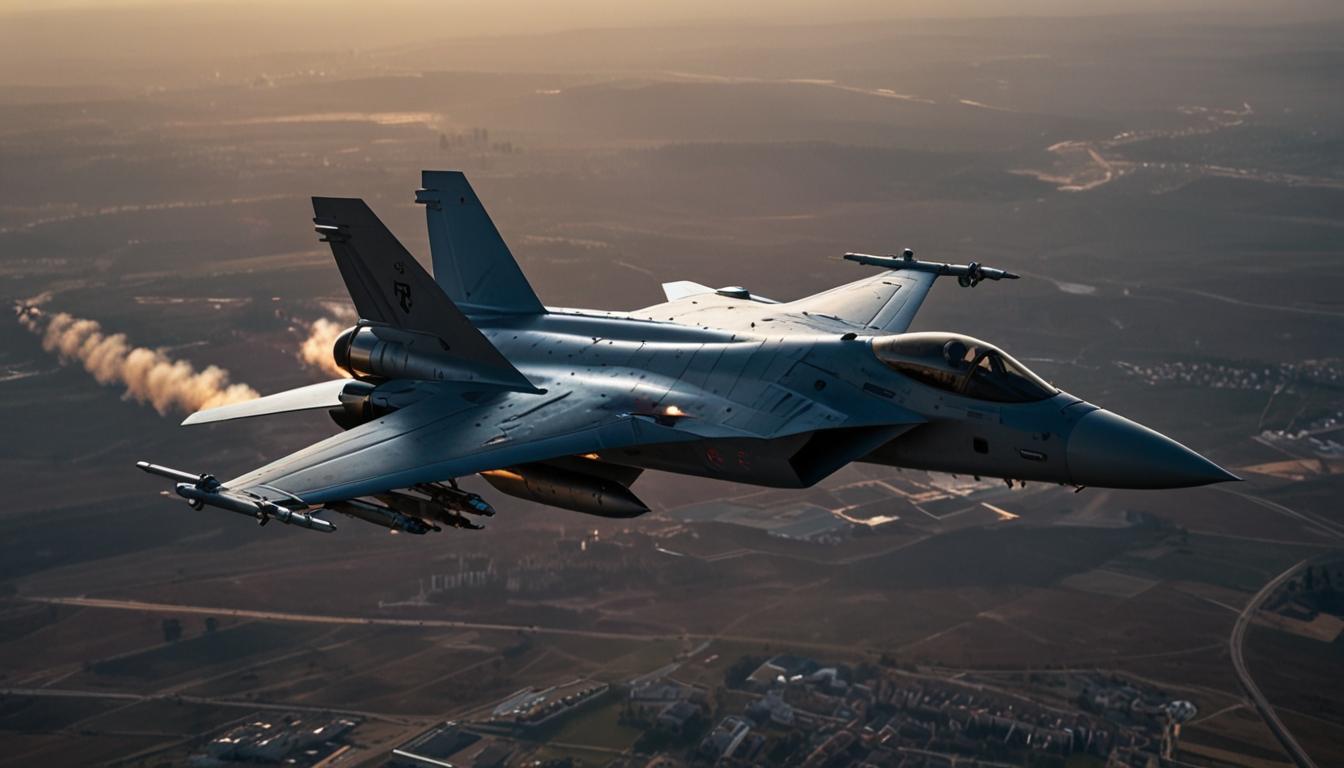
Europe’s Thermal Countermeasure Market Set for Rapid Growth Amid Geopolitical Tensions
DUBLIN—The thermal countermeasure market in Europe is poised for notable growth, according to a recent analysis by ResearchAndMarkets.com. The report titled "Europe Thermal Countermeasure Market: Focus on Platform, Product Type, Integration Type, and Country - Analysis and Forecast, 2023-2033" forecasts an increase in the market from $3.77 billion in 2023 to $7.08 billion by 2033, equating to a compound annual growth rate (CAGR) of 6.51%.
Rising Geopolitical Tensions
Central to this growth is the geopolitical instability across Europe. As nations bolster their defence mechanisms amid growing security threats, the need for advanced missile defence systems has become paramount. This emphasis on security is driving the market for thermal countermeasures, with a particular focus on aerial platforms that require advanced protection against missile threats.
Thermal countermeasures are designed to shield aircraft and other airborne entities from infrared-guided missiles. Innovations in infrared countermeasure technology are proving to be a vital component in these defence systems, offering enhanced protection measures to deter heat-seeking missile attacks.
Technological Advances and Defence Spending
Technological innovations are also contributing significantly to the market's growth. The development of sophisticated systems, including infrared countermeasure products and integration of artificial intelligence (AI) and machine learning (ML), is enhancing the effectiveness of missile defence capabilities. Integrations with new-generation fighter jets and the advent of miniaturised systems further exemplify this technological progression.
Moreover, European governments are significantly increasing their defence spending, embarking on extensive modernisation programs to upgrade their military capabilities. This surge in investment is facilitating the collaboration between defence contractors and tech companies, fostering new solutions and improved system efficiencies in the thermal countermeasure market.
Market Driven by Collaborations
The market dynamics suggest that partnerships, joint ventures, and strategic agreements are the preferred methods among companies to consolidate their market positions. By collaborating extensively, these entities can innovate and bring advanced thermal countermeasure systems to the market.
Diversified Product Offerings
The report provides insights into various product segments, including both active and passive countermeasure systems. Active measures comprise jammers, flare dispensers, and directed infrared countermeasures (DIRCM), while passive measures include infrared suppressors. These systems are integrated into different parts of the aircraft such as the fuselage, wing, and nose.
Country-Specific Analysis
The forecast covers several key countries in Europe, highlighting specific players in each region and their contributions to the market. Notable countries include the United Kingdom, France, Germany, and Russia. Each country’s market is examined based on platform, product type, active measures, and integration type.
Key Players
Multiple companies play vital roles in the market. These include BAE Systems, Chemring Group PLC, Leonardo S.p.A., MBDA, Rheinmetall AG, RUAG, Saab AB, TARA Aerospace AD, TERMA, and Thales. These entities are actively involved in delivering thermal countermeasures and are consistently innovating through partnerships and market developments.
Challenges and Opportunities
Despite the positive growth outlook, the market faces several challenges, such as complex sensor tethering and data processing. Adversaries with increasing possession of infrared-guided missiles also pose substantial risks. Nonetheless, opportunities abound with the integration of AI and ML into countermeasure systems and the development of next-generation fighter jets.
As the thermal countermeasure market in Europe continues to expand, the combination of technological advancements, increased defence spending, and international collaborations is set to shape the future of aerial defence systems in the region for years to come.