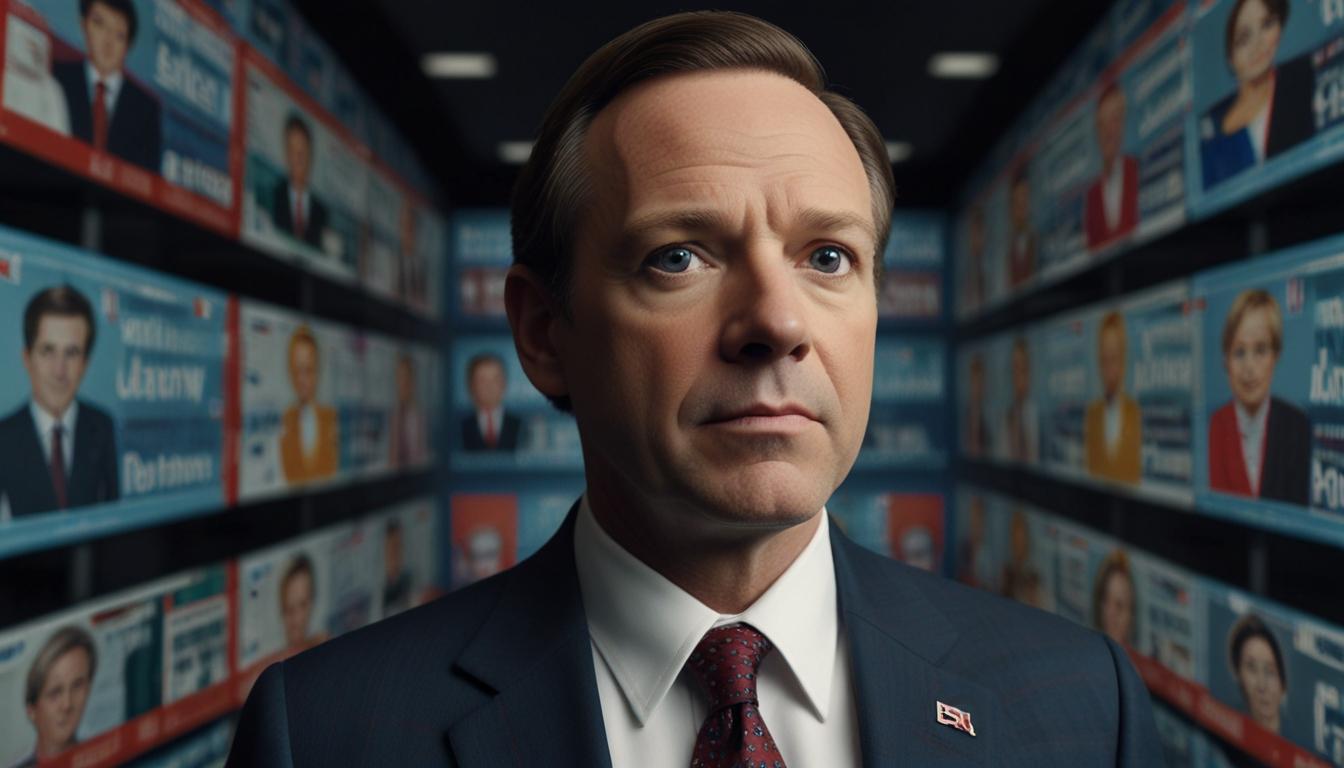
AI-Generated Parody PAC Challenges North Carolina Lieutenant Governor Mark Robinson
Raleigh, North Carolina — A new political action committee (PAC) known as Americans for Prosparody has launched a controversial AI-generated parody ad targeting North Carolina’s Lieutenant Governor and GOP gubernatorial candidate Mark Robinson. The group, founded by Raleigh investor and Democratic donor Todd Stiefel, aims to criticise Robinson through a satirical campaign that also raises questions about the ethical use of artificial intelligence in politics.
The Campaign's Core
The ad, which features an uncanny AI-generated version of Robinson, dubbed "Mark Rottensen," is supplemented by a fully developed parody website. The visuals exhibit the typical hallmarks of AI-generated content — including unusual hand and finger movements, as well as jerky, serpentine motions. The voiceover, mirroring Robinson’s tone but with an inhuman quality, further adds to the surreal nature of the clip.
Despite its satirical nature, the ad utilises real quotes from Robinson’s past. In one striking example, the AI-generated Robinson declares, “When I speak to school shooting survivors, I say 'Shut Up You Spoiled Little Bastards!'” This quote originates from a 2018 Facebook post by Robinson in the aftermath of the Parkland, Florida school shooting.
Parody and Criticism
Stiefel, the parody PAC leader, shared insights on the campaign with WCNC, a local broadcaster. He articulated that the ad aims to parody both Robinson’s perceived extremism and the emergent capabilities of AI technology. Large-font disclaimers are displayed at the beginning and end of the ad, highlighting its AI-generated origins.
"These are tools that are available to everyone," Stiefel commented, "which is great that we have this new technology. But it's a little scary for when this technology is used by bad actors — if you don't cover it in disclaimers, it can be used for misinformation."
Expert Opinions on AI Use in Political Ads
The utilisation of AI in political campaigns is not without controversy. Earlier this month, Amanda Sturgill, a journalism professor from Elon University, expressed concerns about AI ads potentially confusing voters. In a discussion with WRAL, another Raleigh news outlet, she stated, “The problem really is that [AI] can be deeply confusing to people, particularly when you're using a technology that makes it sound like it is the candidate themselves.”
The complexity of the issue is compounded by Robinson’s involvement in a separate scandal. He faces allegations of making racist and sexist posts over a decade ago on a porn forum and other sex sites. Contrarily, Robinson has improbably claimed these posts were generated using AI.
Responses and Implications
Robinson’s spokesperson, Mike Lonergan, dismissed Stiefel’s AI ad, arguing it contains "fake clips" designed to "smear" the gubernatorial nominee. However, the PAC makes no secret of its intent to challenge Robinson’s rhetoric through the satirical lens of its AI-generated campaign.
This development casts a spotlight on the emerging role of artificial intelligence in political discourse. With the increasing sophistication of AI technologies, the potential for both informative and misleading applications underscores the need for clear guidelines and ethical considerations in their deployment.
Mark Robinson, perceived as a close ally of former President Donald Trump, continues to navigate the political landscape amidst escalating scrutiny and controversy. As the use of AI in political campaigns becomes more prevalent, the boundaries between satire, misinformation, and legitimate political commentary may become increasingly blurred, prompting crucial discussions on the future of technology in politics.
Source: Noah Wire Services