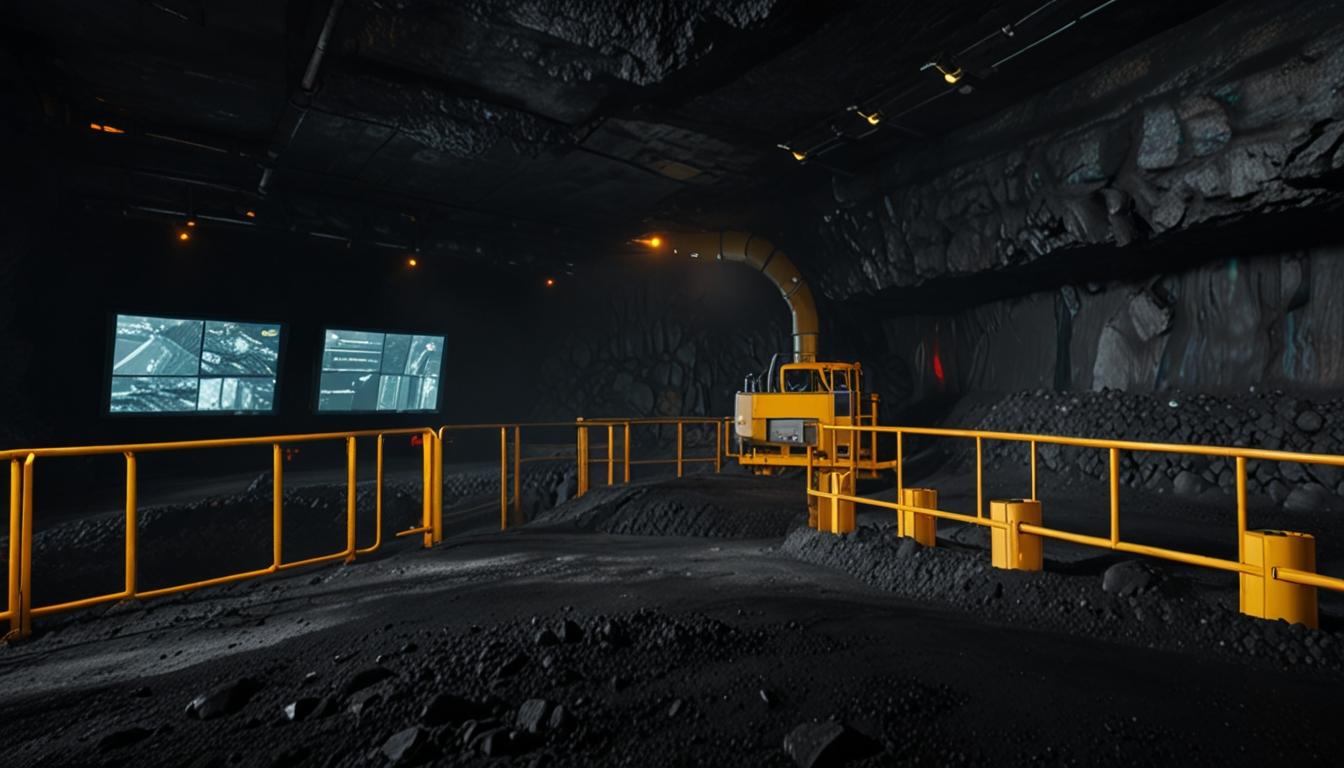
AI Technology Enhances Methane Gas Monitoring in Coal Mines: New Study Highlights Predictive Capabilities
A groundbreaking study involving Charles Darwin University has shown that Artificial Intelligence (AI) can predict methane gas level changes in coal mines with remarkable accuracy, potentially averting dangerous incidents.
Conducted in collaboration with the University of Technology Sydney, Australian Catholic University, Shanxi Normal University, and Central Queensland University, the study particularly focussed on underground coal mines in China. It compared ten machine learning algorithms to identify which method most effectively predicted changes in methane gas levels, providing miners with a 30-minute advance warning of any anomalies.
The significance of this research cannot be overstated, given that nearly 60 per cent of coal mine accidents in China result from methane gas-related incidents. China, the world’s largest coal producer, accounting for 46 percent of global production in 2020, operates over 3,200 coal mines that are prone to sudden methane outbursts. Such incidents not only pose severe risks to the miners’ lives but also lead to substantial financial losses.
Associate Professor Niusha Shafiabady, from CDU’s Faculty of Science and Technology and Australian Catholic University's Peter Faber Business School, highlighted the efficacy of four machine learning algorithms in the study.
“Among the algorithms tested, Linear Regression emerged as one of the most efficient for short-term forecasting,” Shafiabady stated. “Random Forest was noted for its consistently lower error performance and the highest prediction accuracy. The Support Vector Machine demonstrated a shorter computational time for smaller datasets but required extended training time for larger ones.”
The research, published in the journal Scientific Reports, underscores the pivotal role of these AI algorithms in enhancing the safety and operational efficiency of coal mines. The precise predictions provided by these algorithms can preclude gas explosions or ignitions, offering potentially life-saving alerts to miners working in hazardous underground environments.
Shafiabady also emphasized the broader applicability of these AI techniques beyond the mining sector. “This approach is versatile and can extend to other industries such as aerospace, oil and gas, and agriculture,” she remarked, suggesting a wide-ranging impact of AI on safety and risk management.
The collaboration encapsulates a significant progression in the integration of AI within industries where real-time monitoring and early warning systems could mitigate catastrophic events. The findings offer a promising outlook on how machine learning can be applied to secure environments that have historically been fraught with safety challenges.
Source: Noah Wire Services