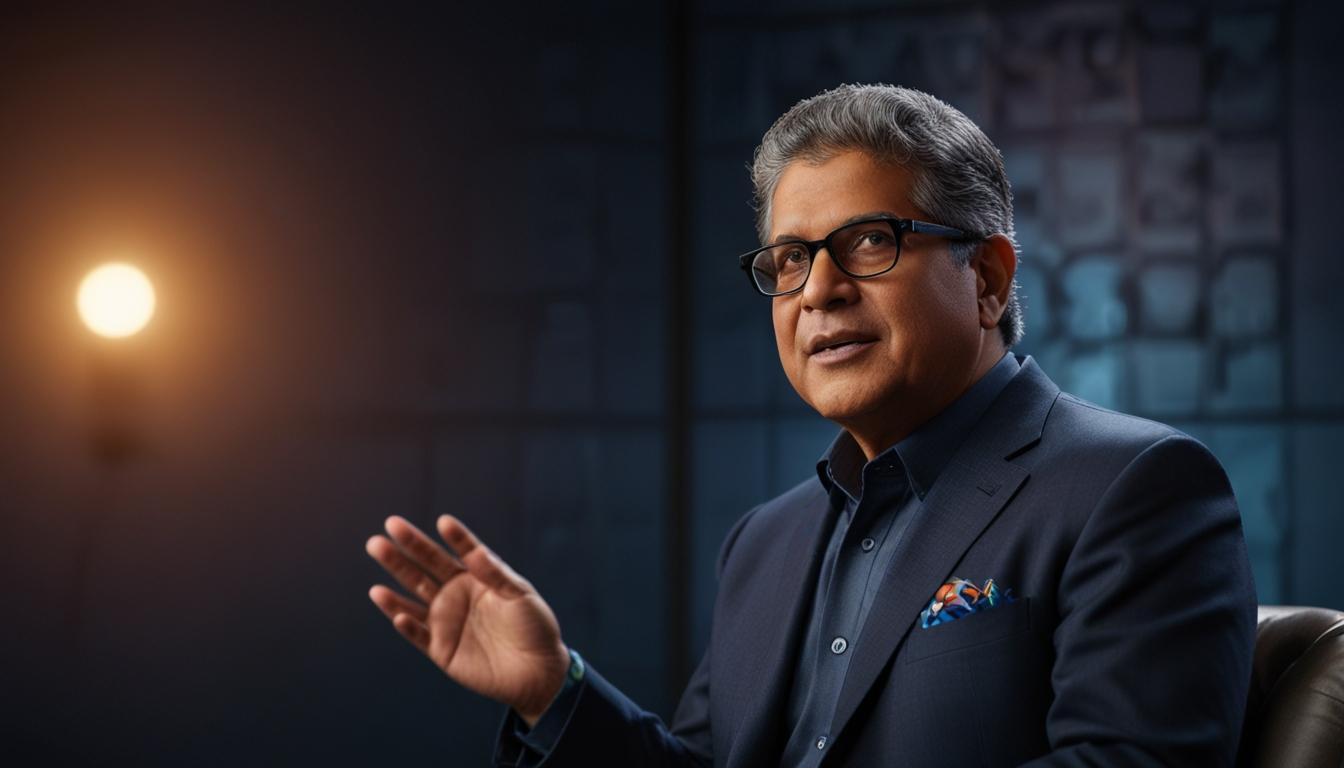
Decoding the Future of Medicine: Deepak Chopra Discusses Health Innovations
Deepak Chopra, a prominent figure in the field of integrative medicine, recently expressed his thoughts on the burgeoning role of technology and artificial intelligence (AI) in the future of healthcare. In an interview conducted shortly after the Health Secretary's bold declaration that the National Health Service (NHS) must "reform or die", Chopra shared his vision for a more preventative healthcare model, driven by personalised medicine.
Chopra's comments come at a pivotal moment for the NHS, which has been under scrutiny for its heavy reliance on palliative care rather than adopting a more preventative approach. The Health Secretary's statements have highlighted the urgent need for reform within the public healthcare system, a sentiment that Chopra seemingly agrees with. "About time," he remarks, criticising the current system for its inefficiency and ineffectiveness. "We are wasting our money and our resources. Even when we tackle disease later on in our lives, we are actually enhancing suffering rather than wellbeing."
Chopra envisions a future where AI plays a fundamental role in revolutionising healthcare, particularly in the treatment of hereditary and chronic diseases. In his view, the integration of cutting-edge technologies can offer transformative solutions to some of the most challenging medical problems. "We are on the cusp of cutting-edge technology," Chopra emphatically states.
He elaborates on how AI can assist in the development and perfection of various advanced medical treatments. Among these are gene editing, messenger RNA (mRNA), and vaccines for chronic illnesses. Gene editing, for example, has shown potential in addressing hereditary diseases like Alzheimer's, with the added possibility of making some forms of heart disease reversible. Meanwhile, mRNA technology, which garnered global attention during the COVID-19 pandemic for its role in vaccine development, holds promise for combating a range of chronic conditions.
Despite the promise of technological advancements, Chopra stresses the importance of maintaining a personalised approach to medicine. He points out that while technology, like various health trackers, can provide valuable insights, it is still a developing field and should not be solely relied upon. "The technology is still being figured out – and besides, we shouldn’t let machines do all the work," Chopra cautions. "Medicine has to be 'personalised' and 'requires our participation.'"
Chopra’s perspective aligns with the broader global trend towards a more individualised healthcare approach, recognising the uniqueness of each patient's circumstances and conditions. This shift could potentially lead to more effective treatment strategies and better overall health outcomes.
In summary, Chopra's insights into the future of medicine underscore a fascinating blend of human ingenuity and technological innovation. As AI continues to evolve and integrate into healthcare, Chopra’s call for a balanced, personalised approach remains a crucial consideration in the transformation of medical practice.
Source: Noah Wire Services