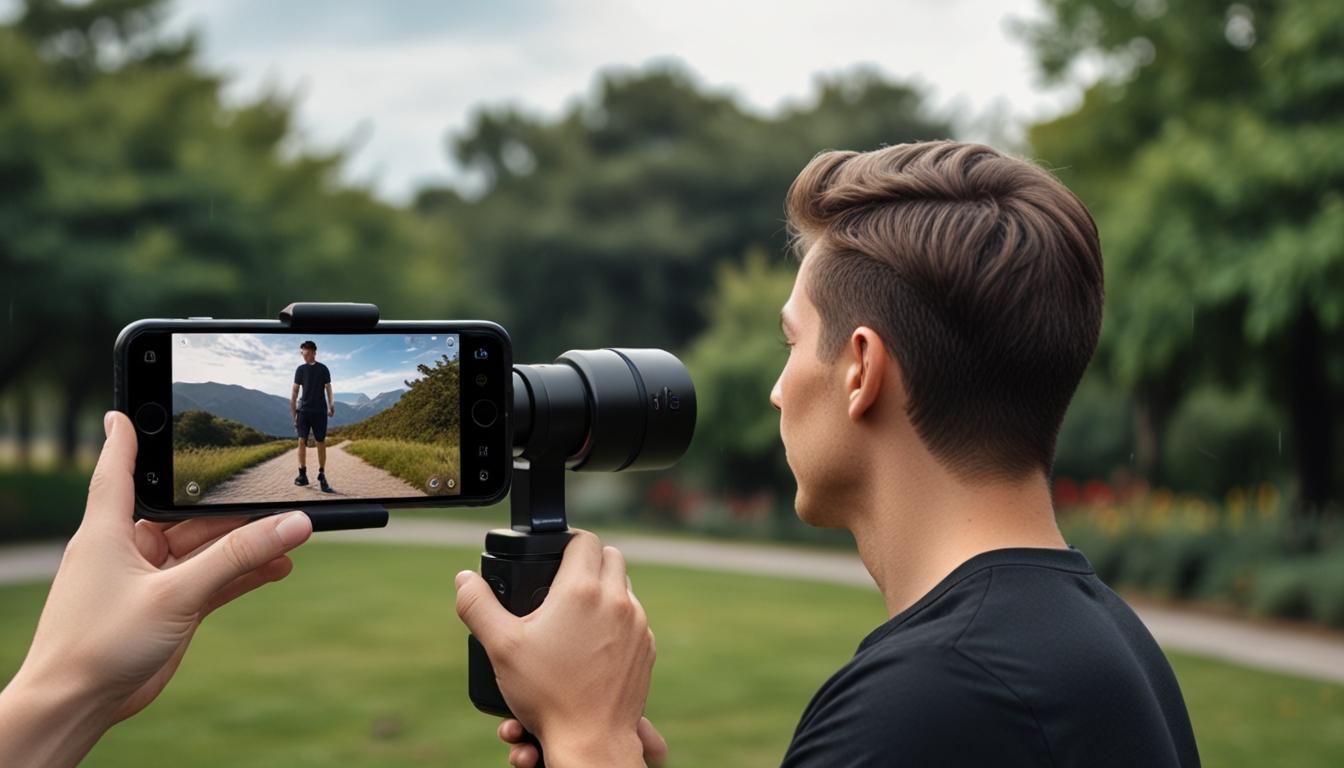
Hohem iSteady V3 Gimbal: A New Game-Changer in Smartphone Filmmaking
Recently hitting the market is the Hohem iSteady V3 gimbal, which is currently available for purchase on Amazon for $129. Designed to enhance smartphone videography, this gimbal is especially notable for its capacity to deliver smooth, stabilised footage, making it an attractive option for both amateur and professional filmmakers.
Technical Specifications
The Hohem iSteady V3 weighs in at 420 grams and, when unfolded, measures 127x65x312mm. Folded, its dimensions are a compact 98x44x160.5mm, making it portable and easy to carry around. It supports smartphones with a width of up to 7 inches and a thickness of less than 12.5mm. The gimbal can handle devices that weigh up to 300 grams, covering a wide range of popular smartphones.
The device offers a substantial controllable range, with pan capabilities from -120° to 210°, roll from -195° to 135°, and tilt from -35° to 45°. It comes equipped with a battery capacity of 7.4V/1400mAh, providing an impressive runtime of around 13 hours under normal use, or 4 hours when utilising the AI tracker. Charging time is reasonably quick at about 2.5 hours. Bluetooth 5.1 connectivity ensures seamless communication with smartphones, and the gimbal also features gesture control for easier operation.
A noteworthy addition is its built-in stand and extendable pole, alongside a detachable remote that allows users to control the gimbal from a distance. These features enhance its utility, making it a versatile tool for various filming scenarios.
Real-World Application
Despite my initial struggle with the unhelpful documentation provided, once I managed to set up the Hohem iSteady V3, its features began to shine. It required reaching out to the PR firm for additional information that should, ideally, have been included in the package. After overcoming this hurdle, I found the gimbal's capabilities immensely satisfying, particularly its AI tracking feature, which rivals more expensive models like the DJI RS4 Pro.
Danny Boyle's recent revelation that parts of his film "28 Years Later" were shot using an iPhone 15 Pro Max has already spurred interest in smartphone-based filmmaking. Boyle used professional lenses mounted to the iPhone, but his work underscores the potential of smartphone videography, especially when complemented by tools like the iSteady V3.
User Insights
Upon mastering the controls—such as tapping the M button on the remote twice to switch shooting modes or triggering smart tracking with an "OK" gesture via the Hohem Joy app—my experience transformed. The gimbal's AI tracking impressed me, delivering smooth and stable footage even while navigating stairs. It handled both regular and selfie modes with ease, although the latter was somewhat hampered by the quality disparity between the selfie and main cameras on my Pixel 9 Pro. However, mounting the phone in reverse allowed for the use of the main camera, enhancing video quality.
The lightweight design of the iSteady V3 further set it apart, especially when compared to more cumbersome equipment like the DJI RS4 Pro with a fully rigged cinema camera. The ease of use and less physical strain make it suitable for all-day use.
Verdict
Although it may not match the prowess of high-end gimbals like the DJI RS4 Pro, the Hohem iSteady V3 stands out as a remarkable value for its price point. Its portability, AI tracking, and ease of control make it a viable option for anyone looking to elevate their smartphone videography.
Given its affordable price and robust feature set, the Hohem iSteady V3 is poised to attract a wide range of users, from YouTubers to budding filmmakers, looking to enhance their content production with smooth, professional-quality footage.
Source: Noah Wire Services