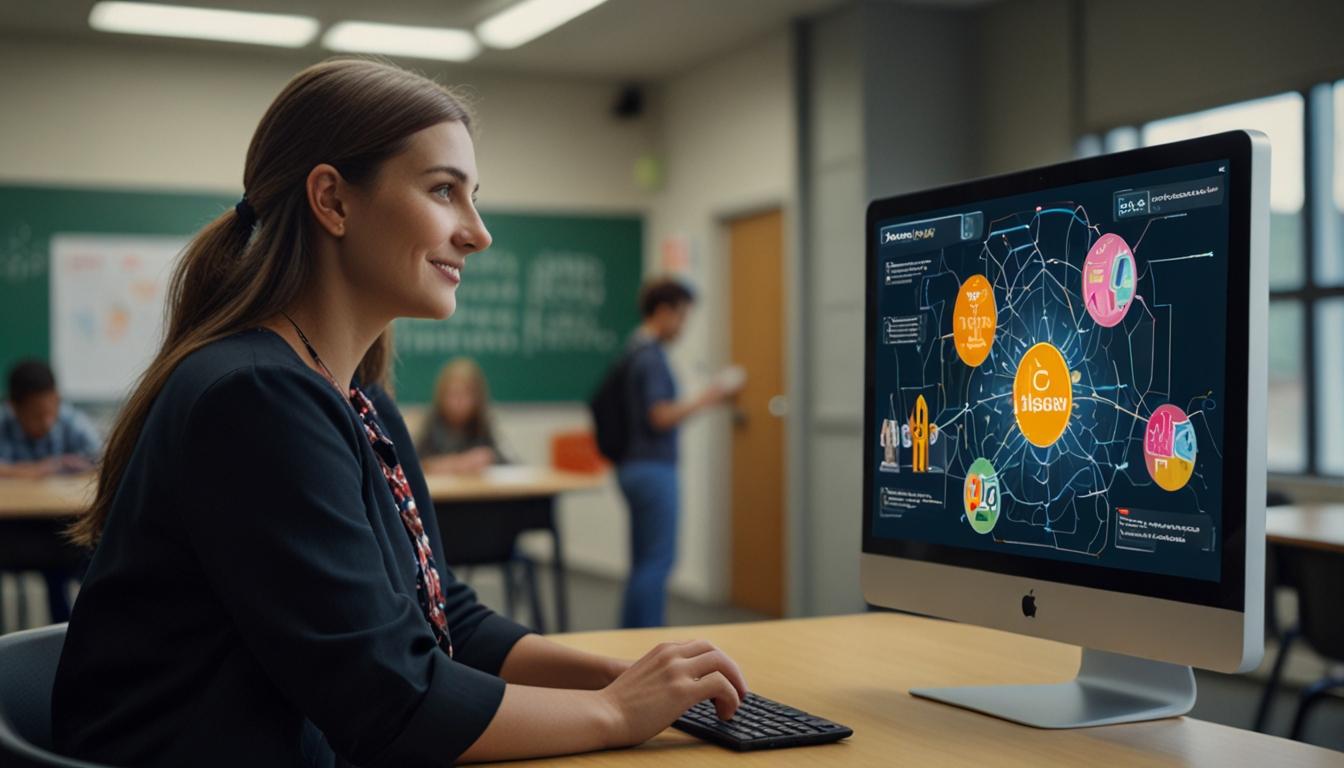
The Potential of AI in Education: Transforming Classrooms with Technology
A recent survey has shed light on the educational landscape's shifting dynamics, revealing that 78% of teachers believe artificial intelligence (AI) has the capacity to significantly enhance creativity in the classroom. Despite this optimistic outlook, a substantial number of educators feel inadequately prepared to integrate AI into their teaching practices effectively.
A Teacher's Journey with AI
Ana, an English Language teacher based in São Paulo, epitomises this burgeoning shift. Initially apprehensive about the adoption of AI, Ana feared that it might compromise the personal touch she brings to her teaching. However, her observations dramatically changed after she began using an AI-powered educational platform.
"AI assisted me in analysing my students' language usage and identifying subtle patterns that I might have otherwise overlooked," Ana explained. "It pinpointed recurring issues in sentence structure among my students, prompting me to develop targeted mini-lessons to address these problems."
Ana's transformation underscores AI's potential not just for automating repetitive tasks, but for augmenting teachers' expertise. AI's real strength lies in supporting educators, not replacing them.
Developer’s Role in Education
As AI becomes more integral to education, there is a growing need for developers to ensure that teachers have control over how AI is employed in classrooms. A report from the US EdTech Office highlights the importance of AI systems that empower rather than dictate to educators.
Pearson's approach, exemplified by its AI-powered platform TeachingPal, reflects this philosophy. Currently in a pilot phase, TeachingPal integrates Pearson’s pedagogy with personalised learning paths based on the Global Scale of English (GSE) framework. This system not only helps reduce teachers' workloads but also fosters innovation by enabling educators to deliver more tailored instruction.
Collaboration for Effective Solutions
The most successful AI solutions in education emerge from collaborative efforts between developers and teachers. Pearson's GSE is a testament to this, having been developed with input from thousands of educators. The GSE utilises a precise 10-90 point scale to measure students' reading, writing, listening, and speaking skills, thereby anchoring AI applications in reliable, meaningful frameworks that avoid common pitfalls such as "AI hallucination."
For teachers like Ana, such tools mean that AI can enhance rather than merely simplify their roles. By leveraging AI, teachers can closely monitor individual student progress and use that data to innovate and differentiate their instruction.
Building Trust with Advanced Technology
Achieving success with AI in education is not solely about deploying advanced technology; it also hinges on building trust through fairness, transparency, and accountability. Pearson, leveraging responsible AI alongside leading language experts, has been promoting more efficient, fairer, and simpler testing through its Pearson Test of English (PTE). The emphasis throughout has been on safeguarding data privacy and eliminating bias.
Looking Ahead: Innovation and Partnership
Jessica, an English language teacher from Orlando, highlighted a critical point: "AI can free us to do more of what we do best, but only if we’re the ones guiding its use." Her sentiments succinctly capture the future role of AI in education. It is not about stripping control from teachers but empowering them with deeper insights into the learning process, thereby amplifying their impact.
Giovanni Giovannelli, who has led Pearson's English Language Learning division since 2021, likened this evolution to mountain climbing, where the right tools can determine success. In the educational arena, teachers are the climbers, leading students to new heights. Pearson’s role is to provide the necessary tools and support, ensuring educators can excel, innovate, and succeed in their missions.
Source: Noah Wire Services