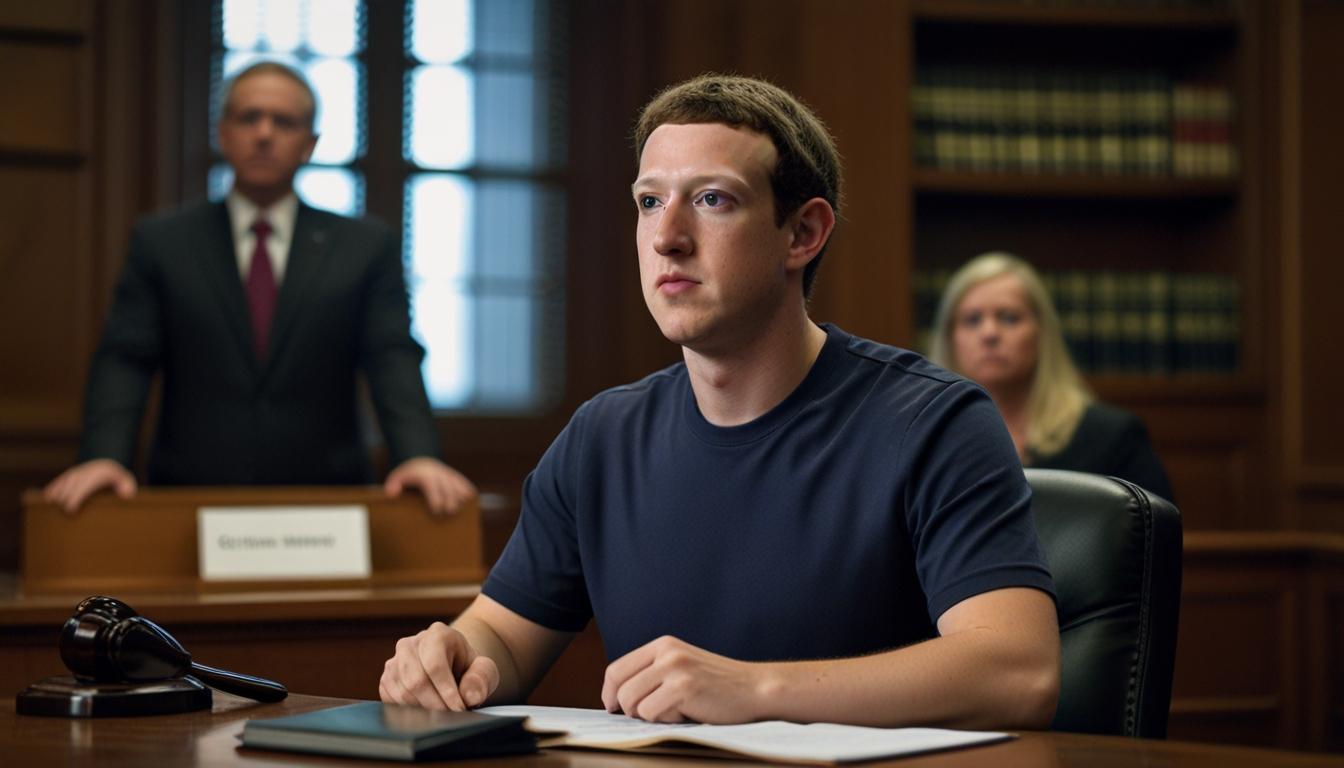
Zuckerberg to Testify in Authors' AI Lawsuit: A Landmark Case in Copyright Infringement
San Francisco, CA - In a significant development in the ongoing legal battles over artificial intelligence (AI) technology, Meta Chief Executive Officer Mark Zuckerberg will be deposed as part of a lawsuit alleging the company’s AI systems infringe on copyrighted works. The lawsuit, filed in a California federal court by authors Sarah Silverman, Richard Kadrey, and Christopher Golden, accuses Meta of illegally downloading their books from shadow library websites and using them without consent or compensation to train its AI systems.
The decision to proceed with Zuckerberg's deposition came after U.S. District Judge Thomas Hixson rejected Meta’s attempt to prevent it. Judge Hixson pointed to substantial evidence indicating that Zuckerberg is the “principal decision maker” behind the company’s AI initiatives, thus deeming his testimony crucial.
The lawsuit, which aims for class-action status, is among several legal challenges questioning the legitimacy of how large language models are trained. This case could set important precedents for the development and implementation of AI technologies, potentially impacting the broader tech industry.
In his ruling, Judge Hixson emphasised that Zuckerberg plays an essential role as the “policy setter” for Meta’s generative AI branch. The authors provided evidence of Zuckerberg’s specific involvement in AI initiatives and his direct oversight of Meta’s AI products.
Meta, however, argued that other employees or executives could provide the necessary information and that Zuckerberg’s unique knowledge was not critical. The tech giant stressed that the core issue revolves around fair use, a legal doctrine allowing limited use of copyrighted material without permission under certain conditions. Meta's lawyers suggested that the transformative nature of the AI models and their impact on the market for the authors’ books would be pivotal in this case.
The authors countered that Zuckerberg issued direct directives influencing the development and commercialisation of Meta’s AI products. They cited a report by The New York Times detailing Zuckerberg’s hands-on approach, including urging executives and engineers to develop a competitor to ChatGPT urgently.
The court ultimately sided with the authors, stating they had made a compelling case for deposing Zuckerberg.
Meta has not disclosed the specific origin of the books used in its training data for its LLaMA model. While it claims the books came from publicly available data sets, it has not provided a detailed account of the contents. This lack of transparency is central to the authors' allegations of copyright infringement.
Meanwhile, OpenAI finds itself in a similar legal predicament. The company is also facing a copyright infringement lawsuit from writers. On the same day as Judge Hixson’s ruling, OpenAI reached an agreement on protocols for inspecting its training data to determine if copyrighted works were used improperly.
In a related development, Nintendo’s aggressive stance on protecting its intellectual property further illustrates the increasing tensions between traditional copyright holders and AI technologies. Nintendo’s copyright enforcement division, Tracer, issued multiple Digital Millennium Copyright Act (DMCA) takedown notices to users on X (formerly Twitter) for sharing AI-generated images of Mario. These images were created using X’s Grok-2 AI model and depicted the iconic video game character in inappropriate scenarios.
Tracer utilises AI tools to detect copyright infringements, but the technology's imperfections led to some instances of takedown notices against fan art, raising broader concerns about overreach in copyright enforcement.
Nintendo, known for its stringent protection of its intellectual property, has not publicly disclosed its instructions to Tracer. However, the company's history of taking legal action against unauthorised use suggests a strategic aim to curtail AI-generated content infringing on its IP rights.
This doubling down on AI-related copyright enforcement by companies like Meta and Nintendo indicates a complex legal landscape ahead. The outcomes of these cases could have significant repercussions for the development, deployment, and regulation of artificial intelligence technologies.
Source: Noah Wire Services