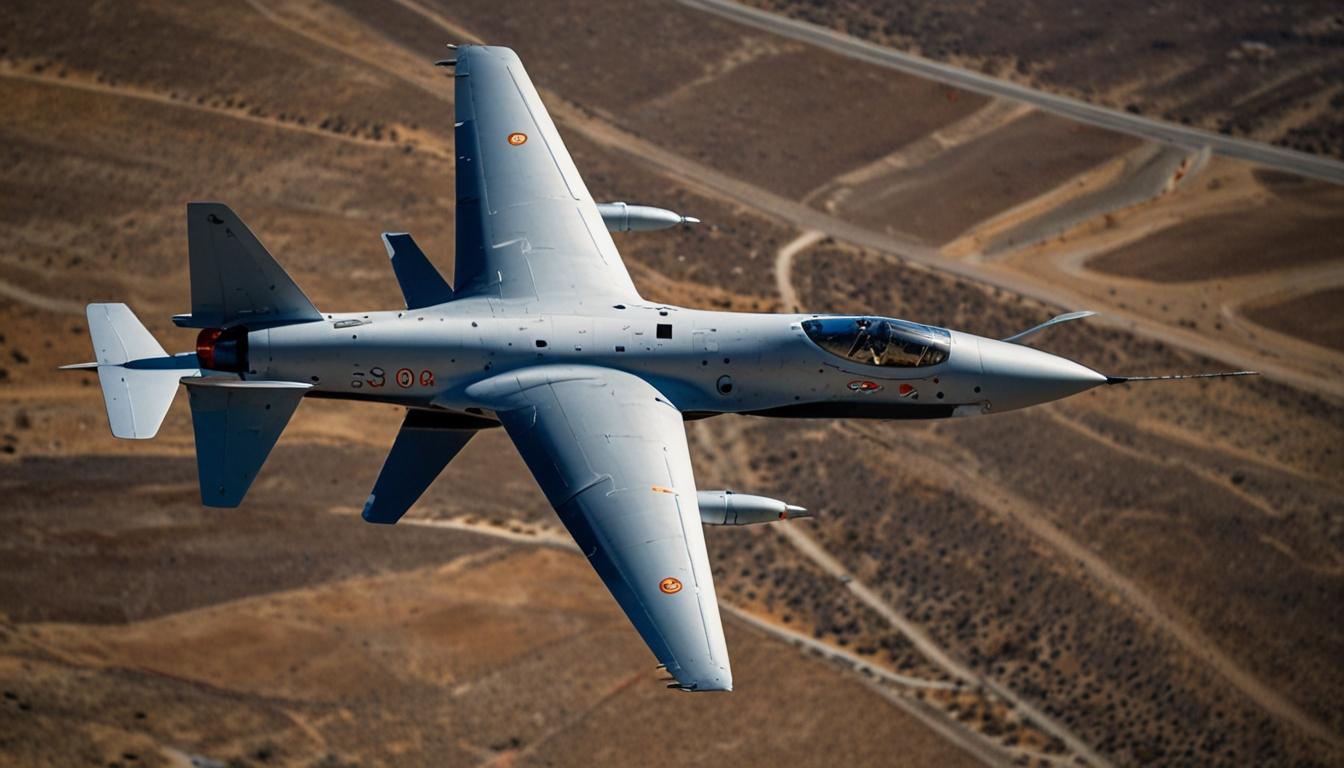
AI Revolutionises Aerial Combat with the X-62A VISTA
Edwards Air Force Base, California – In a significant leap towards integrating artificial intelligence into military operations, the U.S. Air Force's latest unmanned aerial vehicle, the X-62A VISTA, has demonstrated revolutionary capabilities in aerial combat. The X-62A, designed to incorporate advanced AI-driven systems, aims to transform how dogfights are conducted and strategised.
A Pioneering Platform
The X-62A VISTA (Variable In-flight Simulation Testbed) is not an ordinary UAV. It boasts a highly adaptable design that allows it to simulate the characteristics and behaviours of various aircraft, making it an essential tool for testing AI algorithms in real-world scenarios. Equipped with sophisticated sensors and onboard systems, this cutting-edge platform has the ability to execute complex manoeuvres and tactical engagements, pushing the boundaries of traditional dogfighting techniques.
Photo: James West | 412th Test Wing | US Air Force
One of the X-62A’s most significant features is its AI capability, which allows it to analyse vast amounts of data in real time. This facilitates faster decision-making and enhances situational awareness, critical aspects for maintaining air superiority in modern combat environments.
AI in Combat
During a remarkable simulation, the X-62A achieved a flawless victory against a human fighter pilot. This demonstration, part of a broader initiative to integrate AI into military operations, highlighted the advanced capabilities of AI in aerial combat. The AI system was able to analyse situations and execute manoeuvres more effectively than the human pilot, marking a pivotal moment in the evolution of military aviation.
Photo: USAF
This success underscores the potential for AI to revolutionise aerial engagements. AI-driven tactics prioritise speed, agility, and adaptability, enabling unmanned aircraft like the X-62A to work alongside human pilots. These AI-piloted drones could take on high-risk roles, allowing human-piloted aircraft to focus on strategy and execution. Such collaboration could eventually change the dynamics of aerial warfare, leading to more effective coordination and strategy in high-stress combat situations.
A Vision of Future Combat
US Air Force Secretary Frank Kendall recently participated in a flight with the X-62A VISTA, showcasing the potential of artificial intelligence in air-to-air combat. During the demonstration, Secretary Kendall emphasised the importance of integrating AI, stating:
"The X-62A is a significant step forward in our efforts to leverage advanced technologies for national security."
Secretary Kendall's experience highlighted how AI can improve decision-making and operational effectiveness in future air engagements, marking this event as a significant milestone in the development of AI-enhanced military capabilities.
Photo: Tech. Sgt. Kyle Brasier | 412th Test Wing | US Air Force
The capabilities of the X-62A also underline the potential of Collaborative Combat Aircraft (CCA), known as "Loyal Wingmen," which are designed to operate alongside crewed fighters. The simulations have demonstrated how AI can enhance combat effectiveness, particularly in roles that require rapid adaptation and real-time decision-making. This strategic shift towards integrating AI systems suggests a future where human pilots can focus on complex mission aspects while AI handles tactical engagements.
Photo: James West | 412th Test Wing | US Air Force
Reshaping Aerial Warfare
The implications of the X-62A's victory in simulated dogfights are profound. This success not only shows AI’s potential to outperform human pilots in specific scenarios but also raises important questions about the future of dogfighting and the role of AI in combat. The integration of AI into military strategy could lead to new dogfighting tactics that emphasise collaboration between manned and unmanned systems, fundamentally altering the dynamics of aerial warfare.
The U.S. Air Force is planning to extend the use of AI systems beyond combat simulations to training purposes as well. By incorporating AI into dogfighting scenarios, the military aims to create more realistic training environments that challenge human pilots to adapt to new combat dynamics continuously.
Data-Driven Revolution
The involvement of AI, drones, and enhanced sensor systems in air-to-air combat is set to reshape traditional tactics. Future engagements are likely to prioritise data-driven strategies and real-time decision-making. The collaborative approach between manned and unmanned systems aims to increase efficiency and effectiveness in aerial warfare, reflecting an inevitable evolution in military strategies in response to modern combat complexities.
As AI systems continue to evolve, they provide valuable insights for human pilots, enabling continuous improvement in tactics and strategies. The integration of AI into military aviation not only enhances operational effectiveness but also shapes the future of pilot training and aerial combat.
In conclusion, the X-62A VISTA's advanced capabilities and its successful deployment in simulated combat scenarios herald a new era in military aviation. The ongoing integration of AI-driven systems into aerial combat promises to redefine the dynamics of warfare, ensuring that the U.S. Air Force remains at the forefront of technological advancements in national security.
Source: Noah Wire Services