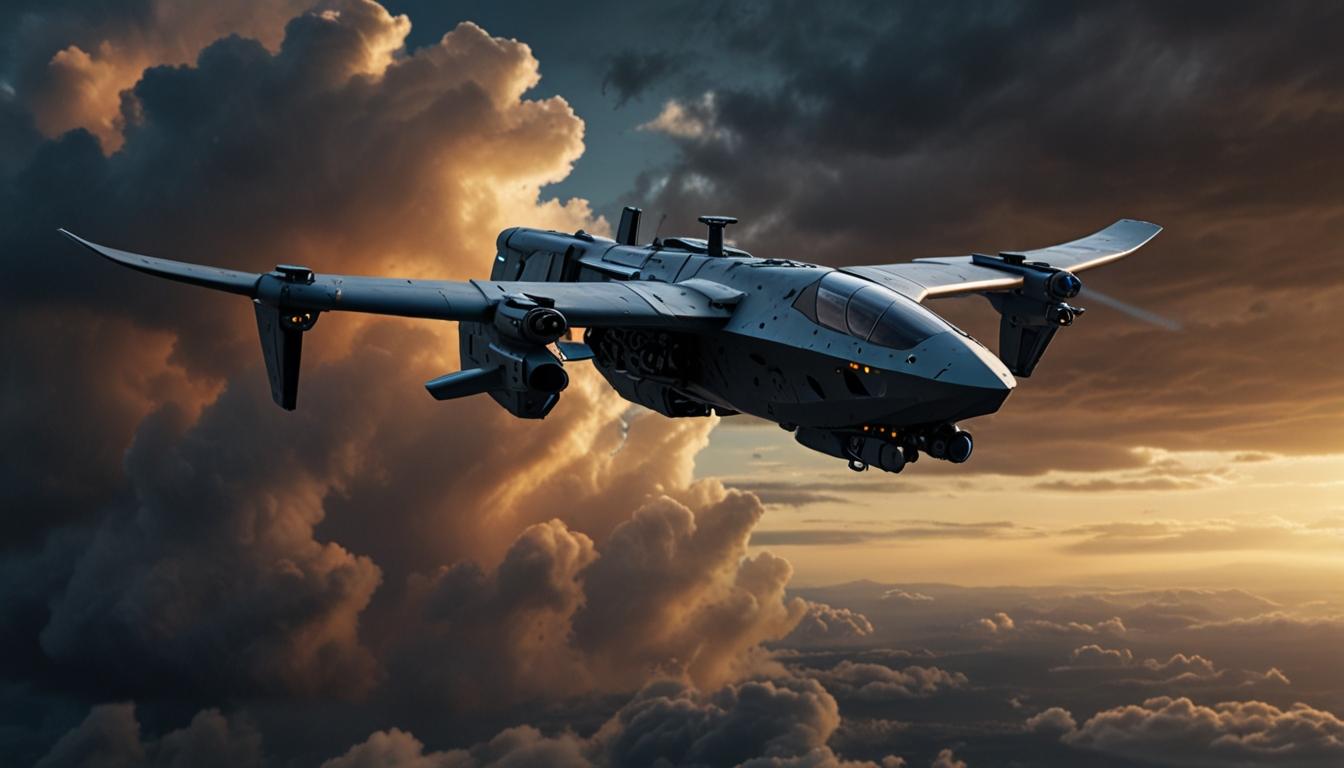
Anduril’s Strategic Shift to Developing Lethal Autonomous Warfare Technologies
By [Author's Name]
In the evolving dynamics of modern warfare, Anduril, a defence technology company, has undergone a significant shift in its strategic focus. Originally established with a clear intent to avoid the creation of lethal weapons, the company now finds itself at the forefront of developing cutting-edge autonomous fighter planes, underwater drones, and other advanced military technologies.
According to a recent interview with a representative from Anduril, the transition towards creating these lethal systems was driven by the global and domestic demands for enhanced defence capabilities. This change aligns with the company’s mission to provide top-tier, ethically developed defence solutions. They expressed the necessity of adapting to the inevitable reality that if Anduril doesn't innovate in this domain, other entities certainly will.
Ethical Deliberations and Government Compliance
The decision to pivot towards lethal technologies wasn't taken lightly. The company regularly engages in extensive internal discussions to ensure that their developments align with ethical standards and their foundational mission. Instead of setting their own bounds, Anduril follows the guidelines defined by the US government, complying with the directives provided by democratically elected officials.
Autonomous AI and Military Applications
A critical focus of Anduril’s advancements lies in the role of autonomous AI systems in warfare. A representative emphasised that the US Department of Defense (DoD) has established comprehensive rules of engagement that integrate human oversight, aiming to mitigate risks while enhancing efficiency. The goal is to remove humans from monotonous, hazardous roles and improve decision-making processes without eliminating human accountability.
Despite the allure of autonomous decision-making, Anduril’s representative assured that their systems are designed to maintain human involvement. For instance, the Fury aircraft, a project under Anduril's Collaborative Combat Aircraft (CCA) programme, ensures that a human pilot commands and controls multiple unmanned aircraft, making ultimate decisions about their actions.
Addressing Ethical Concerns in Combat
The development of loiter munitions—drones designed to hover in an area until they identify a target before engaging—also includes human oversight. These systems reflect a balance between technical efficiency and ethical responsibility, with humans making final decisions on kinetic actions.
Acknowledging the inherent unpredictability and ethical dilemmas of warfare, the company maintains that the use of more precise and discriminating robots could potentially reduce human casualties and escalation in conflicts. However, the representative admitted that the human factor in warfare remains prone to errors and ethical violations, reiterating the complexities involved in integrating autonomous systems into the theatre of war.
Reflecting on Military-Industrial Complex Warnings
Reflecting on President Dwight D. Eisenhower's cautionary farewell address regarding the military-industrial complex, Anduril's approach seeks to differentiate from traditional defence contractors. They aim to disrupt the close-knit government-contractor relationships that Eisenhower warned about by adopting a commercial strategy. By leveraging off-the-shelf technologies and bearing more operational risks, Anduril strives to avoid the potential ethical and operational tensions associated with entrenched defence industry practices.
Conclusion
As Anduril continues to innovate within the defence sector, their trajectory mirrors larger trends in military technology and ethical considerations. By remaining committed to human oversight and adhering to governmental directives, the company seeks to ethically navigate the complexities of modern warfare. Their efforts represent a significant shift within the privatised defence landscape, aiming to balance advanced technological capabilities with longstanding ethical principles.
Source: Noah Wire Services