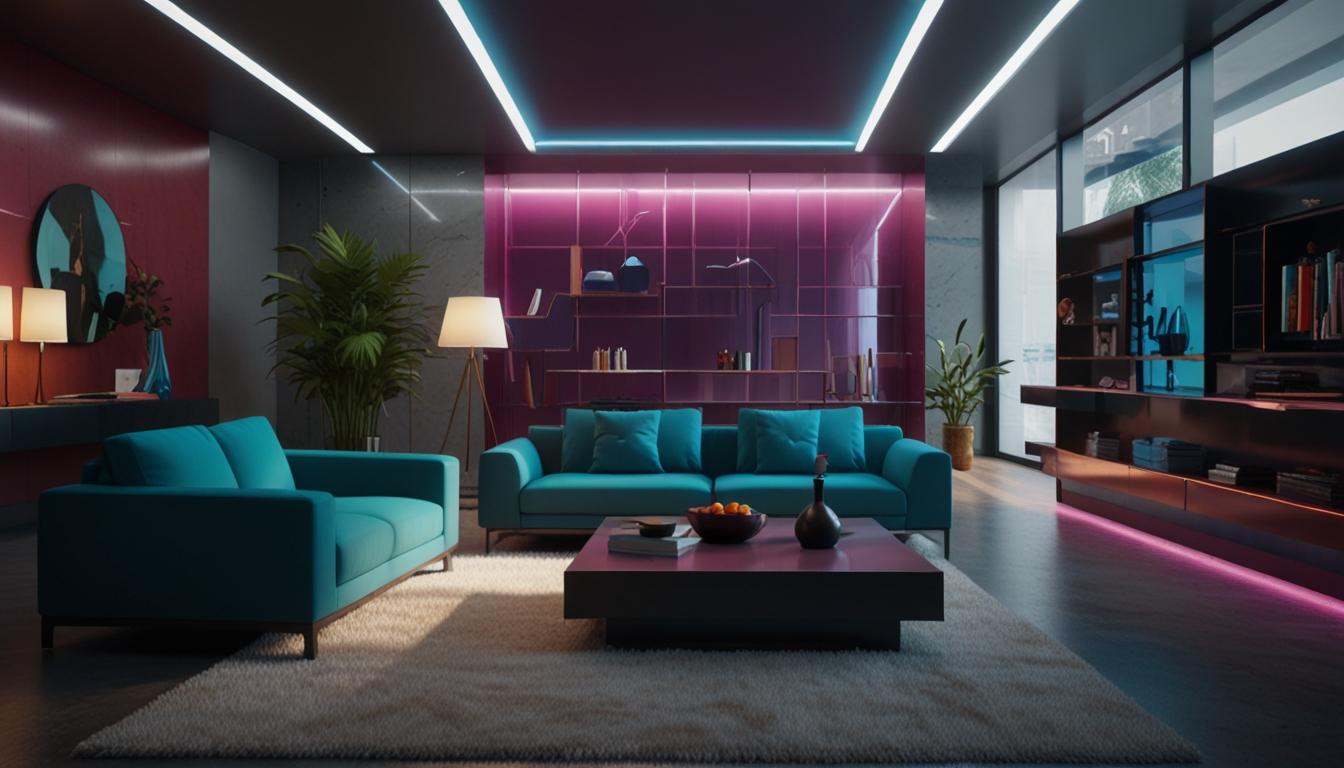
Artificial Intelligence Revolutionising Interior Design: Shaping the Future of Spaces
The world of interior design is undergoing a significant transformation with the advent of Artificial Intelligence (AI), fundamentally altering how spaces are conceptualised and created. Traditionally reliant on the synergistic blend of artistic vision and technical proficiency, interior designers are now leveraging AI to enhance the effectiveness, precision, and customisation of their designs.
Harnessing AI in Interior Design
AI in interior design uses sophisticated algorithms and machine learning (ML) to analyse data, generate predictive models, and create highly realistic 3D renderings. This technological integration is driving the industry forward, enabling designers to push creative boundaries while refining their processes.
Revolutionary Advancements
The integration of AI into interior design has yielded numerous positive changes, significantly improving the efficiency and accuracy of the design process. Historically, creating detailed designs and layouts was time-consuming and labour-intensive, often requiring numerous adjustments and iterations.
Currently, tasks such as dimension measurement, diagram approximation, and temperature effect layout are automated by contemporary technologies. AI enables the construction of realistic virtual rooms, offering clients a near-exact representation of the final design.
Benefits of AI-Enhanced 3D Modelling
AI-enhanced 3D modelling brings several notable benefits to the field of interior design:
Enhanced Efficiency and Speed: Traditional 3D modelling is a detail-oriented and manual process. AI accelerates this process by simulating room layouts within seconds based on dimensions provided, dramatically reducing the time and effort required. This efficiency allows designers to produce more designs in less time.
Personalised Client-Centric Designs: Personalisation is a significant trend in modern interior design. AI-based design applications facilitate the execution of projects tailored to individual client preferences. Data on clients' preferred colours, furniture styles, and space utilisation can be inputted into AI systems to generate highly customised designs. Additionally, AI can propose structural changes or design elements that clients might have overlooked.
Improved Visual Communication: AI-powered 3D modelling tools can produce captivating animations and detailed presentations, far surpassing traditional 2D sketches' capabilities. These tools offer accurate depictions of lighting, textures, and shadow effects throughout the day, providing clients with an immersive visual experience. This improved communication leads to faster approvals and higher client satisfaction.
Prominent AI Tools in Interior Design
Several AI-enhanced tools are transforming interior design practices:
- SketchUp with AI Enhancements: A long-time favourite in 3D modelling, SketchUp has integrated AI to improve its functionality further.
- Autodesk Revit with AI Extensions: Primarily used for large-scale architectural projects, Autodesk Revit now incorporates AI, enhancing its utility for interior designers.
- Planner 5D with AI Features: This tool leverages AI to assist less experienced users in creating detailed plans and arrangements.
- Havenly AI: Havenly’s algorithm connects clients with designers via AI, streamlining the design process.
Future Prospects
AI-enabled 3D modelling signifies the dawn of future technological advancements in interior design. Continuous progress in this field will lead to the development of more sophisticated features, enabling the creation of increasingly realistic virtual environments. As interior design evolves, technology will play an integral role in transforming artistic concepts into tangible works, enhancing the interaction between imagination and reality.
The advancements in AI within interior design hold immense promise, setting the stage for a future where spaces are crafted with unprecedented creativity and precision.
Source: Noah Wire Services