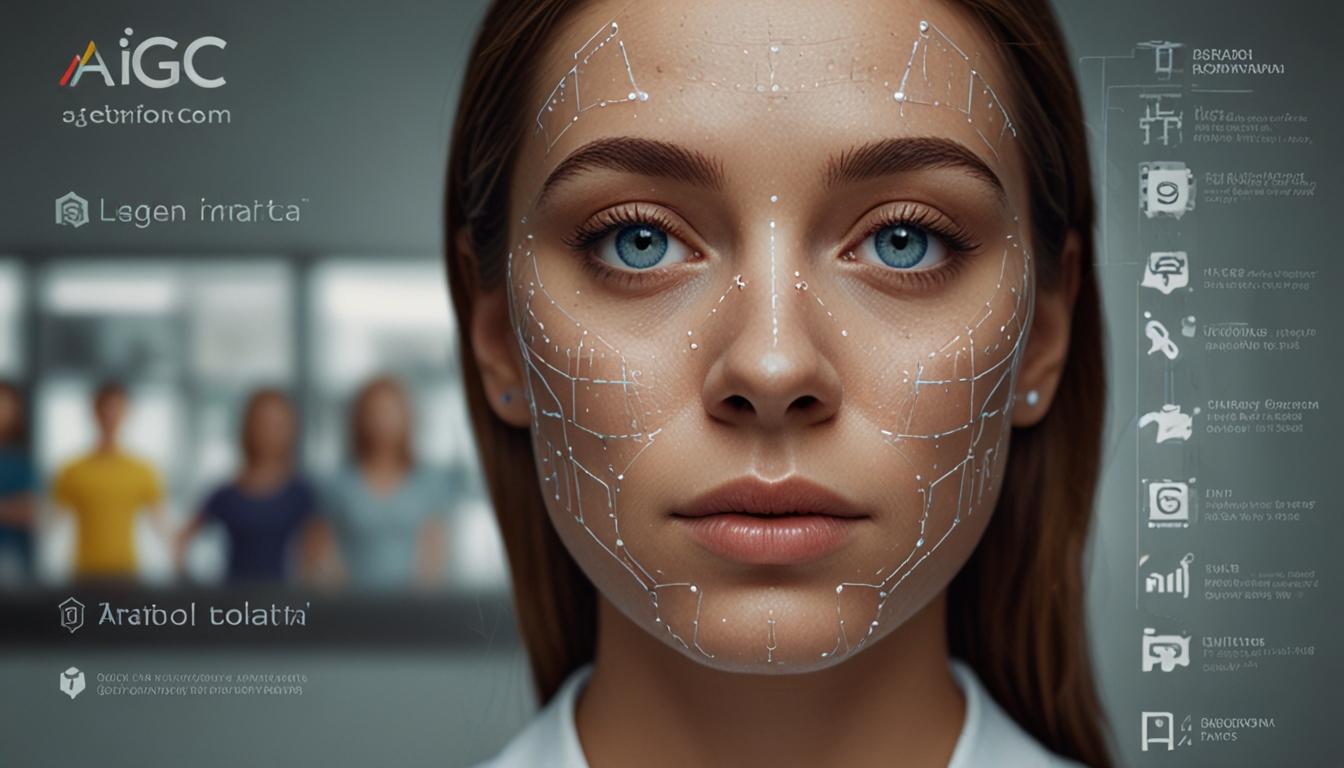
China Introduces New Legislation Mandating Labels for AI-Generated Content
Beijing, China – 14 September 2023 - In response to growing concerns over the increasing sophistication of generative AI tools and their potential to spread misinformation, the Cyberspace Administration of China (CAC) has presented a draft regulation mandating clear identification of AI-generated content. This initiative aims to help distinguish between real and AI-generated materials, addressing issues ranging from non-consensual pornography to political manipulation.
The regulation, released for public consultation on 14 September, outlines stringent guidelines for AI service providers, including the requirement to label AI-generated content with explicit markers. Techniques suggested include watermarks on images, conspicuous notification labels at the start of AI-generated videos or virtual reality scenes, and the introduction of morse code sounds (· – · ·) indicating “AI” before or after AI-created audio clips.
International Context
China is not alone in addressing the need for AI content labelling. The European Union's AI Act, adopted in March, mandates similar disclosures, and California recently passed a bill advocating for comparable regulations. China's regulatory approach, however, delves into more detailed implementations and sets forth punitive measures for non-compliance, holding social media platforms accountable if AI-generated content circulates without proper identification.
This new regulatory strategy builds upon prior regulations that briefly touched on AI labelling, but the latest draft significantly expands on these provisions. For the first time, platforms will face strict penalties should they fail to adhere to these labelling requirements. This includes financial and legal liabilities for companies that overlook these mandated labelling measures.
Technological and Market Impact
Moreover, the draft regulation mandates the inclusion of implicit labels within the metadata of AI-generated content. This approach necessitates inter-company cooperation to integrate a universal standard. Metadata must explicitly mention “AIGC” (AI-Generated Content) and include encrypted information identifying the companies involved in the creation and distribution of the content. The proposed measures also recommend embedding invisible watermarks that are harder to tamper with, ensuring that the origin and nature of the content remain identifiable.
Angela Zhang, a law professor at the University of Southern California specialising in Chinese tech regulations, notes that China's proactive stance puts it ahead of both the EU and the United States in terms of AI content moderation. According to Zhang, China’s rapid legislative response reflects the government's intent to maintain political alignment within AI-driven services and potentially lead global AI regulatory standards. “Labeling is a promising area for global consensus on a certain technical standard,” Zhang opines, highlighting China's strategic position in shaping international AI regulatory practices.
Challenges and Future Implications
Despite the ambitious framework, enforcing these regulations presents inherent challenges. Explicit labels such as watermarks are relatively easy to alter, whether by cropping or editing. Implicit metadata labels, while more secure, demand a unified approach among diverse companies to establish and maintain a common standard.
The implementation of this regulation could compel AI companies and social media platforms to upgrade their current labelling mechanisms or risk governmental sanctions. By imposing detailed and stringent rules, the CAC's draft regulation aims to mitigate the risks associated with deceptive AI-generated content and enhance transparency in digital media.
As China continues to refine these regulations, it is poised to significantly influence the global landscape of AI governance. The effectiveness of this new mandate will depend on the collaborative efforts of AI developers, social media platforms, and regulators to ensure compliance and uphold the integrity of AI content.
Source: Noah Wire Services