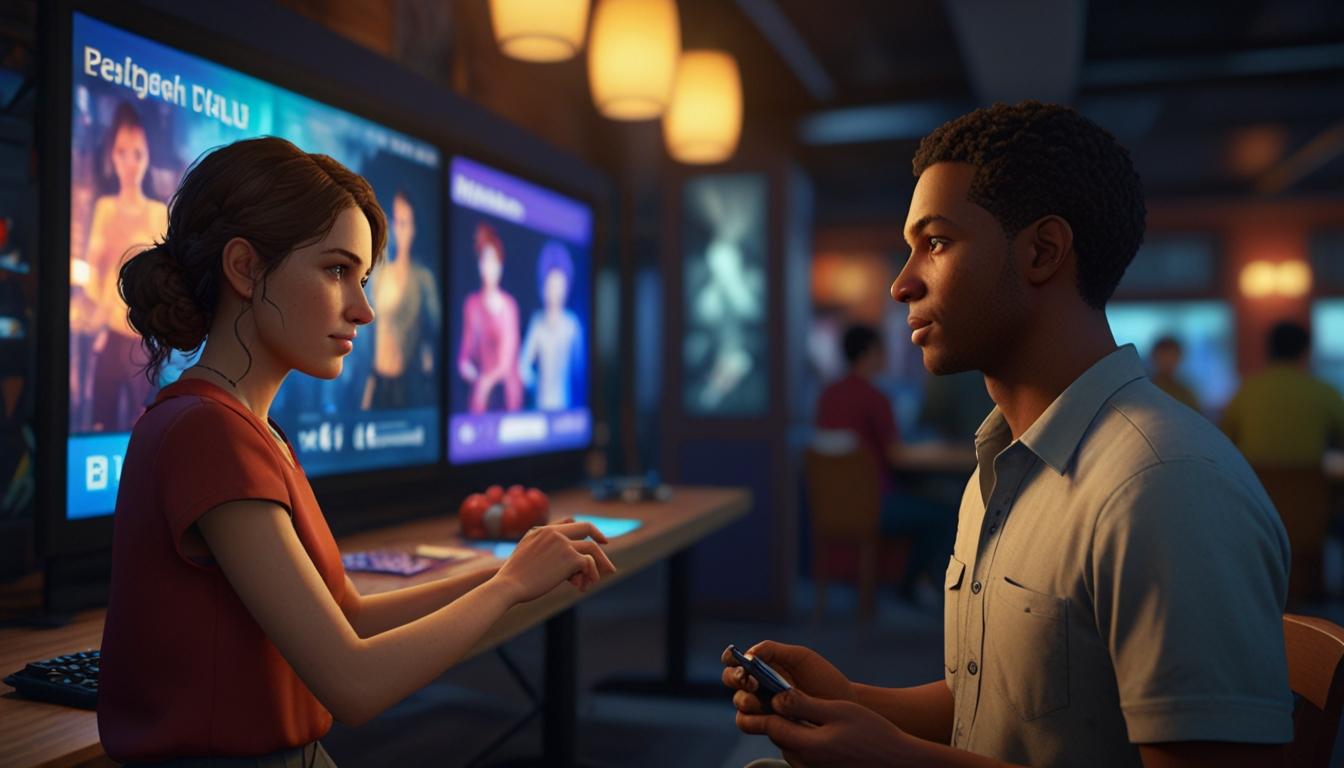
Game Studios Embrace AI for Enhanced Player Interaction
Los Angeles, CA (AP) – Video game studios are increasingly turning to artificial intelligence (AI) to enhance interaction within their virtual worlds. Traditionally, video games have relied on pre-scripted dialogues and interactions with non-player characters (NPCs) to guide and engage players. However, advancements in AI technology are now enabling developers to introduce more dynamic and spontaneous interactions, akin to those seen in table-top role-playing games.
Several tech companies are at the forefront of developing these AI solutions for the gaming industry. Nvidia has created ACE technologies, which aims to bring “digital humans” to life using generative AI. Inworld AI offers developers a platform for creating generative NPC behaviour and dialogue, further pushing the boundaries of interactive entertainment.
French video game company Ubisoft has also joined the ranks of AI adopters, utilising an in-house AI tool named Ghostwriter. This technology assists in writing NPC dialogue, complementing the efforts of human writers rather than replacing them.
A report published by the Game Developers Conference in January revealed that nearly half of the surveyed developers are implementing generative AI tools in their workplaces. Of these, 31 percent are personally using these tools, with indie studios showing the highest adoption rates at 37 percent.
Despite the growing interest and utilisation of AI in game development, ethical concerns loom large. About 80 percent of developers expressed worries about the responsible use of AI in their work. Carl Kwoh, CEO and co-founder of Jam & Tea Studios, emphasised the importance of using AI to elevate storytelling without displacing human creators.
"The goal has always been to use this tool to create an experience that makes players more connected to each other," Kwoh stated. "AI can enable them to tell stories that they couldn’t tell before."
Artificial Agency, a Canadian AI company, has developed an engine designed to integrate AI into various components of a game. This includes NPCs, companions, and "overseer agents" that can guide players towards unexplored content and generate tutorials to help them learn necessary in-game skills, thereby enhancing their overall gaming experience.
"One way we like to put it is having a game designer on the shoulder of everyone as they’re playing the game," said Alex Kearney, co-founder of Artificial Agency. According to Kearney, their AI engine can be embedded at any development stage of the game.
Brian Tanner, CEO of Artificial Agency, noted that creating scripts for every possible game scenario can be a laborious and challenging task. Their AI system allows game designers to focus more on defining character motivations and backgrounds, enabling characters to respond and improvise based on in-game events.
"These characters can improvise on the spot depending on what’s actually happening in the game," explained Tanner, highlighting the transformative potential of AI in creating more lifelike and engaging virtual interactions.
As AI technology continues to evolve, its application within the gaming industry is poised to redefine how players interact with their digital environments and the characters within them.
Source: Noah Wire Services