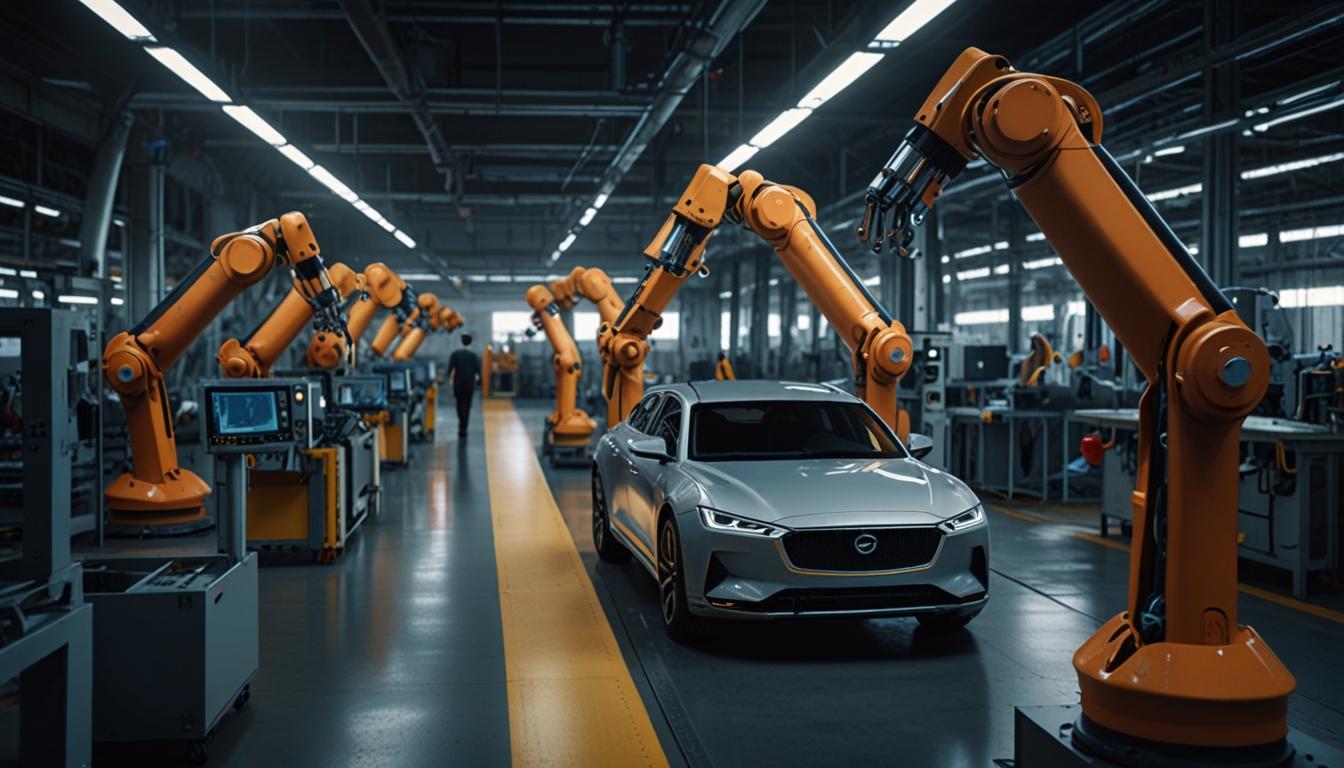
Global Automotive Automation Market Set for $2.45 Billion Growth by 2028
New York, 26th September 2024 – The global automotive automation market is projected to grow by USD 2.45 billion from 2024 to 2028, as reported by Technavio. This anticipated growth, at a compound annual growth rate (CAGR) of 4.36%, is driven largely by the increasing demand for enhanced visibility and flexibility in automotive manufacturing processes.
Market Dynamics
The push towards smart manufacturing and adoption of advanced technology has positioned the automotive sector for significant transformations. Technologies that integrate Internet of Things (IoT) with industrial machines and robots are at the forefront, facilitating real-time data collection and predictive maintenance through distributed control systems (DCS), manufacturing execution systems (MES), and programmable logic controllers (PLC).
Geographical Insights and Key Players
The Asia-Pacific (APAC) region is expected to contribute the most to this growth, accounting for 41% of the global market. Key countries driving this regional market include China, Japan, and India. In Europe, Germany leads the market, while the United States remains paramount in North America.
Major corporations shaping this market include giants like ABB Ltd., Mitsubishi Electric Corp., Schneider Electric SE, Siemens AG, and Yokogawa Electric Corp. Other significant contributors are DENSO Corp., General Electric Co., and Rockwell Automation Inc.
Technological Advancements
Automated technology in the automotive industry includes industrial sensors, PLCs, MES, Supervisory Control and Data Acquisition (SCADA), and DCS. These technologies are crucial in vehicle and component manufacturing. Industrial sensors, for example, measure a variety of physical parameters such as temperature, pressure, and vibration, converting these into electrical signals for PLC systems to ensure consistent product quality. Innovations such as smart sensors and wireless systems are expected to expand the industrial sensor market significantly, enhancing automation further.
Challenges and Risks
However, the transition is not without its challenges. Legacy industrial control systems, particularly those prevalent in Europe and the U.S., pose security vulnerabilities due to their outdated designs. These pre-Internet systems lack the capability for command authentication and secure data transmission, making them prone to security breaches. Upgrading these systems involves significant costs and complex integrations of new IT and OT technologies, further complicated by the rise of IoT and cloud computing.
Emerging Technologies and Applications
Emerging technologies such as augmented reality, digital twin technology, edge computing, and advanced analytics are revolutionizing automotive production. The implementation of 5G wireless technology and digitalization is enhancing turbocharging and remote monitoring capabilities. Robotics, cobots (collaborative robots), and 3D printing are transforming efficiency and product development processes.
Conclusion
Despite challenges, the automotive industry continues to see robust growth in automation. The integration of AI and machine learning is fostering ongoing innovation. As automation becomes a cornerstone of manufacturing strategies, the market is poised for significant advances in both productivity and flexibility, making it a vital area of focus for industry stakeholders.
For businesses and investors, staying abreast of these trends and technological advancements could offer strategic advantages in a competitive market landscape.
Contact Information:
For further details, you may contact Technavio Research.
- Jesse Maida, Media & Marketing Executive
- US: +1 844 364 1100
- UK: +44 203 893 3200
- Email: [email protected]
- Website: www.technavio.com
Source: Noah Wire Services