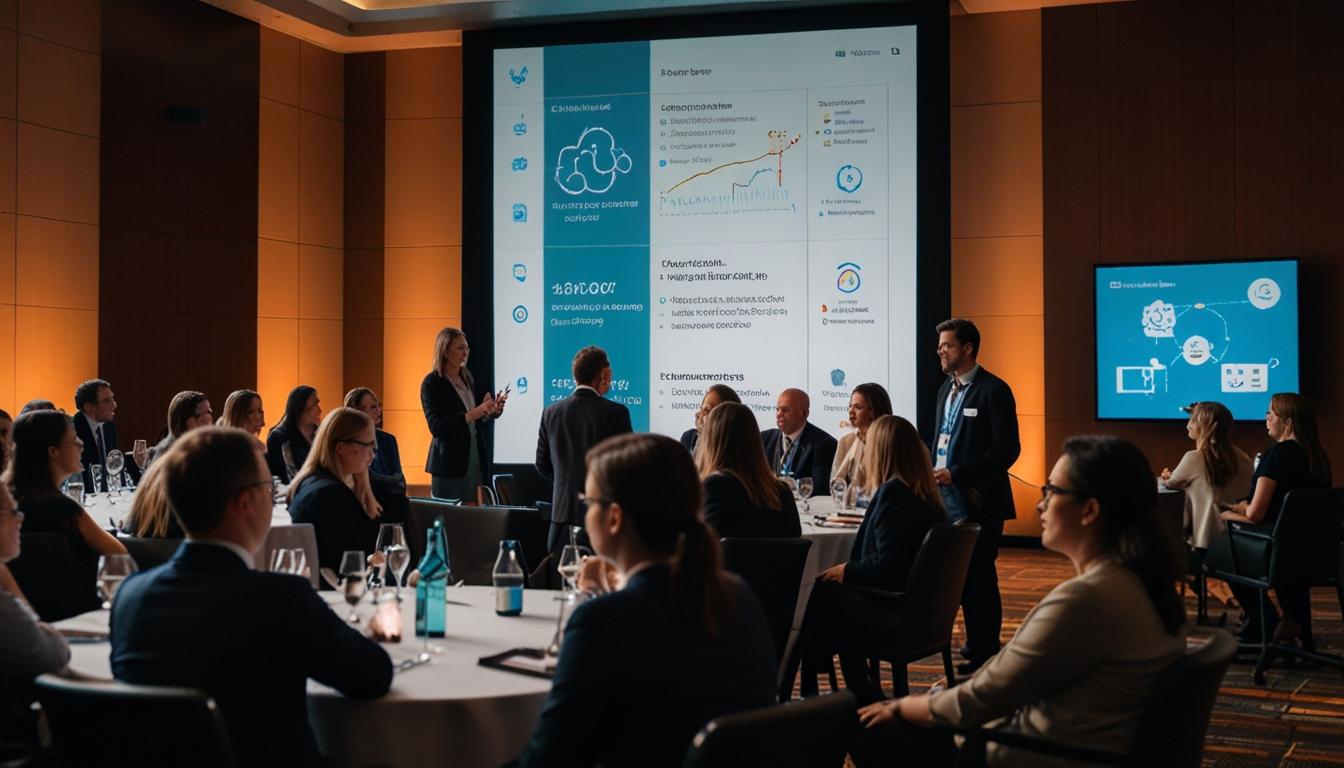
Las Vegas - At the HR Tech Conference held in Las Vegas on Wednesday, Forrester principal analysts Betsy Summers and Katy Tynan diverted attention from the omnipresent topic of generative AI, eliciting a round of applause from the audience. While generative AI has been a frequent subject throughout the conference, Summers and Tynan aimed to explore other pressing issues within the HR industry and discuss strategies to address these without getting overshadowed by the gen AI trend.
During their presentation, Summers and Tynan identified 10 significant HR challenges that go beyond generative AI, using interactive technology to gauge the importance of these issues according to the audience's views. The ranked challenges are as follows:
- Siloed teams within HR
- HR’s data, AI, and technology capability gaps
- Increasing pace of change
- Low trust in HR and executive leadership
- HR burnout
- Hyper-politicization of everything
- Low investment in leadership development
- Purchase complexity (tighter budgets, larger buying groups)
- Changes in the employee/employer social contract
- Shadow HR (other functional leaders conducting their own learning, recruiting, and workforce planning)
The analysts noted that the top-ranked challenges, siloed teams and gaps in technology capabilities, are closely linked. Summers explained that HR departments usually operate within specific domains such as recruiting, onboarding, and performance development, which leads to fragmentation in HR processes and data management.
“Each functional team is using their own tools, their own data sets, and they don’t really connect,” Summers stated. To mitigate this, she suggested HR teams should leverage shared data sets to dismantle the silos, particularly during significant change initiatives like HR transformations, cultural shifts, and transitions to skills-based organizations.
Tynan echoed this sentiment, pointing out the frustration caused by these silos and the inadequacy of technology alone in resolving the issue. “People are frustrated because of silos and they don’t know how to fix silos, so they just keep beating them with technology. And that’s not working,” she said. She highlighted that while many HR tech vendors promise a "unified journey" across HR, organisational maturity is often lacking, hindering the successful integration of these systems.
Additionally, Summers and Tynan addressed the concerning gap in HR professionals' confidence in their technological capabilities. Recent research by Forrester in collaboration with HR Executive revealed that HR professionals feel most confident in leading compliance, recruiting, and talent strategy, but far less so in data analytics, automation, and AI. In fact, confidence in AI capabilities has actually declined between 2021 and this year, a trend Summers described as "pretty alarming".
“I do see this as a big risk for any function within HR. If they are not developing skills around AI, how can they be included in those governance conversations, those big decisions about use cases, how to get more magic from the AI and not the mayhem?” Summers questioned.
In response, Tynan encouraged conference attendees to network, share experiences, and learn how other HR professionals are advancing their data and AI competencies. This collaborative approach, she suggested, could help HR departments close these critical gaps.
The insightful presentation by Summers and Tynan provided a comprehensive look at current HR challenges beyond the spotlight of generative AI, pressing HR professionals to reconsider their strategies and focus on their technological skills, data unification, and internal collaboration.
Source: Noah Wire Services