Meta Unveils Major AI and Augmented Reality Advancements at Connect Conference
MENLO PARK, California — At the heart of Silicon Valley, the future of technology was on full display today as Meta CEO Mark Zuckerberg took the stage at the company’s annual Connect conference. Held at Meta's headquarters, the event showcased an array of groundbreaking updates designed to integrate artificial intelligence (AI) and augmented reality (AR) into daily life.
Celebrity Voices for AI Assistants
One of the most talked-about announcements was Meta’s move to upgrade its AI assistants with celebrity voices. Users will soon be able to interact with Meta AI using voices from famous figures such as Dame Judi Dench, John Cena, Awkwafina, Keegan-Michael Key, and Kristen Bell. This bold step is part of Meta’s broader strategy to personalise AI interactions, a significant shift from the conventional fixed-identity chatbots offered by competitors like Google and OpenAI.
Introduction of Llama 3.2
Zuckerberg introduced Llama 3.2, the first version of Meta’s open-source AI model with visual recognition capabilities. This development aims to broaden the model's utility across various applications, from robotics to virtual reality and AI agents. Unique to Llama 3.2 is its optimisation for mobile devices, allowing developers to create smartphone apps that leverage the phone’s camera to perform tasks dynamically.
Augmented Reality Glasses: Orion
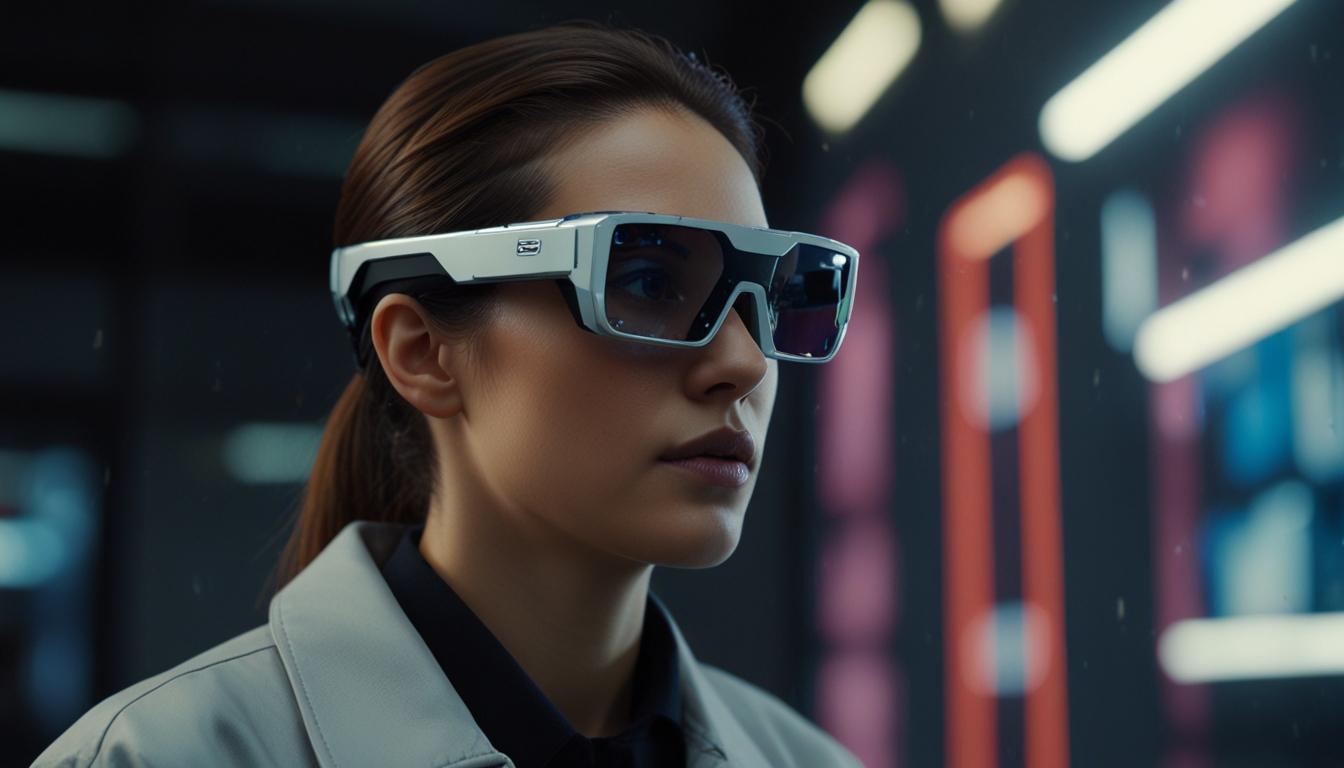
Zuckerberg unveiled Orion, a prototype hailed as “the most advanced glasses the world has ever seen.” Weighing less than 100 grams, these glasses feature holographic displays designed for seamless integration of digital and real-world information without the bulkiness of a headset. Orion interacts through voice commands, hand and eye tracking, and a neural interface connected to a wristband, allowing for intuitive finger gestures. A consumer version is expected by 2027, with initial units available for developers and internal testing.
Advances in Smart Glasses
Meta also provided updates on its partnership with Ray-Ban, introducing an enhanced version of its smart glasses. These updated glasses can now scan QR codes, play Spotify music, perform real-time language translation, and provide detailed analysis of objects in the wearer’s view. Current supply constraints have been addressed, making the glasses more accessible globally.
Expanded AI Capabilities
Meta highlighted several experimental AI features, including live translation between Spanish and English, automatic video dubbing, and creator avatars that can answer fan questions. Zuckerberg demonstrated how Ray-Ban smart glasses, powered by Llama 3.2, could deliver recipe advice based on visible ingredients and offer fashion feedback while shopping.
WhatsApp, Instagram, Facebook, and Messenger Integration
The company announced deeper integration of Meta AI into its popular platforms like WhatsApp, Instagram, Facebook, and Messenger. Users will soon find augmented AI tools embedded within their social media experiences, including an image-generating tool for Instagram feeds and Facebook profile pictures.
AI-Generated Content
Meta will also introduce an image-generating tool in user feeds, allowing AI to suggest image captions and offer AI enhancements to Stories on Facebook and Instagram. Moreover, the latest Llama model can automatically translate languages in Instagram reels, adjusting audio and lip movements for coherent voiceovers.
Meta Quest 3S and Other Hardware Updates
Meta launched the Quest 3S, a new entry-level mixed-reality headset priced at $299.99, significantly cheaper than competing devices like Apple’s Vision Pro. The Quest 3S aims to make mixed reality more accessible, blending the virtual and physical worlds together. In addition, Meta has discontinued its older Quest 2 and high-end Quest Pro devices but lowered the price of the existing Quest 3 to $499.99.
Financial Implications and Future Plans
Despite impressive technological advancements, Meta's Reality Labs unit reported substantial losses amounting to $8.3 billion in the first half of the year. Nonetheless, Zuckerberg expressed optimism about the potential of AR and AI technologies to redefine the company's future. Meta plans to continue its significant investment in these areas, aiming for widespread adoption of its AR glasses and AI systems.
The event underscored Meta's commitment to blending AI and AR experiences into everyday life, reaffirming its vision to stay at the forefront of technological innovation. As developers and consumers eagerly await the rollout of these new capabilities, the impact of today’s announcements is set to unfold in the coming months and years.
Source: Noah Wire Services