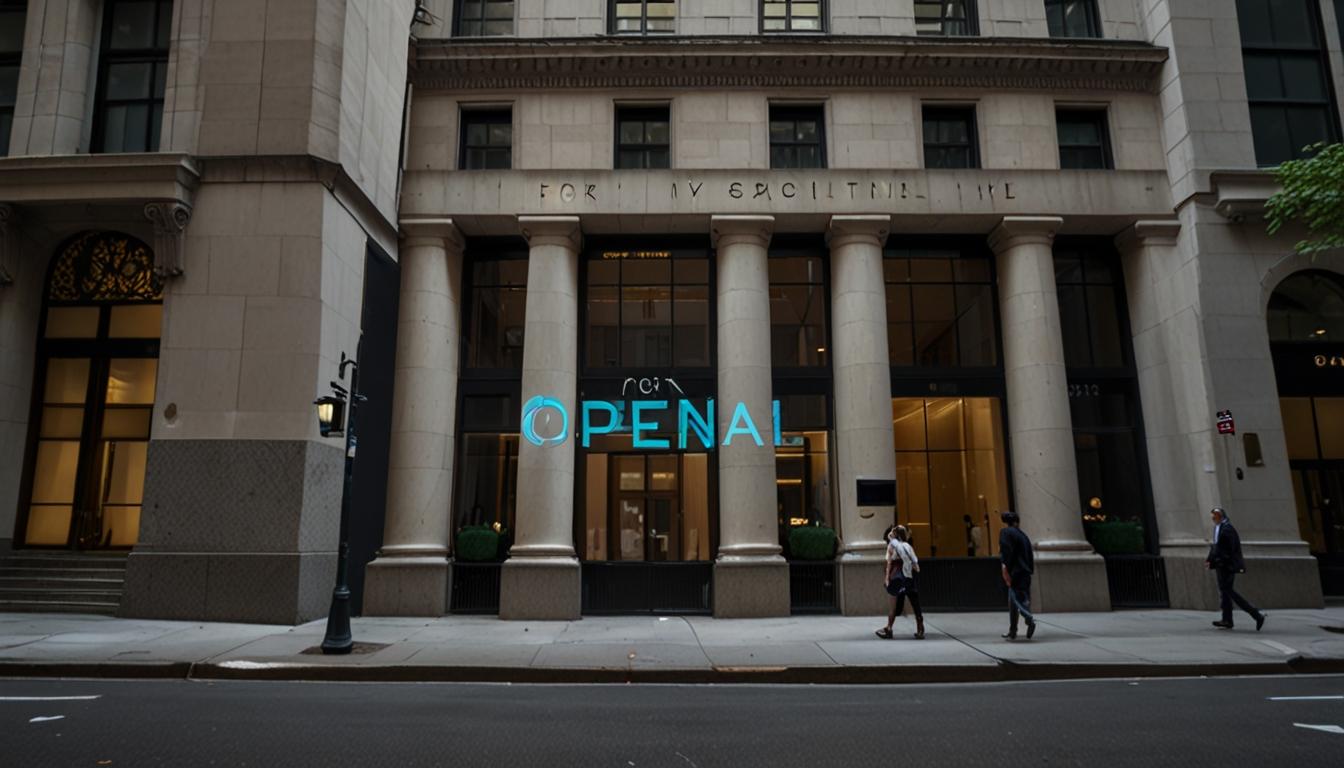
OpenAI on the Verge of Major Restructuring Amid High Profile Departures
San Francisco-based artificial intelligence (AI) firm OpenAI, known globally for its ChatGPT software, is considering transformative changes in its corporate structure. Founded in 2015 as a nonprofit with the mission of developing AI for societal benefit, the company is now contemplating a significant shift to a for-profit model. This move could see CEO Sam Altman, 39 years old, obtaining a 7% equity stake, estimated to be worth around £8 billion, vastly increasing his personal fortune, which is currently estimated at £750 million.
This potential restructuring comes during a period of major personnel changes and financial manoeuvrings for the company. Chief Technology Officer Mira Murati, Chief Research Officer Bob McGrew, and Vice President of Research Barret Zoph have all recently announced their departures. Reports suggest these exits are independent decisions despite their coinciding timing. Still, it has sparked significant interest given the broader context of changes at OpenAI.
In a public statement, Altman addressed the high-level exits succinctly, stating, "Leadership changes are a natural part of companies, especially those that grow so quickly and are so demanding... I obviously won’t pretend it’s natural for this one to be so abrupt, but we are not a normal company."
This restructuring move follows the tumultuous November 2023 incident when Altman was briefly ousted from his position by OpenAI's nonprofit board, only to be reinstated days later following widespread backlash. The nonprofit structure, which has since 2019 controlled a for-profit subsidiary, has been a source of continuous tension. This hybrid model was initially intended to align with the company's mission of developing safe and socially beneficial AI.
Sources familiar with the internal discussions have indicated that the board is now contemplating turning OpenAI into a public benefit corporation—a type of for-profit entity that balances financial returns with societal benefits. Aligning with this shift, a new £5 billion fundraising round is being pursued, potentially elevating the company's valuation to £150 billion. If successful, this round would make OpenAI one of the world's most valuable startups.
Microsoft, a significant investor in OpenAI, has already poured in more than £7 billion, acquiring a 49% ownership stake in the company. Attracting further investment appears to be a central goal of the restructuring, as it would provide the necessary capital for scaling up the infrastructure needed for advanced AI development.
Interestingly, this shift towards a fully for-profit model has been met with scrutiny and controversy. Co-founder Elon Musk, who departed the company in 2018, has previously filed a lawsuit claiming that the company's transition away from a nonprofit structure violated its original mission. Furthermore, there are concerns among former and current employees about the potential deprioritisation of AI safety in favour of quicker commercial gains. Daniel Kokotajlo, a former researcher at OpenAI, stated to the New York Times, "OpenAI is really excited about building AGI [artificial general intelligence], and they are recklessly racing to be the first there."
Despite these concerns, OpenAI maintains that its nonprofit arm will continue to exist and focus on its original mission. An OpenAI spokesperson reiterated, "We remain focused on building AI that benefits everyone, and we’re working with our board to ensure that we’re best positioned to succeed in our mission. The nonprofit is core to our mission and will continue."
Altman's potential windfall and the manner of executive departures reflect an intense period of change within OpenAI, hinting at both its rapidly evolving internal dynamics and its expanding influence in the AI industry. As the company gears up for what appears to be a significant leap towards a more investor-friendly structure, all eyes will be on how it balances its ambitious goals with its foundational mission.
Source: Noah Wire Services