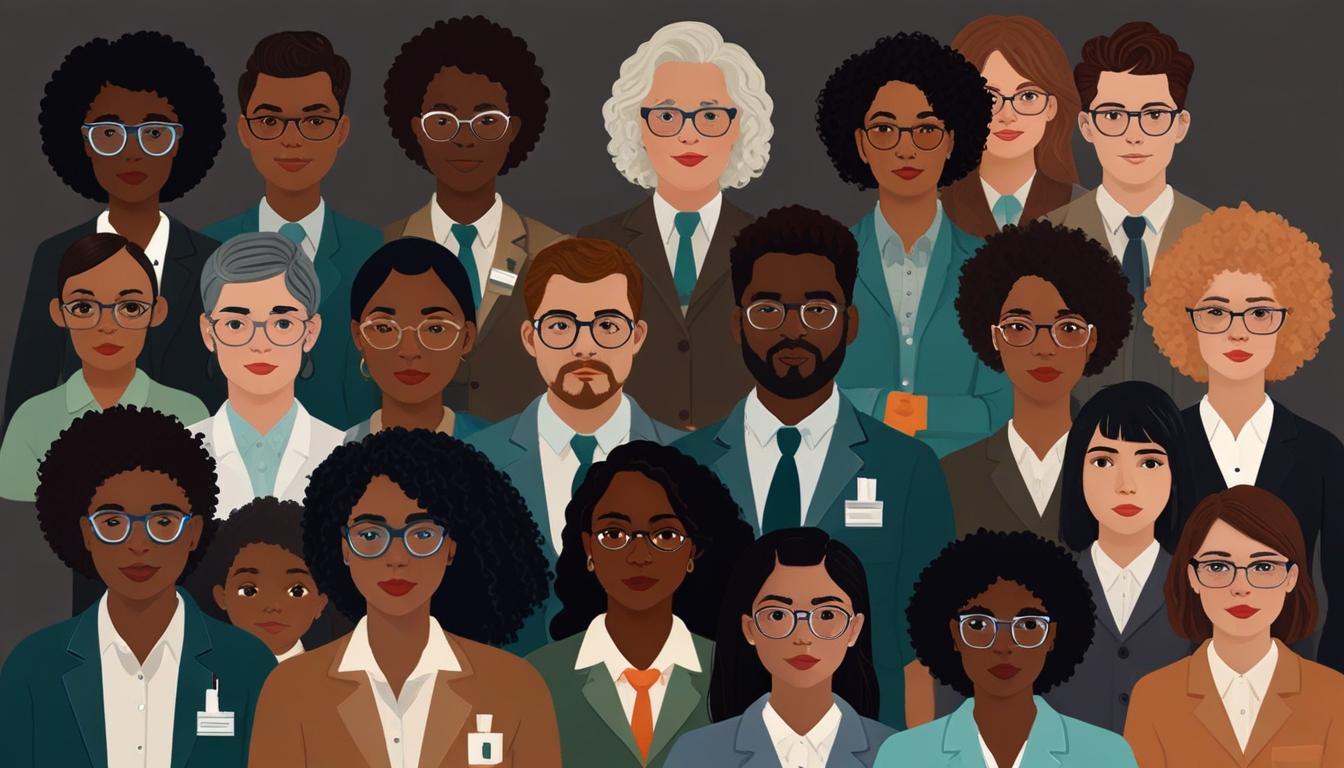
Restack and DataPulse Research Unveil AI Bias in Representation Across Diverse Professions
In an era increasingly defined by the intersection of technology and creativity, artificial intelligence (AI) image generators are becoming significant tools in various industries. However, these technologies exhibit notable limitations, particularly concerning the representation of gender and race. A recent study conducted by Restack, a technology company focusing on AI products, in collaboration with DataPulse Research, sheds light on these biases.
Study Methodology
The study employed five well-known AI image generators—DALL-E, Midjourney, Leonardo.ai, Hotpot.ai, and Deepai. The aim was to analyse how these tools handle gender and racial representation across different professional and social scenarios. Rather than evaluating the aesthetic or technical quality of images, the study focused solely on who was being depicted by gender and skin colour.
Researchers selected ten diverse prompts, ensuring gender-neutral wording to avoid any predetermined bias. The prompts spanned various scenarios, including a scientist working in a laboratory, a teacher giving a lecture, a person cooking, an athlete celebrating, a politician delivering a speech, a CEO, a poor person living on the streets, a criminal robbing a bank, a fashion designer, and a hip-hop artist performing on stage.
Key Findings
The generated images revealed significant biases in the representation of gender and race. Here are some notable results:
- Scientist: All AI generators presented light-skinned men.
- Teacher: Predominantly white men appeared, except for one white woman generated by Hotpot.ai.
- Cook: The majority were men, with an equal split between white and non-white individuals.
- Athlete: Mostly white individuals, with one dark-skinned man and ambiguous representations.
- Politician: Exclusively white men across all platforms.
- CEO: All images depicted white men.
- Poor Person: Mostly non-white individuals, predominantly men.
- Bank-Robbing Criminal: Mostly white men, with one image that was indiscernible.
- Fashion Designer: Mostly women, with a mix of racial representations.
- Hip-Hop Artist: Predominantly non-white men.
Analyzing the Bias
The data indicates a strong gender and racial bias across most categories. Male subjects featured in 40 of the 49 discernable images, while female subjects appeared in only nine. Racial representation was heavily skewed, with 37 images depicting white individuals and only 12 showing dark-skinned people. Just two images clearly depicted women of colour.
Stereotypes were troublingly prevalent. Dark-skinned men were primarily shown as poor individuals or hip-hop artists, while women were typically depicted as fashion designers. Professional and authoritative roles such as scientists, politicians, and CEOs almost exclusively featured white men.
Among the tools, DALL-E depicted the least diversity, with nine out of ten prompts resulting in images of white men. Midjourney showed a similar trend with seven out of ten.
Implications and Outlook
AI image generators derive their outputs from extensive databases of existing imagery, effectively mirroring societal biases in their creations. This study underscores the importance of addressing these biases, as AI tools continually integrate newly generated images back into their learning models, perpetuating and potentially exacerbating skewed representations.
The findings highlight the need for developers and researchers to enhance diversity and representation within AI systems. This is crucial to ensure these technologies reflect a fair and inclusive perspective.
As AI continues to permeate various aspects of life, ongoing scrutiny and advocacy for transparency and ethical standards are essential for fostering technologies that serve all sectors of society equitably.
Source: Noah Wire Services