Southern Scientists Leverage AI for Revolutionary Agricultural Advancements
In a groundbreaking movement across the Southern United States, scientists are increasingly employing artificial intelligence (AI) to revolutionise agricultural practices. From reducing labour costs and enhancing efficiency to precisely targeting weed control and improving food quality, these advancements promise notable benefits for growers.
Aerial Technology Boosting Sustainable Practices
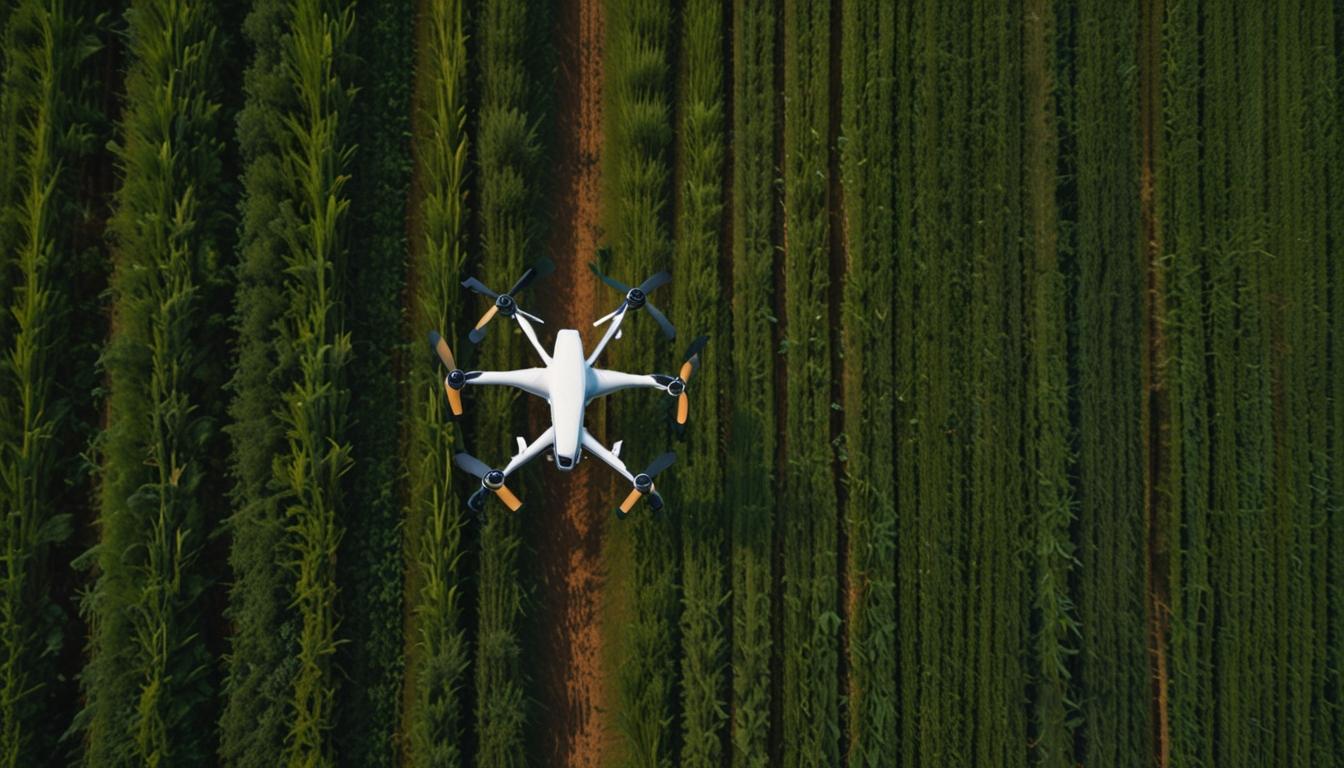
One notable development comes from the University of Florida's Institute of Food and Agricultural Sciences (UF/IFAS), where Yiannis Ampatzidis has introduced the innovative Agroview technology. Aimed at streamlining agricultural processes, Agroview uses images from drones, satellites, and ground-level sources to assess plant health, measure plant populations, categorise based on height and canopy area, and estimate nutrient content.
"Growers in Florida and across the United States use this technology to predict yield, detect stressed plant zones earlier, and develop precision maps for variable-rate fertilizer applications," stated Ampatzidis, an associate professor of agricultural and biological engineering at UF/IFAS’s Southwest Florida Research and Education Center. The technology significantly reduces data collection and analysis time, cutting costs by up to 90% compared to traditional manual methods.
Precision Weed Control Minimises Chemical Use
The challenge of weed management without harming crops has also seen an innovative solution. Nathan Boyd, a professor of horticultural sciences at UF/IFAS Gulf Coast Research and Education Center, together with Arnold Schumann from the Citrus Research and Education Center, developed a precision weed sprayer. This technology uses images of weeds to train computers for accurate weed identification, enabling targeted herbicide application. This approach has demonstrated the potential to reduce pesticide use by up to 90%.
Beyond Florida, researchers at Virginia Tech are also making strides in weed management. Vijay Singh, an assistant professor in the College of Agriculture and Life Sciences and a Virginia Cooperative Extension specialist, is leading a project focused on the automation of drone-spray technology combined with real-time weed detection through machine learning. This initiative aims to standardise the technology for practical field use, thus saving farmers both time and money.
"Testing of unmanned aerial systems is the first step, but the overall goal is to automate the process and achieve real-time weed detection and spray applications," noted Singh, promising advances in this field over the coming years.
Augmented Reality for Food Processing
Furthermore, the adoption of AI extends to food quality control through the development of augmented reality technologies. Christopher Kucha, an assistant professor at the University of Georgia’s College of Agricultural and Environmental Sciences (CAES), is leveraging precision sensing technologies and AI to create digital twins of food items. These digital counterparts allow researchers to simulate life cycles and optimise production processes, contributing to enhanced food quality and waste reduction.
"Amazon uses augmented reality to show customers virtual products, and we are applying a similar concept to food processing," explained Kucha. By collecting comprehensive data on food items and their processing, these digital twins can improve operational efficiency within the food supply chain.
Ebenezer Olaniyi, a graduate research assistant in Kucha’s lab, pointed out that these imaging systems are designed to boost the sustainability of the food industry by establishing standards for more efficient and cost-effective processes.
Conclusion
These diverse projects underscore a unified goal: harnessing the power of AI to drive substantial improvements in agricultural productivity and sustainability. These technological advancements hold the potential to not only optimise resources and reduce environmental impact but also provide significant financial benefits to growers across the Southern United States.
Source: Noah Wire Services