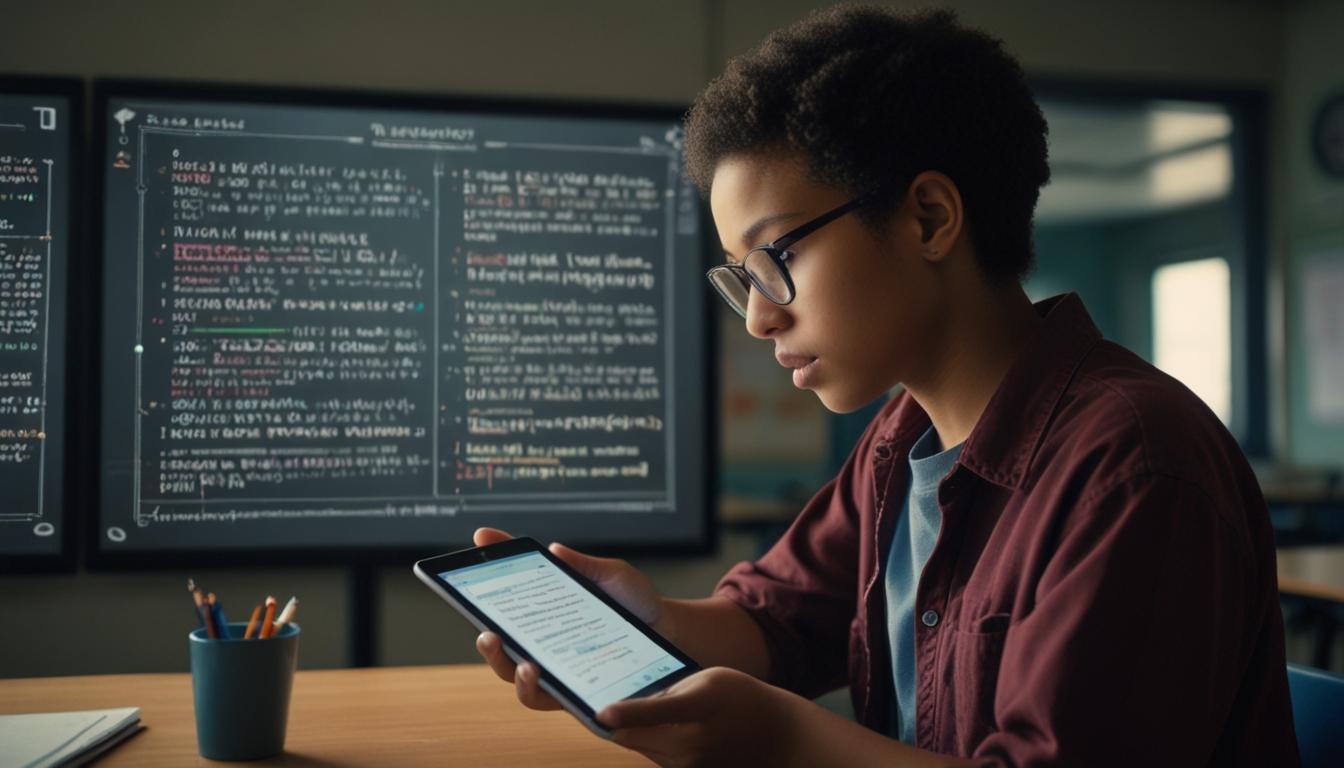
The Dual Facets of AI in Education: Opportunity and Caution
Artificial Intelligence (AI) has swiftly infiltrated numerous aspects of daily life, and education is no exception. As with any transformative technology, AI brings both opportunities and challenges, prompting a mix of anticipation and caution among educators and students alike. A particularly significant issue is AI's penchant for 'hallucinations,' where systems generate inaccurate or entirely fabricated information.
Understanding AI Hallucinations
AI hallucinations occur when models like ChatGPT, drawing on patterns from their training data rather than an intrinsic understanding of the world, produce erroneous outputs. These inaccuracies can range from incorrect summaries and fictitious characters in book reviews to inaccuracies in basic details such as dates or names. Such hallucinations underscore the necessity for users to critically evaluate and verify the information produced by AI.
AI Hallucinations in an Educational Context
Despite their challenges, AI hallucinations can be harnessed positively within educational settings. Educators view this phenomenon as an impetus for developing critical thinking skills. The onus is on students to scrutinise AI-generated content, cross-check facts, and validate information. This promotes a culture of meticulousness and independent verification, reinforcing essential academic skills.
For instance, when ChatGPT provides a text summary, it should be used as a starting point rather than a definitive source. Students must engage with the original material to assess the summary's accuracy. This process helps reinforce knowledge and understanding, and the act of verification itself is an instructional technique that deepens learning.
Promoting Critical Thinking Through AI
The concept of encouraging students to identify and rectify errors is well-established in educational practice. Activities such as 'spot the difference,' peer reviews, and cross-referencing are routinely employed to enhance critical thinking and attention to detail. The incorporation of generative AI into this framework offers a modern twist on these traditional methods.
When educators introduce AI into the classroom, they not only teach students about the possibilities AI offers but also alert them to its limitations. Illustrating major mistakes made by AI, such as those by ChatGPT, makes these limitations tangible. Organising forums, discussions, or even contests focused on identifying AI's inaccuracies can provide practical, engaging learning experiences. This turns the detection of AI-generated errors into a collaborative and competitive educational activity.
Transforming Challenges into Learning Opportunities
The inevitability of AI use among students, even when not formally permitted, suggests it's prudent to integrate AI awareness into the educational strategy. By acknowledging AI's propensity for hallucinations, educators can foster an environment where students are encouraged to question and verify AI outputs. This critical engagement not only addresses the immediate issue of misinformation but equips students with lifelong skills in discernment and analysis.
Conclusion
AI stands poised to effect significant changes in education, with its ultimate impact hinging on the approach taken by educators and students. While AI hallucinations present a challenge, they also serve as a valuable teaching tool. By leveraging these inaccuracies, educators can enhance critical thinking and promote rigorous academic standards. As AI continues to evolve, its role in education will undoubtedly become more nuanced, striking a balance between innovation and traditional educational values.
Source: Noah Wire Services