Los Angeles – The video game industry is on the cusp of a significant transformation as advancements in artificial intelligence (AI) are set to redefine the way players interact with game environments and non-player characters (NPCs). Historically, NPCs have been characterised by scripted, repetitive interactions, but with the integration of generative AI, gaming experiences are poised to become more dynamic and responsive.
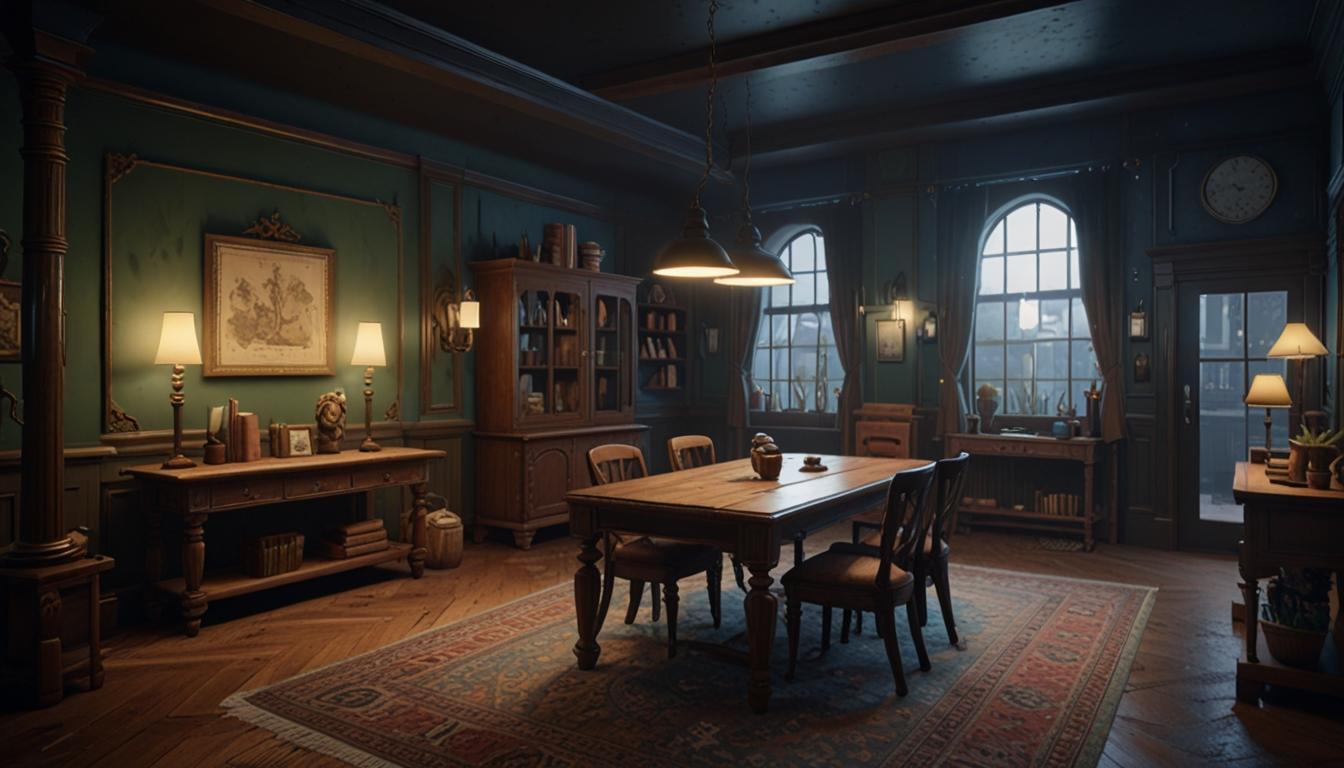
Jam & Tea Studios' multiplayer game “Retail Mage” exemplifies this shift. In this game, players manage a magical furniture store and assist customers to earn a five-star review. Unlike traditional games, where player actions are dictated by pre-written scripts, “Retail Mage” leverages AI to offer more flexible and spontaneous interactions. Players can perform a variety of tasks such as deconstructing chairs for parts or tearing a page from a book to leave a note, all informed by real-time AI responses.
“We believe generative AI can unlock a new kind of gameplay where the world is more responsive and more able to meet players at their creativity and the things that they come up with and the stories they want to tell inside a fantasy setting that we create for them,” said Michael Yichao, cofounder of Jam & Tea Studios.
The traditional approach to NPC interactions has often been limited to a few dialogue options leading to a predetermined outcome. However, developers and AI companies are now exploring the potential of generative AI to create more nuanced and adaptive relationships within the game world. This could enable players to craft their own narratives and experience a more immersive and lifelike environment.
Several technology firms are pioneering these efforts. Nvidia has developed its ACE technologies to create “digital humans” using generative AI, while Inworld AI provides a platform for dynamic NPC behaviour and dialogue. Ubisoft has also employed an AI tool called Ghostwriter to assist in writing NPC dialogue, although they emphasise that it supplements rather than replaces human writers.
A January report from the Game Developers Conference revealed that nearly half of surveyed developers are already using generative AI tools in their workplace, with a notable 31% utilising these tools personally. Indie studios are particularly inclined towards AI integration, with 37% reporting its use in their development processes. Despite these advancements, an ongoing debate about the ethical implications of AI remains, with approximately 80% of developers expressing concerns over its responsible use.
Carl Kwoh, CEO and cofounder of Jam & Tea Studios, underscored the collaborative potential of AI. “AI should be used responsibly alongside creators to elevate stories — not to replace them,” he said. “How can we use this tool to create an experience that makes players more connected to each other? They can tell stories that they couldn’t tell before.”
Yichao emphasised that the goal is not just to produce endless dialogue but meaningful interactions. By utilising AI technologies such as Google’s Gemma 2 and their servers in Amazon, they aim to inject life and reactivity into NPCs beyond traditional scripted encounters. Examples from “Retail Mage” illustrate how players have transformed the game's shopping experience into something resembling a dating simulator, with NPCs providing realistic responses to player-induced scenarios.
Similarly, Nvidia’s integration of AI into the game “Mecha BREAK” enables players to interact with NPCs like Martel the mechanic with unprecedented fluidity. “Typically, a gamer would go through menus to do all this. Now it could be a much more interactive, much quicker experience,” said Ike Nnole, a senior product marketing manager at Nvidia.
Canadian AI company Artificial Agency has gone a step further by developing an engine that can introduce AI into every facet of a game, including companions and overseer agents that guide players towards unexplored content. CEO Brian Tanner highlighted that their system allows game designers to focus on character motivations and backgrounds, trusting AI to handle situational improvisation. This not only simplifies the development process but also ensures that the game world feels genuinely alive and responsive.
“It is truly going to feel like the world’s alive and like everything really reacts to exactly what’s happening," Tanner said. “That’s going to add tremendous realism.”
As the gaming industry continues to explore the capabilities of generative AI, players can anticipate richer, more immersive experiences that adapt to their choices and creativity, signalling a new era in interactive entertainment.
Source: Noah Wire Services