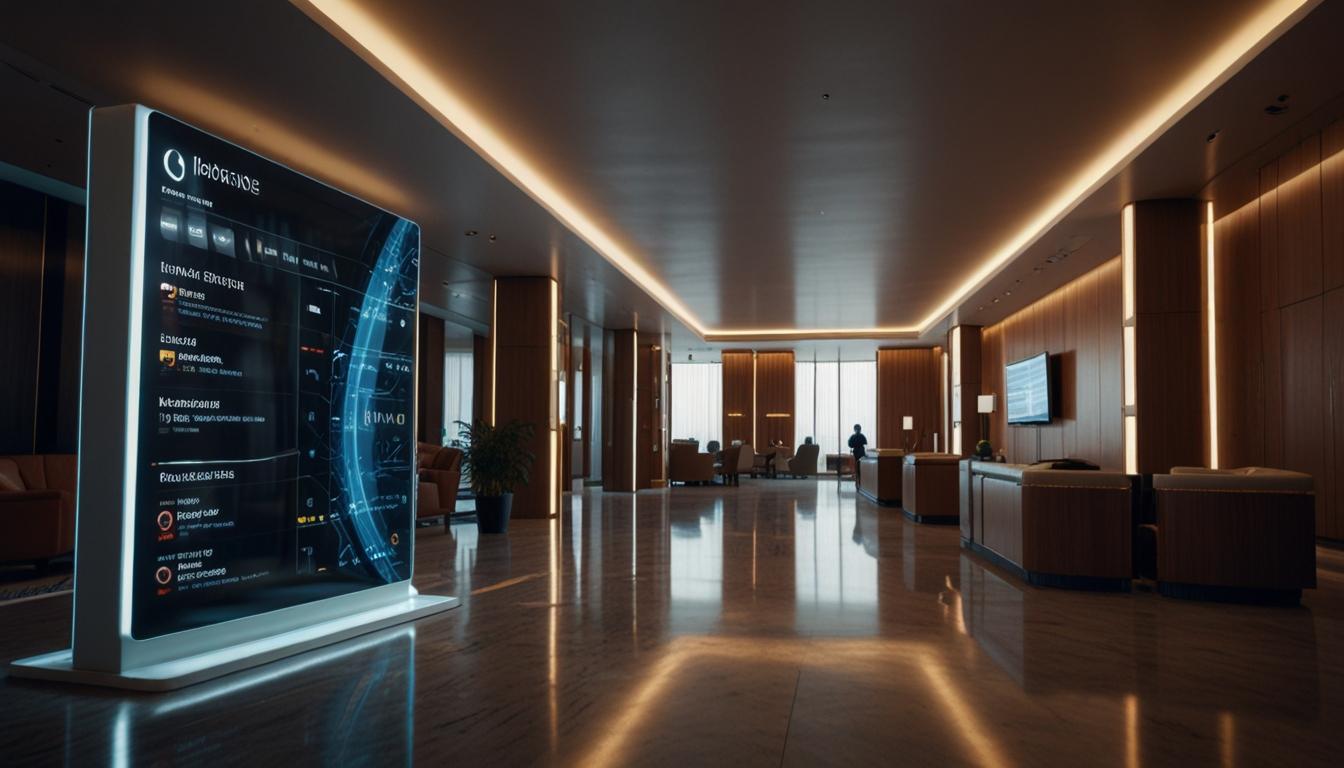
The Impact of AI on the Hospitality Industry: Predictions from the Destination AI Summit
Washington, D.C. — Hotel executives and leaders of online travel agencies are intently analysing the landscape of artificial intelligence (AI) advancements, particularly generative AI, to understand and anticipate the transformative impact on the hospitality industry over the next few years. At the recent Destination AI summit held in Washington, D.C., industry experts shared their insights and speculations on the potential disruptions AI might bring.
The Existing Landscape and Upcoming Changes
Currently, the utilisation of generative AI in hotel bookings is minimal. However, according to Jess Petitt, Senior Vice President of Commercial Strategy, Insights, and Analytics at Hilton, AI's influence is expected to grow significantly in the next five years. "There’s been a lot of hype,” stated Petitt, “but in the next five years, the [technology] will make a huge impact.”
Complexity in Distribution Channels
One prevalent theme at the summit was the increasing complexity in hotel distribution channels. There is a keen interest in how tech giants like Apple, Amazon, and Google might integrate generative AI into their devices and operating systems. Such advancements could enable these companies to provide highly personalized travel recommendations, thereby challenging traditional online travel agencies (OTAs).
George Roukas, president of consulting firm Gaipan, illustrated the potential of such technology with an example from this summer's Google I/O conference. "A woman requested a four-day itinerary to Chicago for her family," Roukas recounted. "The AI generated not just a static plan but a fully dynamic itinerary that adaptively responded to changes in her schedule."
The Challenge to Online Travel Agencies
The consensus among experts is that OTAs like Expedia might struggle to compete with the personalisation capabilities of device-embedded AI. Chris Hemmeter, Managing Director at Thayer Ventures, posited, “If an AI agent has a personalization capability, it should ultimately take the traveller to the best place to book a hotel that the user actually wants to stay in.” However, Hemmeter noted that in the short term, OTAs might still retain an edge due to their substantial investments in AI and their existing technological infrastructure.
Another potential disruptor in the distribution wars could be financial institutions issuing popular travel credit cards. These banks could leverage spending history data and brand-agnostic loyalty programs to offer personalised travel recommendations, further altering the landscape.
Strategies for Adaptation
For hotel companies to remain competitive, substantial investment in AI technologies is imperative. Experts like Shane O’Flaherty, Global Director of Travel, Transportation, and Hospitality at Microsoft, envision a future where consumers control their data through digital wallets. These wallets would allow individuals to selectively share their preferences with companies to enhance their travel experiences. O’Flaherty explained, "Ultimately, my AI assistant will know I’m on a business trip and will share my preferences with Hilton’s AI system to ensure I’ll get the best journey possible."
Monetisation and New Business Models
There is also apprehension about the potential monetisation of these AI-driven personalisation services. Jess Petitt emphasized that hoteliers need to stay vigilant to secure favourable terms in interactions facilitated by AI, avoiding pitfalls encountered in past third-party distribution agreements. “Our role as hoteliers is to make sure we get the best possible terms,” noted Petitt.
Financial Performance Monitoring
The Skift Travel 200 (ST200) index, which tracks the financial performance of nearly 200 travel companies, has been instrumental in understanding the economic impact of these developments. This index includes publicly traded international and regional hotel brands, hotel REITs (Real Estate Investment Trusts), management companies, alternative accommodations, and timeshares.
Conclusion
The discussions at the Destination AI summit underscore that while the current influence of generative AI in hotel bookings is limited, its future impact is expected to be profound. As AI technology continues to evolve, both hotel companies and OTAs must adapt to remain competitive in this rapidly changing landscape. The insights shared by industry leaders highlight the need for strategic investment and give a glimpse into how AI might reshape the future of travel and hospitality.
Source: Noah Wire Services