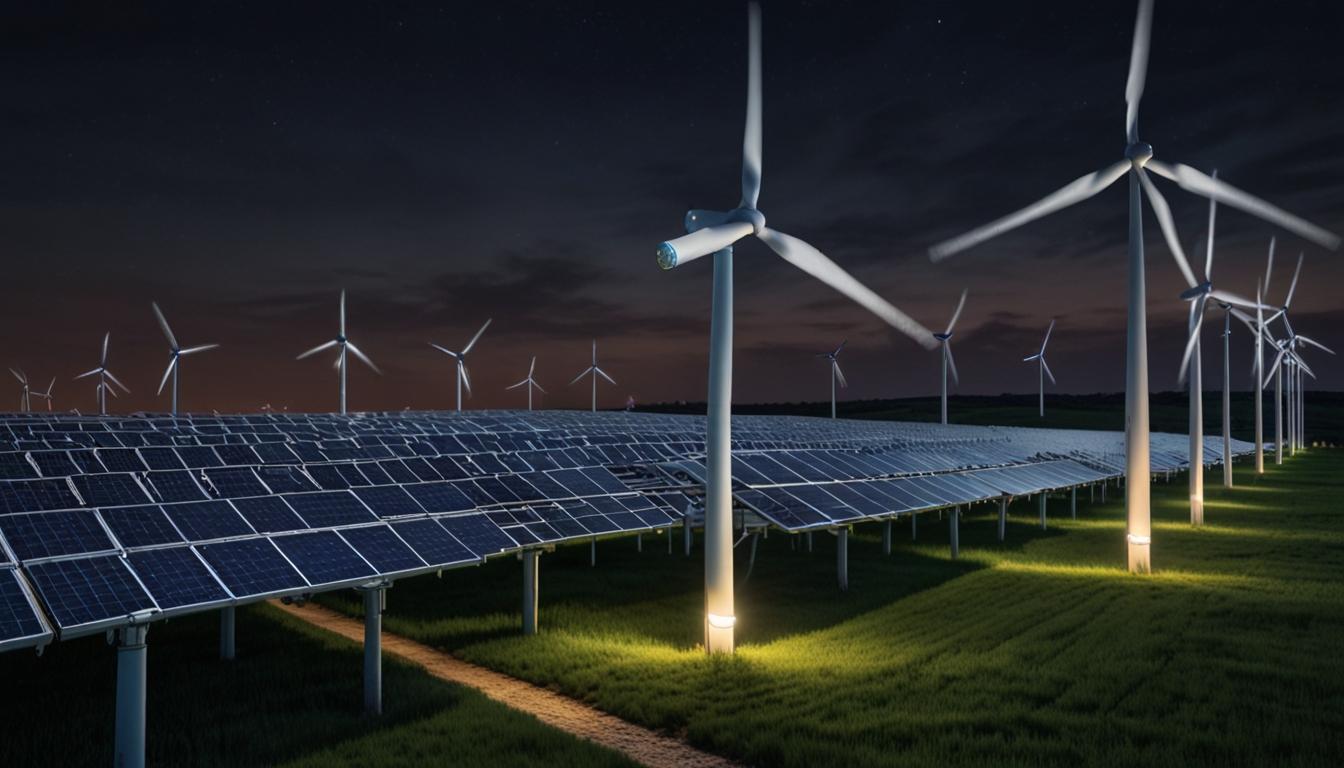
The Integration of Renewable Energy: AI's Pivotal Role
The shift to harnessing renewable energy sources is no longer a far-off vision. It's a rapidly unfolding reality driven by the global need for sustainable and environmentally friendly energy solutions. However, the integration of intermittent renewable energy sources such as solar and wind into existing power grids presents a myriad of challenges. Enter artificial intelligence (AI), which is rapidly evolving to offer innovative solutions that optimise grid operations and maximise the potential of renewable energy.
Challenges of Renewable Energy Integration
The integration of renewable energy into power grids is fraught with complexities. Primarily, it involves dealing with intermittency, balancing supply and demand, and mitigating grid congestion. Solar and wind energy generation is inherently variable, dependent on climatic conditions which pose significant challenges in ensuring a consistent power supply. Moreover, balancing real-time consumption with generation is crucial, as renewable energy sources can lead to imbalances. As the volume of renewable energy feeding into the grid increases, so does the risk of congestion, potentially resulting in power outages.
AI: Offering Solutions
AI has emerged as a transformative force in addressing these integration challenges. Here are several ways AI is being utilised:
Predictive Analytics: AI algorithms can process vast amounts of data, including weather forecasts, historical energy consumption patterns, and real-time grid conditions. This capability enables accurate predictions of future energy demand and supply, allowing grid operators to adjust generation and distribution more effectively. A study by the National Renewable Energy Laboratory (NREL) found that AI-powered forecasting models can reduce prediction errors by up to 20%.
Optimal Dispatch: AI optimises power dispatch from various sources, including renewable energy, traditional power plants, and energy storage systems. By factoring in cost, efficiency, and grid stability, AI ensures the most suitable generation mix is deployed at any given time. The International Energy Agency (IEA) estimated that AI-based dispatch optimisation could result in annual cost savings of up to $20 billion for electricity grids globally.
Demand-Side Management: AI helps manage demand by analysing consumer behaviour and identifying energy conservation opportunities. For instance, AI-powered smart thermostats can adjust temperatures based on occupancy and energy prices, thereby reducing peak loads and enhancing grid efficiency. The Rocky Mountain Institute found that AI-enabled demand-side management programs could cut peak demand by up to 15%.
Virtual Power Plants: AI facilitates the creation of virtual power plants by aggregating distributed energy resources (DERs) like solar panels, batteries, and electric vehicles. AI controls and coordinates these virtual power plants to provide essential grid services such as frequency regulation and voltage support. The IEA suggests that virtual power plants could contribute up to $100 billion in annual economic benefits by 2030.
Microgrid Integration: AI aids in integrating microgrids, which are localized power systems that can function independently or in conjunction with the primary grid. AI enhances the operation of microgrids, improving their reliability and resilience. According to the Lawrence Berkeley National Laboratory, AI-enabled microgrid control systems can boost grid resilience by up to 30%.
Case Studies
Several real-world applications highlight the benefits of AI-powered grids:
California: The California Independent System Operator (CAISO) has implemented AI tools to manage the integration of large-scale solar and wind power. These tools have maintained grid stability and reduced costs. A study by CAISO showed that AI-powered grid management tools reduced grid congestion events by 25%.
Europe: Countries like Germany and Denmark are leveraging AI to optimise their renewable energy-dominated grids. This ensures a reliable and affordable power supply. A European Commission report estimated that AI-based grid optimisation could lead to annual cost savings of up to €10 billion for European electricity grids.
The Future of AI-Powered Grids
As AI technology continues to advance, the energy sector is poised to witness even more innovative applications. Future developments may include self-healing grids capable of automatically recovering from disruptions and increased integration of emerging technologies like blockchain and advanced energy storage systems.
AI-powered grids play a crucial role in unlocking the full potential of renewable energy. By tackling challenges associated with intermittent energy sources and optimising grid operations, AI is leading the way towards a sustainable and efficient energy future. As this technology evolves, more groundbreaking solutions are anticipated, helping to achieve a more sustainable planet.
About Abe Issa
Abe Issa is a recognised leader in the renewable energy sector, known for his advocacy of innovative energy solutions. He is the founder and chairman of a consortium of clean energy companies dedicated to expediting the transition towards a sustainable future. Issa's expertise spans solar power, energy storage, and grid modernisation, making him a prominent commentator on energy trends and their implications for businesses, investors, and society.
Source: Noah Wire Services