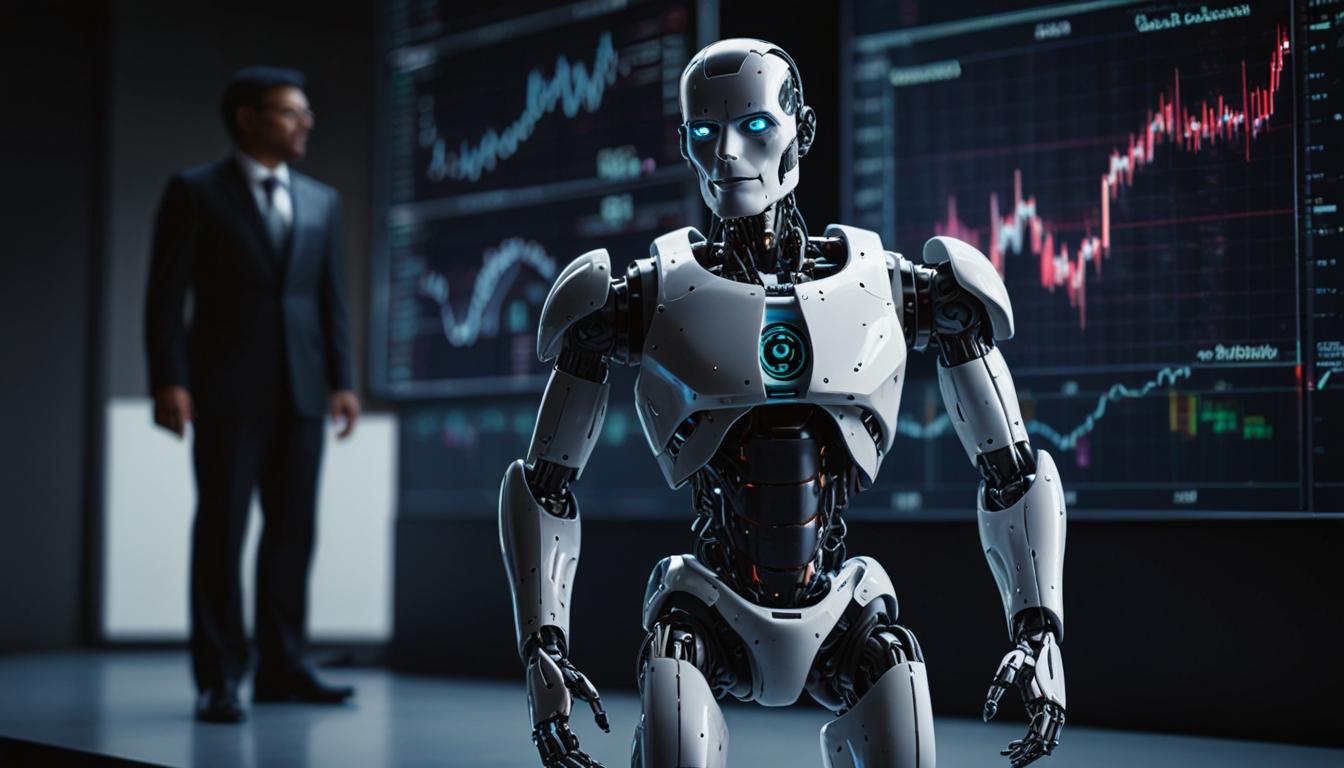
AI in Finance: NYU Stern Professor's Encounter With the Damodaran Bot
New York, NY — In a world increasingly shaped by artificial intelligence, a new and intriguing development has emerged from the Stern School of Business at New York University. Dr. Aswath Damodaran, a renowned professor of finance, confronts a creation that synthesizes his lifetime of work into a digital form—an AI known as the Damodaran Bot.
The inception of the Damodaran Bot is the handiwork of Vasant Dhar, a colleague of Damodaran at the Stern School. Dhar, who specialises in machine learning and data science, has engineered an artificial intelligence that has consumed every piece of content produced by Damodaran. This includes not only written works and public valuations but extends to webcasts and other public teachings. The bot is designed to perform company valuations, a task at which Damodaran excels, and its performance is now set to be measured against the best students in Damodaran’s classes.
While the results of this AI experiment are still pending, it has elicited mixed feelings in Damodaran. On one hand, if the AI performs as well or even surpasses human students, it could suggest a disconcerting obsolescence for professionals in his field. Conversely, if the bot fails to deliver, it might reflect his shortcomings as an educator.
This development exemplifies a broader trend of AI integration, driven by the convergence of cheaper computational capabilities and an abundance of both quantitative and qualitative data. According to Damodaran, AI excels particularly in three areas: mechanical or formulaic tasks, rule-based disciplines, and problems with objective answers. However, tasks requiring intuition, principle-based analysis, or subjective judgements remain challenging for artificial intelligence.
To navigate the growing presence of AI in professional fields, Damodaran offers several strategies. Firstly, he advocates for generalists who can see the larger picture across disciplines, arguing that AI will empower such individuals. He stresses the importance of valuations that go beyond financial modelling and draw on enriched business narratives infused with qualitative data. AI, he contends, will find it tougher to replicate the depth of such human-generated stories.
Secondly, Damodaran warns against over-reliance on quick information sources like Google Search. He suggests that the ability to reason out answers independently is a critical skill, one at risk of erosion in the age of instant information.
Thirdly, creativity remains a uniquely human attribute. The capability to link ostensibly unrelated facts and experience spontaneous 'Aha' moments is something AI finds hard to mimic. Damodaran posits that free thinking and creativity are valuable defences against the encroachment of AI.
Damodaran also addresses potential strategies to safeguard one's professional relevance. One approach is maintaining secrecy about one's work processes, although this has its limitations due to the potential of reverse engineering by AI. Another is seeking legal or regulatory protections against AI encroachments. He anticipates that certain sectors, such as appraisals, may see human expertise enshrined legally or through regulatory frameworks. Finally, he suggests building strategic defences or ‘moats’ around one’s role, requiring an honest assessment of what unique skills and value one brings to their job.
Confronted with the tangible presence of an AI built on his life's work, Damodaran urges a proactive stance towards these technological advancements. While there are those who might deem the AI threat exaggerated, he believes that considering the enormity of potential consequences, it is prudent to prepare as if the threat is real. In doing so, professionals not only safeguard their careers against AI disruption but also become more adept in their fields.
Dr. Damodaran’s experience and insights underscore the evolving landscape of AI integration into traditional professional fields and the necessity for adaptive strategies ensuring continued human relevance.
Source: Noah Wire Services