AI-Powered Stroke Care Pushes Medical Boundaries: A Patient's Journey at Health First
Brevard County, Florida – Date: September 29, 2024
Wayne Trzeciak was having a normal afternoon when he suddenly experienced a debilitating headache on the left side of his head. Almost immediately, the right side of his body became immobile, causing him to collapse from his office chair. Wayne recognised the signs; his mother had suffered a stroke at the same age. Despite the emergent situation, Wayne’s wife, Gail, made the crucial decision to call 9-1-1 instead of attempting to drive him to the hospital.
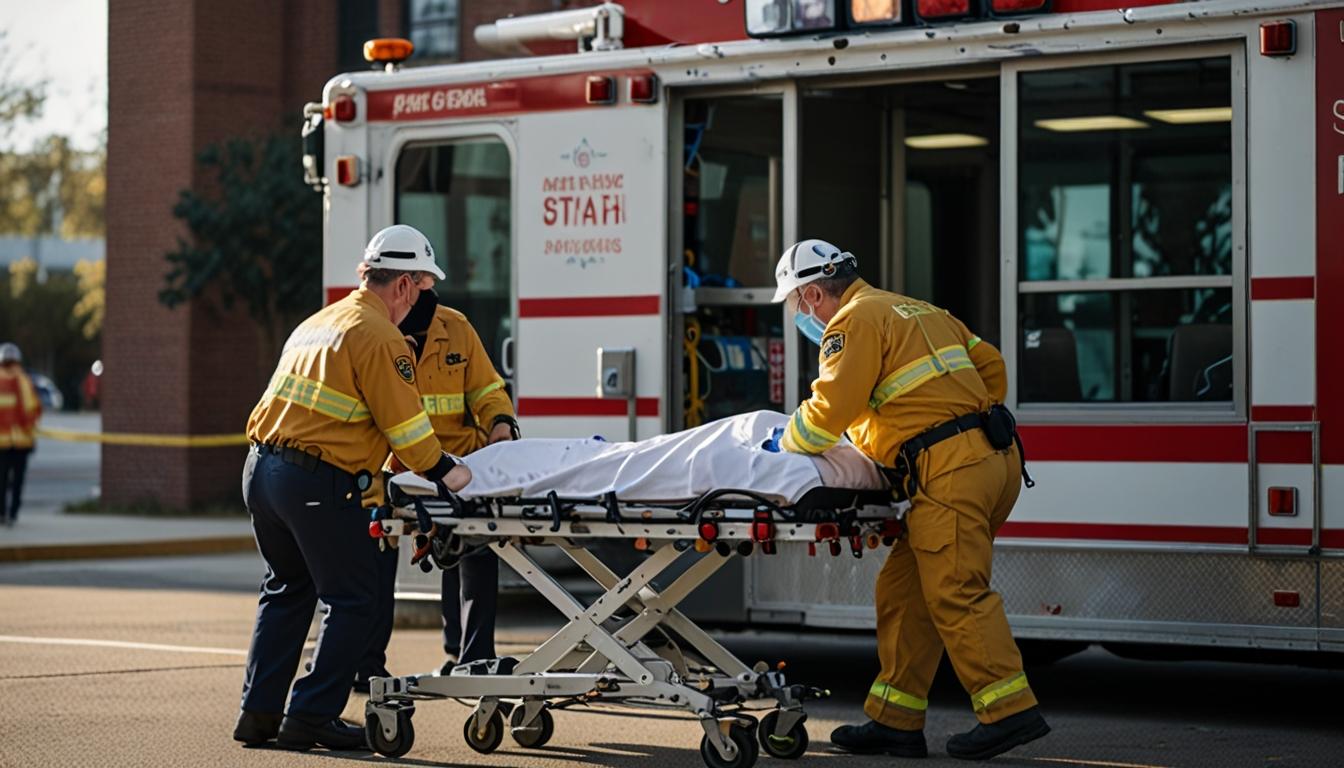
Emergency responders arrived swiftly, taking Wayne to Health First’s Viera Hospital. This hospital has been at the forefront of stroke treatment innovation since it integrated artificial intelligence (AI) technology two years ago. The AI software, Viz.ai, enhances the speed at which hospital computer tomography (CT) scans are evaluated by quickly identifying stroke-causing clots. Key images are then sent directly to the mobile devices of stroke team members, expediting the entire process.
Furthermore, Health First has incorporated Telespecialists, a service that connects emergency and in-hospital physicians with on-call neurologists who also review brain scans. This service helps initiate vital stroke treatments immediately. As Dr. Jill Miller, a Neurologist at Health First, explains, “Telespecialists provide rapid virtual evaluation of stroke patients and accelerate the emergent treatment decisions we need to make to gain outcomes like Wayne’s.”
Time is a critical factor in stroke treatment. The quicker a stroke is identified and treated, the better the outcome. Health First’s average time from patient entry to administering thrombolytic therapy, often referred to as "door-to-needle" time, is an impressive 45 minutes. In the case of Wayne Trzeciak, he received Tenecteplase, a potent thrombolytic drug, just 28 minutes after his ambulance arrived at the hospital.
“It all starts with 9-1-1,” his wife, Gail, reflected on their experience. “They gave me the clot buster, and everything came back to life,” said Wayne, now fully recovered and feeling as he did before the stroke.
The hospital has designed a Stroke Alert system to further streamline the process. When a stroke is suspected, the entire stroke team is notified simultaneously. This ensures that all necessary medical personnel and equipment are mobilized at once, reducing treatment time. Dr. Miller detailed the coordinated effort: “The stroke-trained nurses are bedside assessing the patient. The phlebotomist is there collecting blood. The radiology technicians are getting the patient in the scanner – the radiologist is alerted to review the scan immediately, and the tele-neurologist is on-screen evaluating all of it and assisting in the fastest diagnosis and treatment.”
Wayne and Gail moved to Viera over a decade ago and returned upon retirement. Their experience with Health First has been overwhelmingly positive. Wayne expressed gratitude for the quick, effective care he received, which allowed him to return to his usual daily activities, including cycling up to 10 miles with his wife.
Health First employs the mnemonic B.E.F.A.S.T., teaching the community to recognise stroke symptoms:
- Balance: Is there unsteadiness?
- Eyes: Is there vision loss?
- Face: Does the smile look uneven?
- Arm: Is one arm weak?
- Speech: Is speech slurred?
- Time: Time to call 9-1-1.
Whitney Adkins, the Neuroscience Program Nurse Manager at Health First, underscored the importance of promptly recognising and acting on these signs, especially balance and vision issues, which are frequently misunderstood. Prompt EMS involvement can ensure immediate and coordinated care upon arrival at the nearest stroke centre.
As Wayne reflects on his experience, he urges individuals to manage their health proactively, adhere to prescribed medical treatments, and make those crucial 9-1-1 calls in emergency situations.
For more information on stroke awareness and to assess your risk, Health First encourages visiting their website at HF.org/stroke.
Source: Noah Wire Services