AI Revolution in Social Work: An Emerging Tool with Broad Implications
Hundreds of social workers in England have recently begun leveraging a new artificial intelligence (AI) system that aims to significantly streamline their documentation and case management processes. The AI tool, known as Magic Notes, has been implemented in several councils, including Swindon, Barnet, and Kingston, making them among the first to adopt this technology. This system, developed by the company Beam, seeks to record conversations, draft letters to healthcare providers, and propose actionable steps that human social workers might not have considered independently.
The introduction of Magic Notes intends to reduce the administrative burden on social workers by cutting down the time spent on note-taking and report writing. According to Beam, this could potentially result in annual savings of up to £2 billion. The company's workforce comprises former employees from prominent tech firms like Meta and Microsoft, reflecting a robust technological foundation.
However, the implementation of this AI tool has sparked debates regarding the extent to which social workers might rely on its suggestions. Concerns are being raised about the possibility of social workers heavily depending on AI-generated recommendations without the necessary critical scrutiny. The British Association of Social Workers has publicly supported AI tools that allow more time for face-to-face interaction but emphasised that AI should never supplant the core of social work practice—a relationship-based approach and human decision-making.
Feedback from pilot councils underscores mixed reactions. For instance, the London Borough of Camden highlighted a scenario where the AI tool suggested an action—technology training for a client—based on a subtle cue that was not picked up by the human role players involved. This instance illustrates the potential for AI to identify useful actions that might otherwise be missed but also the need for rigorous validation of the AI’s outputs before they inform significant decisions.
Seb Barker, Beam's chief operating officer, asserted that the AI-generated summaries and actions are subject to human approval, with no evidence suggesting that social workers would disengage during client meetings in favour of letting the AI draw up action plans solely. Despite reassurances, the tool's efficacy and ethical implications remain under review.
Swindon Borough Council reported positive outcomes from using the technology, particularly in aiding social workers with dyslexia, describing the system as transformative. Likewise, Barnet’s council stated that more than 300 adult social care workers found the tool beneficial for enhancing engagement with residents and noted no detected bias in the AI suggestions.
Despite these optimistic reports, Maris Stratulis, the national director of the British Association of Social Workers England, has called for stringent regulation and ethical guidelines for AI use in social services. The government’s National Audit Office noted that diverse AI systems are being piloted or considered for future use across 70% of UK government departments. However, barriers such as outdated IT infrastructure and data quality issues could hinder broader adoption.
Magic Notes compiles and processes highly sensitive information, including health data, personal identifiers, and other private details. Its algorithmic backbone, designed by Deepgram and OpenAI, ensures that data remains within UK servers, with assurances that the information isn't used to train other AI systems.
As social workers and councils navigate this evolving landscape, the integration of AI in social services will likely continue to invite scrutiny, requiring balanced consideration and ongoing evaluation.
Aviation's Bold Frontier: Innovating Aircraft Design to Tackle Emissions
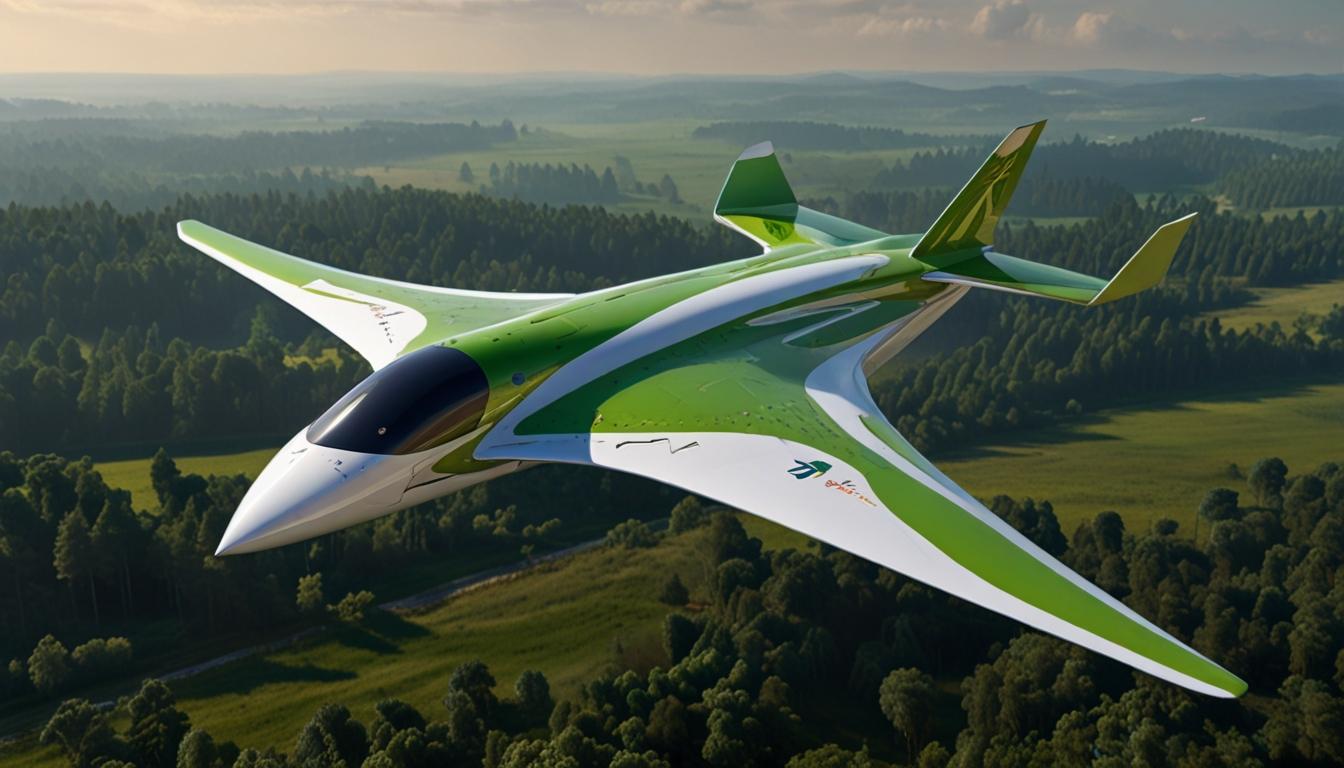
The traditional design of passenger aircraft—a fuselage with wings attached—has remained largely unchanged for decades. However, mounting environmental pressures and technological advancements are compelling manufacturers to reconsider this conventional layout. The future of aviation could see longer, thinner wings, exposed engine fans, and integrated wing-body designs in place of the standard "tube and wing" configurations.
The aviation sector, responsible for 2.5% of global emissions and 4% of the warming effects, is urgently seeking ways to reduce its carbon footprint. Solutions such as sustainable aviation fuel (SAF) have yet to scale to industrial production, while battery and hydrogen technologies are not yet viable on a commercial scale. Consequently, manufacturers like Boeing and Airbus are focusing on enhancing fuel efficiency as an interim measure.
Boeing, still recovering from a crisis prompted by the 737 Max crashes, is at the forefront of these innovations. The company has partnered with NASA to develop the "transonic truss-braced wing," which features a longer, thinner wing supported by a truss. This design promises a 9% reduction in fuel burn, with aspirations to reach 30% through additional technological advancements. A demonstrator for this innovative design is expected to take flight by 2028, targeting operational deployment between 2030 and 2035.
Airbus is similarly advancing wing technology, pushing for longer, more slender wings to reduce drag and improve lift. There is also exploration into more radical designs, such as blended wing-body configurations, which merge the aircraft's wings with its fuselage to enhance fuel efficiency. JetZero, a startup, claims its blended wing concept could cut fuel burn by 50%, while Delft University in the Netherlands has successfully tested a scale model of a V-shaped aircraft, signifying another potential revolution in aviation design.
Engine innovation continues to be crucial for environmental gains. CFM International, a joint venture between General Electric and Safran, is developing an open fan engine design that foregoes the nacelle to improve propulsive efficiency and reduce carbon emissions by up to 20%. This design must still convince regulators and passengers of its safety in cases of blade failure, a significant concern for earlier prototypes.
Additionally, continuous advancements are being made in smaller, incremental improvements to current aircraft. For example, split winglets—curved tips of wings designed to reduce drag—can cut fuel consumption by up to 2% on long flights. Airbus is even experimenting with technologies that mimic avian flight dynamics to optimise fuel burn during turbulent conditions.
These pioneering efforts in aircraft design signal a potential shift in the landscape of commercial aviation. If manufacturers like Boeing and Airbus diverge in their approaches, passenger perceptions of aircraft could change dramatically, prompting a more discerning attitude towards plane designs and their environmental impact.
As the aviation industry navigates these new frontiers, the coming decade could see some of the most transformative changes in aircraft design since the advent of the jet age.
Source: Noah Wire Services