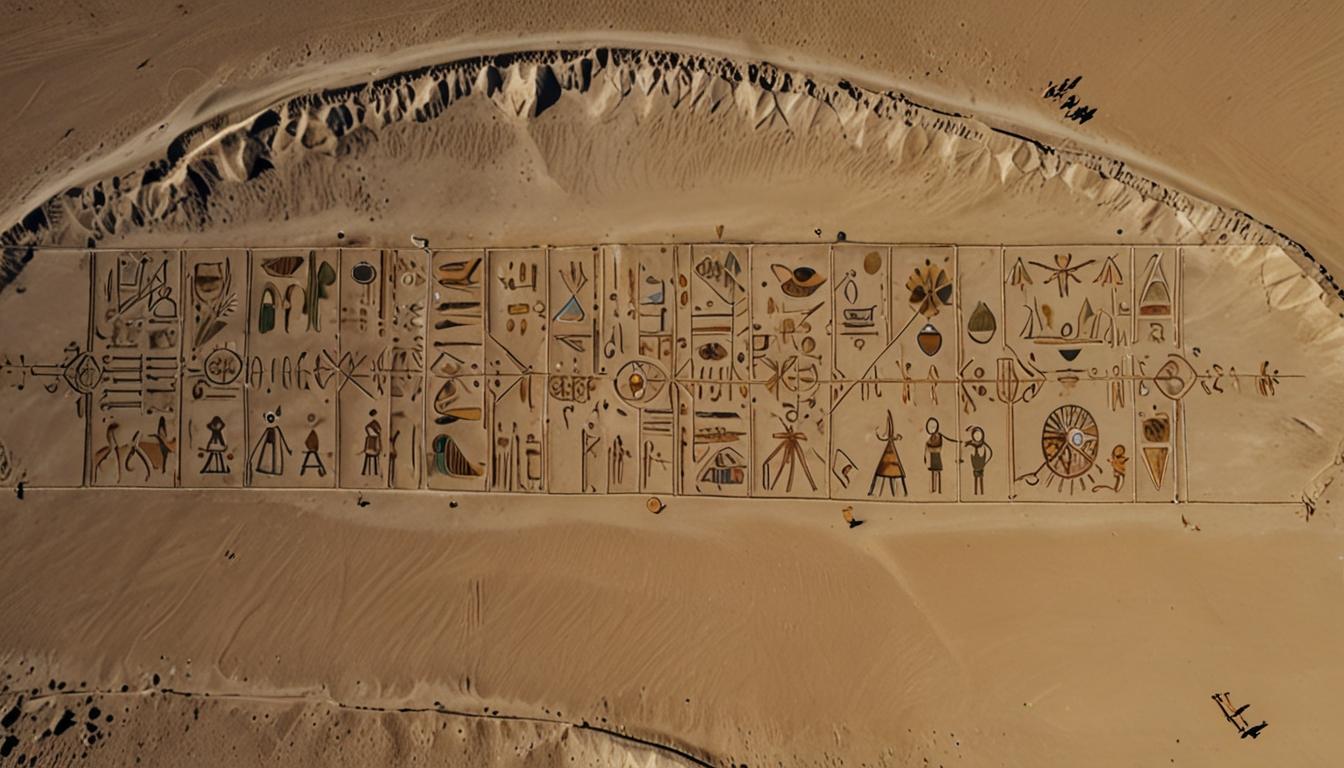
Archaeologists Supported by AI Discover 303 New Nazca Geoglyphs in Peru
Stone carvings that have puzzled experts for decades, the mysterious Nazca geoglyphs, have nearly doubled in number thanks to the application of artificial intelligence. A team of archaeologists, led by Professor Masato Sakai of Japan's Yamagata University, have unearthed 303 new giant symbols sprawled across Peru's Nazca Desert. Their findings were detailed in a recent study published in the "Proceedings of the National Academy of Sciences" (PNAS).
Comprised of various designs including birds, plants, spiders, human figures with headdresses, decapitated heads, and an orca wielding a knife, these newly discovered geoglyphs add to the array of mysterious artworks that have fascinated both researchers and the public for nearly a century.
The Role of AI in Unveiling Hidden Geoglyphs
The breakthrough was achieved by training an AI model, developed in collaboration with researchers from IBM's Thomas J. Watson Research Center in New York, on high-resolution images of 430 Nazca geoglyphs documented as of 2020. Traditionally, models like these require tens of thousands of images for training, posing a significant challenge for the researchers given their limited dataset.
Despite this challenge, the AI model identified over 47,000 potential geoglyph sites within the 629-square-kilometre Nazca Desert. Narrowing these suggestions, the team of researchers identified 1,309 high-potential candidate sites, from which they determined an accurate to promising candidate ratio of 1:36.
From September 2022 to February 2023, the team validated the AI model's predictions by conducting surveys on foot and using drones, confirming 303 new figurative geoglyphs. Of these new discoveries, 178 were directly suggested by the AI, with the remaining 125 found through additional fieldwork and analysis.
Decoding the Nazca Geoglyphs' Purpose
While the precise purpose behind the creation of the Nazca geoglyphs remains elusive, several theories have been posited over the years. Some scholars suggest these symbols formed a sacred space for pilgrimages. Other hypotheses propose they were linked to astronomy, irrigation, or served as paths for activities like running or dancing.
An interesting trend noted during the study is the distinction between the types and locations of geoglyphs. Large line-type geoglyphs, which are more easily visible from an aerial perspective, usually depict wildlife such as animals and plants. In contrast, the smaller relief-type geoglyphs found along ancient trails through the desert more frequently depict human figures, scenes of human sacrifice, and domesticated animals like llamas.
The network of paths identified near these symbols points to a strategic layout, suggesting the geoglyphs were viewed by small groups as they walked through the desert, perhaps en route to ritualistic gatherings or ceremonies.
Future Research and Potential Discoveries
Looking forward, the researchers believe there is much more to discover. They have yet to survey 968 promising candidate sites identified by the AI model, potentially revealing at least 248 additional figurative geoglyphs.
Jambajantsan from the Max Planck Institute of Geoanthropology applauded the significance of these findings, recognizing the use of AI as a revolutionary tool in archaeological discoveries. Although AI can significantly reduce the manual labour involved in such expeditions, human expertise remains indispensable for ground verification and detailed field analyses.
The Yamagata University-led team plans to continue their research efforts, aiming to unravel the meaning and purpose of the enigmatic geoglyphs. Their hypothesis suggests the symbols' meanings may be derived from their combinations and contextual placements within the desert landscape.
As these investigations progress, they promise to shed more light on the cultural and historical significance of the geoglyphs, potentially unveiling more secrets of the ancient Nazca civilization.
Source: Noah Wire Services