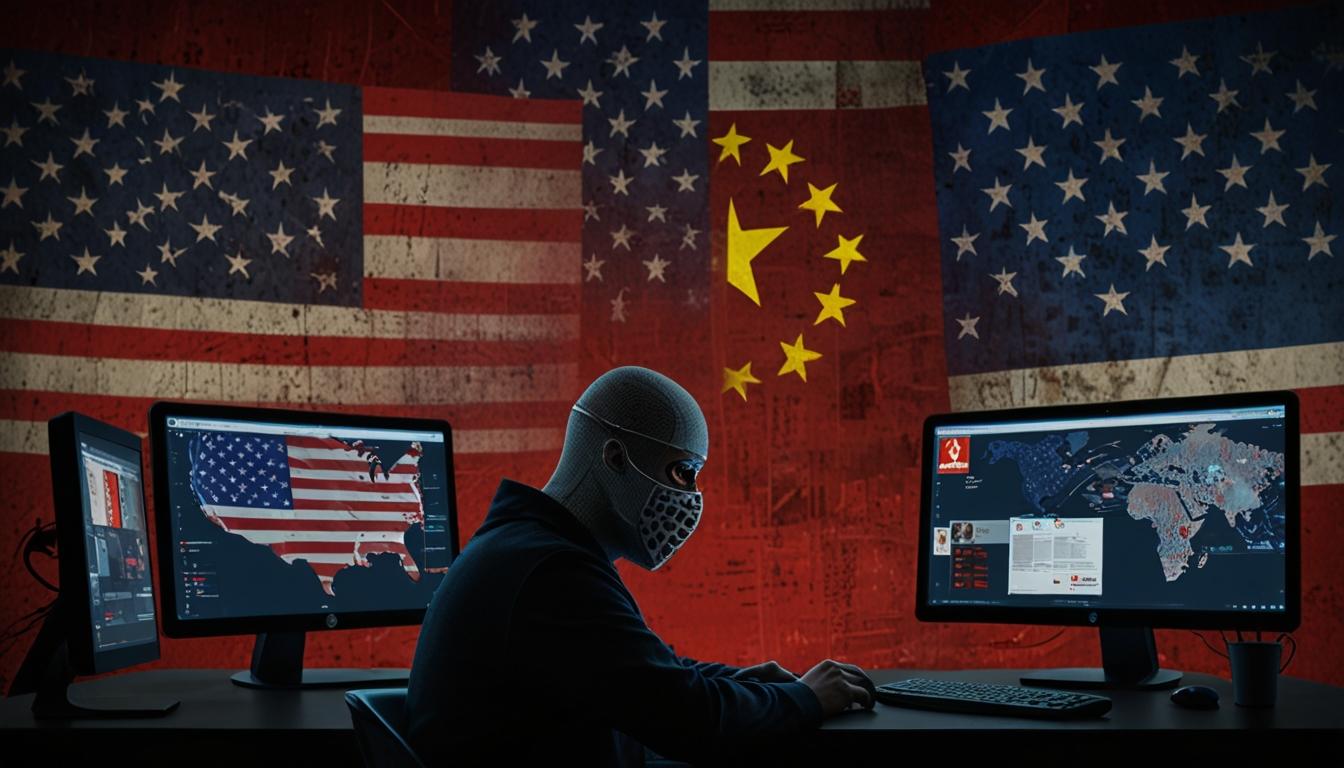
China's Influence in the South Pacific: U.S. and Chinese Disinformation Battle
In 2022, veteran U.S. diplomat Kurt Campbell found himself in the Solomon Islands, on a mission to counter Beijing’s growing influence in the South Pacific. During his visit, he encountered a stark demonstration of how far China would go to spread its message. One morning, he discovered a lengthy article in the local press accusing the U.S. of running chemical and biological labs in Ukraine—a claim vehemently denied by Washington as a falsehood propagated by Russian disinformation and amplified by China’s extensive overseas propaganda machinery.
Two years on, this claim still reverberates across the internet, shedding light on China’s expansive efforts to shape global perceptions. This sophisticated and financially substantial disinformation campaign, aided increasingly by artificial intelligence, has drawn the attention of Washington’s intelligence analysts and policymakers. These experts are committed to countering any actions that might influence the upcoming November election or undermine American interests.
A fundamental tactic employed by China involves networks of websites masquerading as legitimate news outlets, pushing pro-China content that often aligns with Beijing’s official statements. Shannon Van Sant, an adviser to the Committee for Freedom in Hong Kong Foundation, investigated a network of several sites pretending to be news organisations. One site even imitated The New York Times, adopting a similar design to foster credibility while disseminating strongly pro-Chinese messages. Upon examining the site’s “reporters,” Van Sant discovered they didn’t correspond to any known journalists, and their images exhibited signs of AI generation.
"Manipulation of the media is ultimately a manipulation of readers and the audience, and this is damaging to democracy and society," Van Sant stated.
Chinese diplomatic officials, however, dismiss these allegations. Liu Pengyu, a spokesman for the Chinese Embassy in the U.S., refuted the claims, labelling them as "malicious speculations against China."
Apart from its state media, Beijing utilizes foreign entities—whether real or fabricated—to relay its narratives, bolstering the credibility of messages that favour the ruling Communist Party. Xiao Qiang, a research scientist at the School of Information at the University of California, Berkeley, noted that Beijing’s approach is extensive and obscures its ties to the government. Yet, the unmistakably pro-Beijing messages from various actors, whether purported American journalists or international influencers, are telling.
A cybersecurity firm, Logically, identified 1,200 websites propagating content from Russian or Chinese state media. These sites, often mimicking credible news organisations or defunct newspapers, target specific audience segments. Analysis showed that about 20% of articles concerning the U.S. election could be traced back to Russian or Chinese state media.
“There’s a decent likelihood that these articles could influence U.S. audiences without them even knowing where it comes from,” stated Alex Nelson, Logically’s senior manager for strategy and analysis.
Despite the challenges, U.S. officials are taking steps to address the situation. The House of Representatives recently passed a bill proposing an annual budget of $325 million through 2027 to counter Chinese disinformation campaigns, yet this measure still awaits Senate approval. Rep. Gregory Meeks of New York emphasised the need for adequate funding in this global competition for influence, declaring, “If you want to win it, then you cannot do it on a middle-power budget.”
Chinese President Xi Jinping has consistently urged the advancement of Chinese narratives to match the nation’s global stature. Beijing has heavily invested in state media, including the Xinhua news agency and China Central Television, to effectively communicate its message worldwide. At local levels, "international communication centers" have been established to expand Beijing’s overseas presence through various media platforms.
China’s extensive media outreach is intertwined with the global race for economic dominance in sectors such as electric vehicles, computer chips, artificial intelligence, and quantum computing. Jaret Riddick from Georgetown University’s Center for Security and Emerging Technology highlighted that leadership in emerging technologies grants a significant competitive advantage.
Beijing’s disinformation efforts sometimes involve fake personas. A State Department report from 2023 detailed the transformation of a fictional writer named Yi Fan, from a Chinese foreign ministry analyst to an independent commentator. Despite the evolving details, his central message—promoting China’s close ties with Africa and countering Western narratives—remained consistent. Similarly, the supposed Swiss virologist Wilson Edwards, quoted by Chinese media critiquing the U.S. COVID-19 response, was discovered to be a fabrication.
“If you exist, we would like to meet you!” quipped the Swiss Embassy in Beijing on social media, underscoring the fictional nature of such personas.
As these developments unfold, they underline the complexity and reach of China’s disinformation campaigns, casting a spotlight on the ongoing struggle for global influence between major powers.
Source: Noah Wire Services