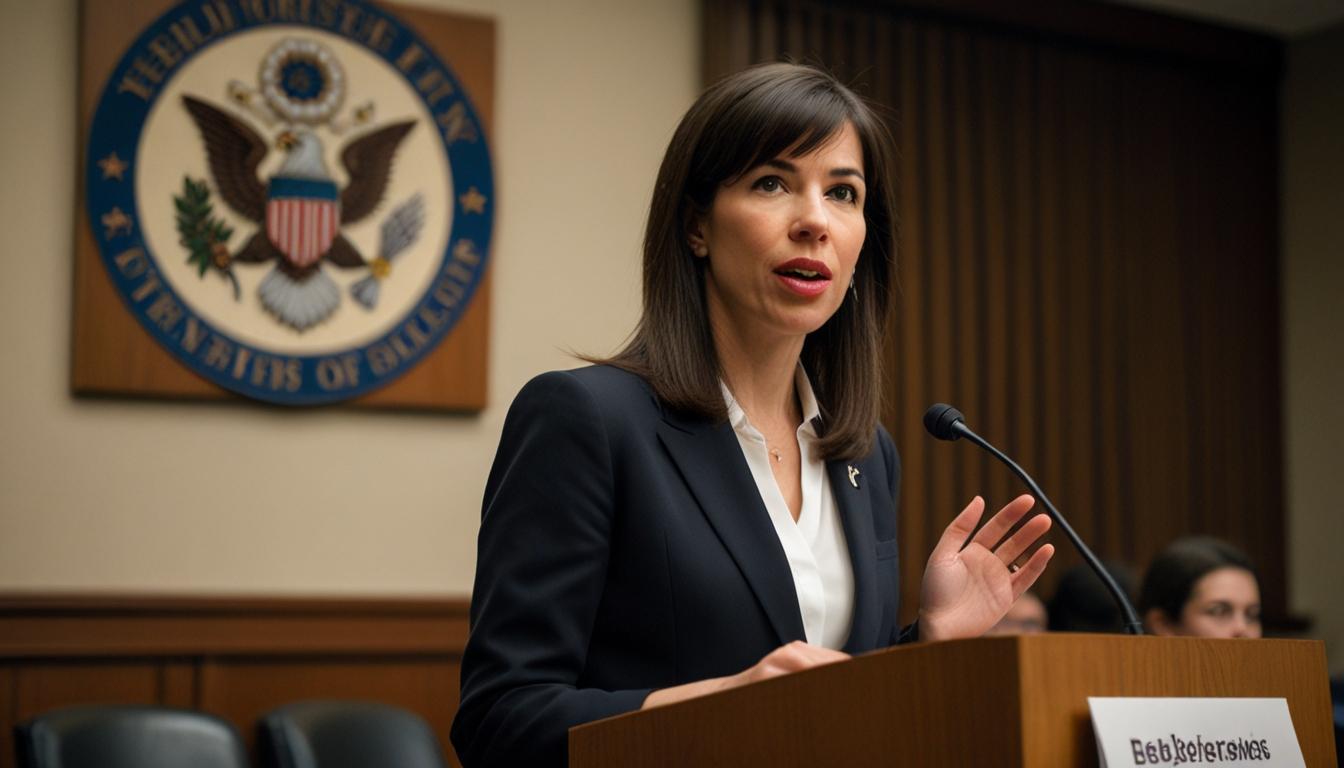
FCC Chairwoman Addresses AI in Political Advertising: Public Deserves Authentic Voices and Images
Berkeley, California — 7 September 2023
On Friday, the Chairwoman of the Federal Communications Commission (FCC), Jessica Rosenworcel, addressed the annual Berkeley Law AI Institute, held at the University of California, Berkeley. In her keynote address, she tackled the increasingly important and complex issue of artificial intelligence (AI) in the media landscape, with a particular focus on its role in political advertising and communications technology.
The Berkeley Law AI Institute, which has been at the forefront of discussions on AI advancements, legal practices, and regulatory frameworks, provided a platform for Rosenworcel to discuss the FCC's initiatives and proposed regulations concerning AI.
Key among the legislative topics Rosenworcel delved into were the FCC’s proposals concerning the disclosure rules for AI use in political ads. This comes ahead of the upcoming elections, with increasing concerns about the potential for AI to spread misinformation. Citing a recent Pew survey, Rosenworcel highlighted that the American public is overwhelmingly worried about the misuse of AI-generated content in campaigns.
"The bottom line is that the public deserves to know if the voices and images in political commercials are authentic," Rosenworcel stated. She emphasised the necessity of transparency, noting that the FCC's approach is not to restrict speech or technological advancements but rather to ensure that voters, viewers, and listeners are informed about the authenticity of the content they are consuming.
The FCC Chairwoman also shared an incident that underscored the urgency of this matter. Earlier in January, voters in New Hampshire received robocalls featuring a voice that mimicked President Joe Biden, urging them not to vote. This use of voice cloning technology was a clear instance of AI being utilised to misinform and potentially disenfranchise voters.
In response, the FCC took swift action, affirming that AI-generated robocalls violate the Telephone Consumer Protection Act. The agency worked with state attorneys general to trace the source and imposed significant fines on the involved parties. Rosenworcel's announcement at the conference included an update that Steve Kramer, the individual behind the New Hampshire robocall incident, is facing a $6,000,000 fine and prosecution for voter suppression.
The Chairwoman stated, "With AI, the place to start is transparency." The FCC has proposed rulemaking to address AI use in robocalls and robotexts, requiring clear disclosures when such technology is used. A similar approach has been proposed for political advertisements, where broadcasters, cable, and satellite operators must disclose if AI was used in creating campaign content.
The proposed FCC rules define AI-generated content as any audio, visual, or textual material produced using computational technology that depicts individuals or events. This definition aims to capture the breadth of AI applications, ensuring comprehensive disclosure.
In concluding her address, Rosenworcel emphasised that the FCC's initiatives are part of a broader effort involving federal, state, and local governments, as well as private actors. She cited popular historian Yuval Noah Harari’s work, which underscores the importance of transparency in AI to preserve democratic principles.
"Let's start with disclosure; let's start with transparency. Let's give every consumer, citizen, viewer, and listener the facts they need to know to make their own decisions," she concluded.
Rosenworcel’s speech set the tone for continued dialogue and action in regulating AI in media, promising a commitment to transparency to safeguard public trust and democratic integrity as AI technology continues to evolve.
Source: Noah Wire Services