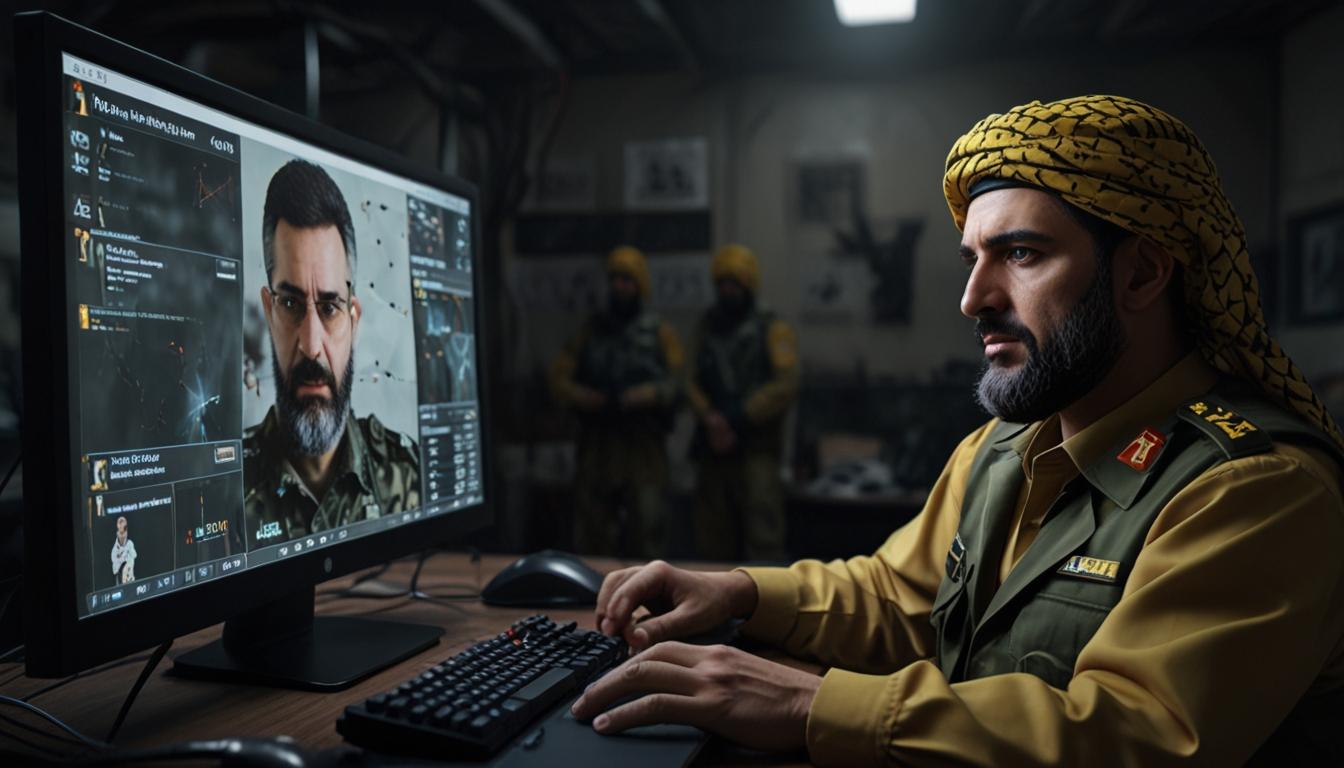
Hezbollah Appoints AI-Generated Leader Amidst Growing Conflict with Israel
Beirut, Lebanon - In an unprecedented turn of events, Hezbollah has announced the appointment of an AI-generated persona to lead the group, following the assassination of its recent leaders by Israeli forces. The controversial decision aims to circumvent the immediate threats posed to physical leaders by Israeli military actions.
The announcement comes in the wake of heightened tensions and recent high-profile assassinations. Just hours after Hassan Nasrallah, the long-standing leader of Hezbollah, was killed, his successor Hassan Khalil Yasin met a similar fate. These swift, successive eliminations have created a palpable sense of vulnerability and reluctance within the ranks of Hezbollah to assume the leadership role.
In a somewhat unorthodox approach to solving this leadership vacuum, Hezbollah's HR department initially put out a vacancy notice for the position of Chief Executive Officer. This call for applications included a pointed disclaimer noting the tenure was "on Israel's mercy" and the compensation package tongue-in-cheek listed as "72 Virgins," a reference to martyrdom in jihadist beliefs. Unsurprisingly, the ad failed to attract any willing candidates.
As a result, Hezbollah turned to technology. Senior members of the group organised an internal vote, stipulating that only those members who, quite literally, "still had their balls" could participate – a phrase indicating members who had not been fear-castrated by the recent Israeli offensives. Notably, women were excluded from this vote, in line with the group's cultural norms, which do not afford voting rights to women.
The group's rationale was simple, albeit unconventional: if there are AI influencers, AI doctors, and even AI CEOs, why not an AI-generated leader for a militant group? The decision reflects a blend of innovation and desperation in the face of a relentless and technologically advanced adversary.
The senior Hezbollah member who spoke on the condition of anonymity illustrated the group's point. "AI leadership provides a unique advantage. We're now able to position a leader that cannot be physically harmed or captured by adversaries," the member explained.
Simultaneously, Israel, known for its advanced technological prowess, is reportedly countering by developing AI-based soldiers designed to neutralise the AI Hezbollah commander, aiming for what some have speculated would be a "hat-trick" in eliminating Hezbollah chiefs, albeit of an unconventional kind.
The situation underscores the rapidly evolving nature of modern warfare, where traditional militant strategies intersect with cutting-edge technology, resulting in unprecedented scenarios that challenge the norms of both combat and leadership.
As the world watches these developments unfold, the implications for future conflicts and the role of artificial intelligence in warfare continue to evolve, reshaping the landscape of international security and militant tactics.
Source: Noah Wire Services