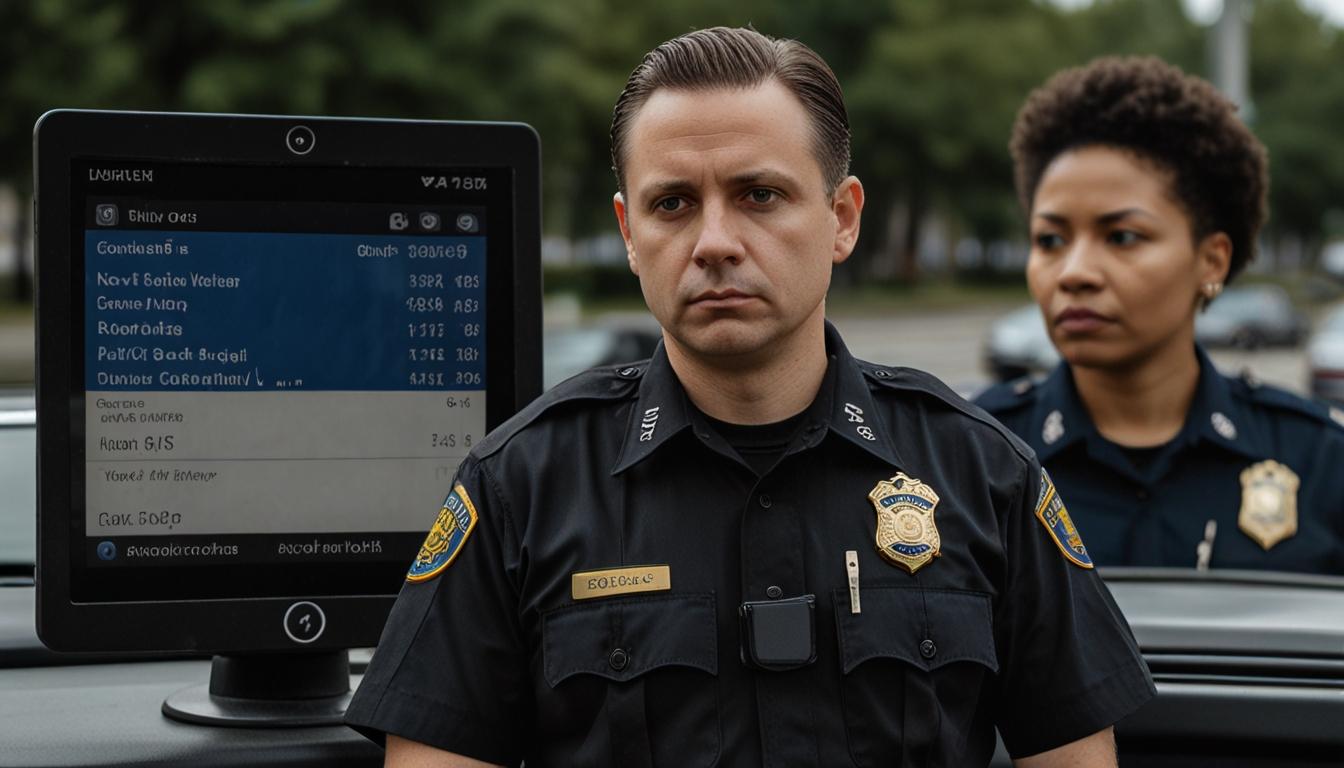
Maine Police Departments Test AI-Driven Report-Writing Technology
Portland, Maine – Police agencies in Maine are starting to explore artificial intelligence (AI) as a means to streamline their operations, promising to save significant time on paperwork, thus allowing more time for active policing. However, the move has sparked debates about its actual utility and potential repercussions on the criminal justice system.
This month, Lt. James Estabrook from the Cumberland County Sheriff’s Office demonstrated the AI tool in Portland. During a simulated traffic stop, his body camera footage was uploaded to the cloud where "Draft One," an AI software by Axon, processed it to generate a preliminary police report within seconds.
This innovation, powered by OpenAI’s GPT-4 Turbo, interprets both text and audio to create these AI-authored drafts. Cumberland deputies and the Portland Police Department participated in a summer trial of the software. While the Portland department has extended its trial period, it plans for full adoption upon securing the necessary funding. The cost is projected at $30.42 per officer monthly, amounting to nearly $35,000 annually for the sheriff’s office—a financial burden they currently cannot bear.
Despite positive feedback from officers who found the summaries accurate and succinct, no agency in Maine has taken the leap to fully implement the system, anticipating potential public backlash.
Technology Behind Draft One
Draft One leverages AI to generate reports based on footage and audio captured by Axon body cameras. The system prompts officers to add missing details, such as speed limits or observations about the driver, and provides a feature to edit and correct errors. The final report states it was AI-generated, and officers must validate its accuracy by signing off on it.
The software is just one part of Axon's comprehensive product line, which includes body and dashboard cameras, Tasers, drones, and other law enforcement tools. Portland Police Department is also eyeing Axon drones, at an additional cost of $40,000.
Legal and Ethical Concerns
The integration of AI in policing raises several concerns. Defense attorney Timothy Zerillo highlights the difference between a human assistant and an AI in understanding context and nuance. Law professor Andrew Ferguson points out that AI-generated reports may lack subtlety and could be depersonalized or biased, as AI lacks cultural understanding and the nuanced interpretation of human officers.
Body cameras themselves, often hailed for their objectivity, can fail to capture an officer's actions fully. Moreover, because the technology relies heavily on audio, officers are encouraged to narrate, which could introduce bias into the AI-generated reports.
Jay Stanley from the American Civil Liberties Union warns that AI’s programmed instructions might still reflect human biases, thereby amplifying potential injustices. Axon claims their internal studies show Draft One to be unbiased, yet they have not disclosed the specific methodology behind this calibration.
Efficacy and Efficiency
The primary question is whether Draft One genuinely saves time. Lt. Estabrook reported that the software reduces report-writing time from an hour to 10-15 minutes. Similar success was claimed by Portland police, who halved their report-writing time. However, a study by Ian Adams from the University of South Carolina found no significant time savings, suggesting the need for more rigorous evaluation.
While some departments report substantial time reduction, Adams cautions against assuming success based solely on self-reports, stressing the importance of experimental data especially when significant public funds are involved.
Judicial Implications
Legal experts are also questioning how AI-generated reports will stand up in court. Cumberland County District Attorney Jacqueline Sartoris expressed initial concerns but acknowledged potential benefits after discussions with local law enforcement. Currently, these AI-generated reports are primarily used for minor offenses and not in high-profile criminal cases.
Law professor Ferguson suggests transparency, such as providing audit trails showing AI-generated parts of reports, to help judges and lawyers assess the reliability of these documents in legal proceedings.
Conclusion
As the dialogue around AI in policing continues, Maine’s law enforcement agencies navigate a complex landscape of technological promises and legal, ethical concerns. The future impact of AI on policing will require ongoing scrutiny from all stakeholders, including policymakers, legal experts, and the public, to ensure it meets the hoped-for benefits without compromising justice.
Source: Noah Wire Services