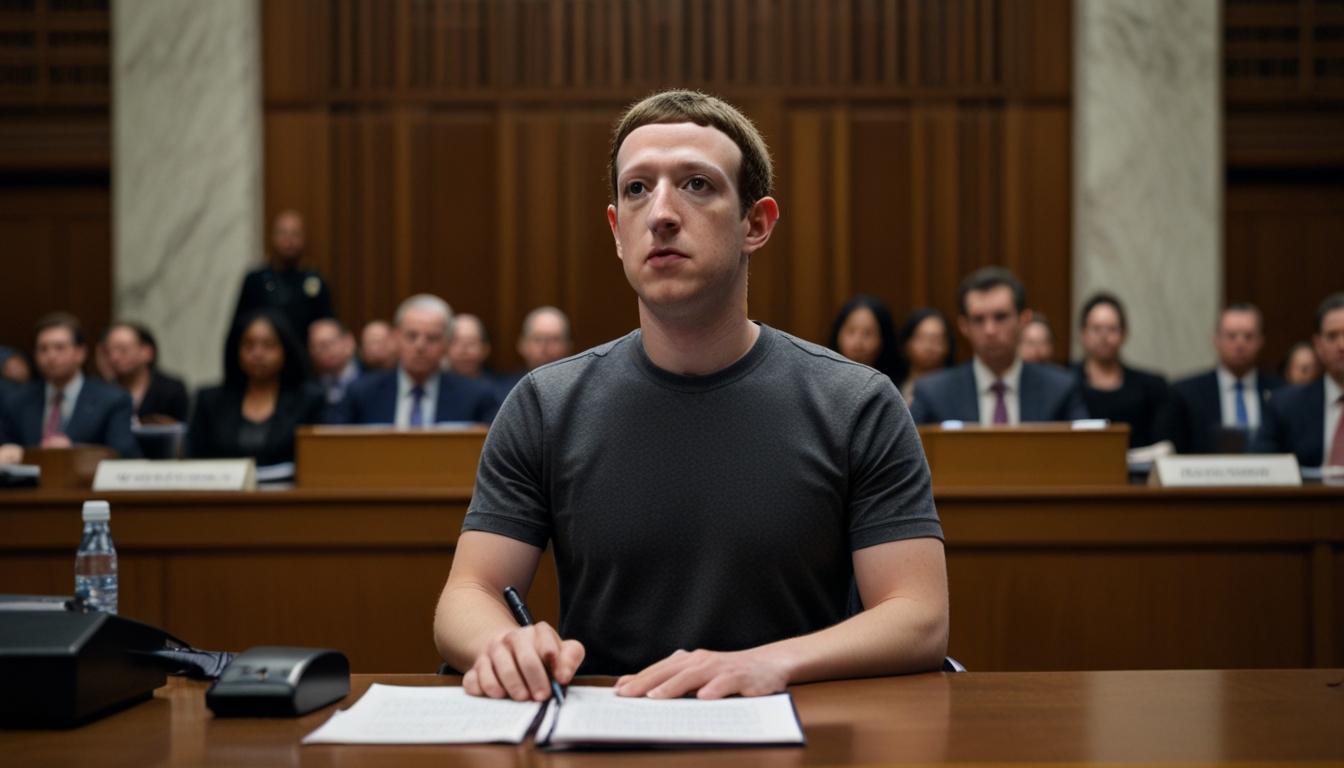
Mark Zuckerberg to Face Deposition in Authors' Lawsuit Against Meta
San Francisco, CA — Meta CEO Mark Zuckerberg is set to be deposed in relation to a class-action lawsuit launched by a group of authors, including comedian Sarah Silverman, who accuse the tech giant of copyright infringement for the purposes of training its artificial intelligence (AI) technology.
The decision to allow Zuckerberg's deposition was handed down by U.S. District Judge Thomas Hixson on Tuesday. Judge Hixson rejected Meta's attempt to prevent the deposition, citing substantial evidence that links Zuckerberg as the "principal decision maker" in the company’s AI operations.
Meta's legal team had argued that Zuckerberg did not possess unique knowledge about the company's AI endeavours and asserted that any necessary information could be derived from depositions of other employees. However, Hixson's ruling highlighted the plaintiffs' submission of evidence demonstrating Zuckerberg’s hands-on involvement and direct oversight of Meta’s AI initiatives.
The lawsuit, filed last year in a federal court in California, alleges that Meta illegally downloaded digital copies of the authors' works to train its AI models without obtaining consent or offering compensation. Among the plaintiffs are not only Sarah Silverman but also esteemed writer Ta-Nehisi Coates and former Arkansas Governor Mike Huckabee.
Adding to the lawsuit’s gravitas, renowned attorney David Boies has recently come on board to represent Silverman and her co-plaintiffs. Boies has a distinguished legal career and is perhaps best known for representing Al Gore in the controversial 2000 United States presidential election legal battle against George W. Bush.
This case is part of a larger trend of similar legal actions against various AI developers, with connected lawsuits filed in San Francisco and New York. The defendants in these related cases include AI companies such as Anthropic, tech giant Microsoft, and OpenAI, the developers behind the widely known chatbot, ChatGPT.
As litigation continues, the focus shifts to the ethically nuanced and legally complex territory of AI development, intellectual property rights, and the obligations of technology companies in respecting and remunerating original content creators. The outcomes of these cases may set crucial precedents for the future interplay between AI technology and copyright law.
Source: Noah Wire Services