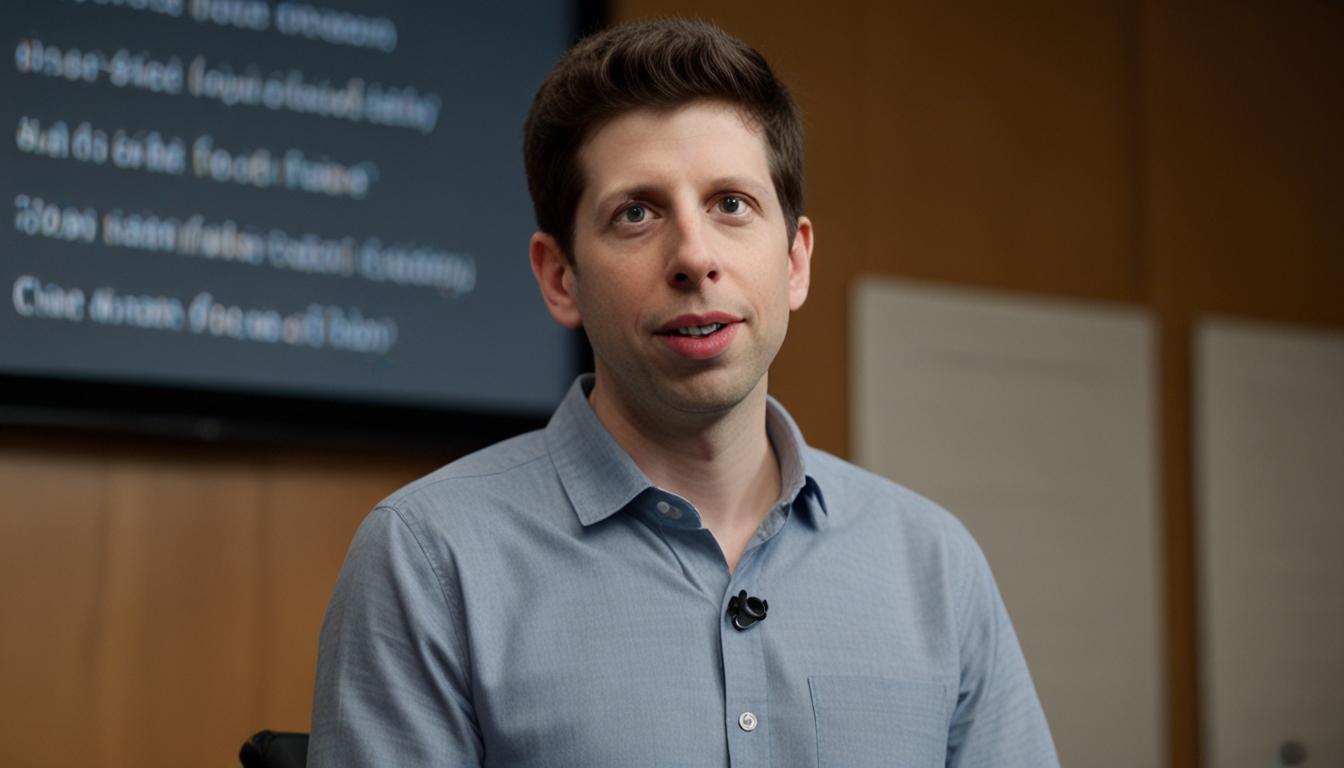
OpenAI CEO Encourages Learning AI Amidst Job Market Concerns
Artificial Intelligence (AI) continues to be at the forefront of discussions about the future of the job market. Two prominent figures in the tech world, Sam Altman and Vinod Khosla, have recently weighed in with differing perspectives on AI’s potential impact on employment.
Sam Altman, the CEO of OpenAI, has advocated for students to embrace AI technology to maintain their relevance in the evolving job landscape. In a recorded interview with Indeed CEO Chris Hyams, released last Thursday, Altman expressed confidence in the future job market despite potential changes due to AI. He drew parallels to his own experience with computer programming, which allowed him to adapt and stay valuable in a tech-driven world.
“I’m confident that there will be lots of jobs, and also that many of them will look somewhat different than the jobs of today, but we never seem to run out of stuff to do,” Altman stated. He emphasised that learning to use AI technology effectively can be beneficial, highlighting how computer programming has transformed various job sectors without completely eliminating the need for human workers.
Contrasting Altman’s optimism, Silicon Valley investor Vinod Khosla recently issued a cautionary note. Khosla suggested that AI could one day perform 80% of the duties within 80% of jobs, posing a significant threat to job security. He argued that unlike previous technological shifts, workers might find it hard to retrain and adapt to the advancements brought by AI.
Despite these concerns, evidence suggests a strong push towards embracing AI and technological skills. Indeed, a prominent job site, released a study identifying over 2,800 work skills that are “very unlikely” to be replaced by generative AI. Svenja Gudell, Indeed’s chief economist, noted that technological advancements do not necessarily equate to widespread job loss. She mentioned that while upskilling can be beneficial, it isn’t a foolproof strategy, and individuals must learn to leverage new tools effectively.
Gudell highlighted the current demand and increasing pay for individuals proficient in AI-related fields, such as machine learning and prompt engineering. “If you’re a prompt engineer — if you’re a machine learning engineer that can actually program some of this stuff — you’re getting a very healthy wage increase,” she said, underscoring the opportunity for those with the right skills.
Khosla, who co-founded Sun Microsystems and has invested in OpenAI, warned about the potential rise of robots, particularly bipedal ones, which could threaten many desk jobs in the near future. However, Gudell suggested that the immediate impact is more likely to be felt in roles requiring AI proficiency rather than complete automation.
In education, the appetite for tech skills remains strong. Edward Kim, vice president of education and training at Code Ninjas, reported consistent demand for the company’s software engineering classes for children aged five to fourteen in the US, Canada, and the UK. Kim noted that professional coders often use AI to generate starter code, yet their roles require much more beyond simple programming, making a complete AI takeover unlikely.
Code Ninjas has observed a significant improvement in children’s ability to learn new programming languages. What previously took 18 months now only takes six to twelve months, indicated by the students’ growing enthusiasm for tech knowledge. “It shows that the kids that are coming up have an increasing thirst for this type of knowledge,” Kim said.
Reflecting on his personal journey, Altman acknowledged that while technology like computer programming has caused some jobs to disappear, it has also enabled new opportunities and capabilities. His hopeful outlook contrasts with Khosla’s more cautious stance, painting a complex picture of AI’s role in the future job market.
Source: Noah Wire Services