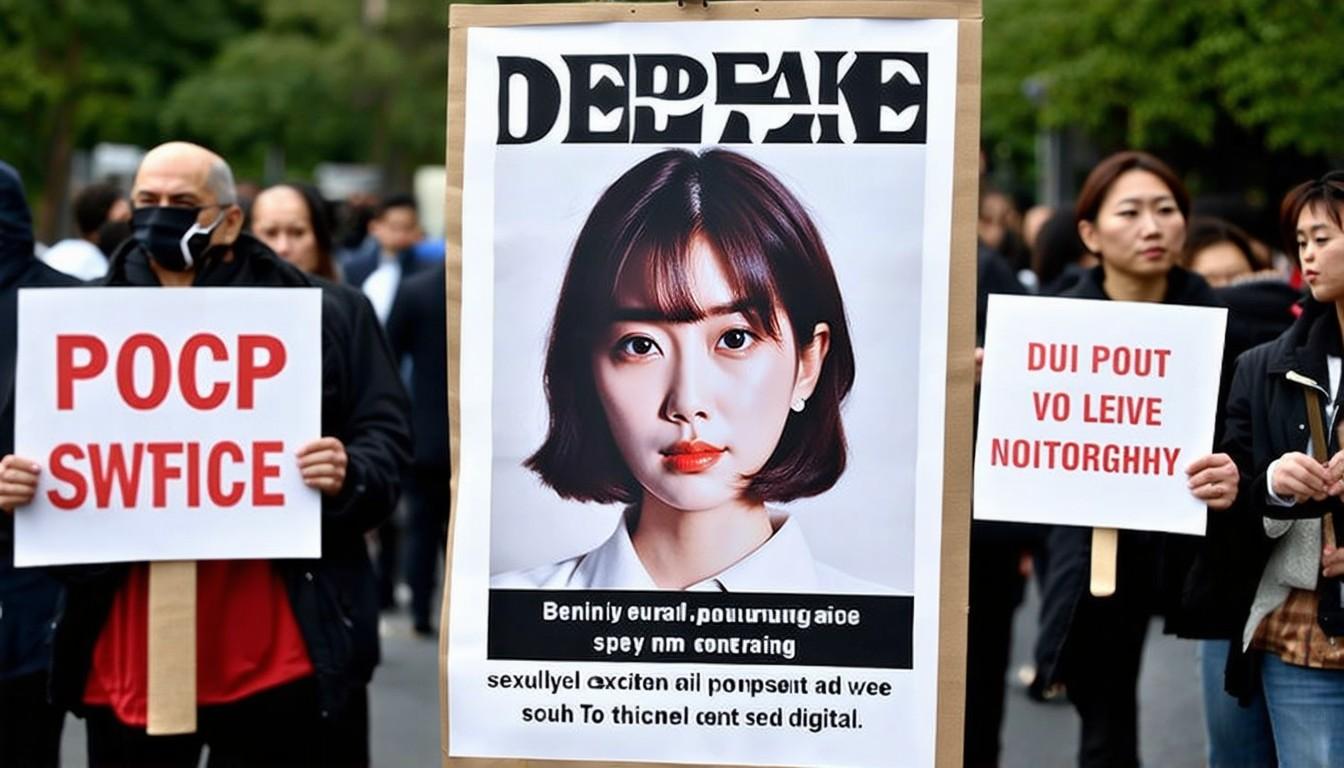
South Korea Passes Legislation Banning Possession and Viewing of Sexually Explicit Deepfakes
SEOUL, October 2024 — South Korea's National Assembly has passed significant legislation aimed at curbing the possession and viewing of sexually explicit deepfake images and videos. This move marks a pivotal development in the country's ongoing efforts to address the proliferation of AI-manipulated, non-consensual explicit content.
The new law, approved on Thursday, is now awaiting the formal signature of President Yoon Suk Yeol to be enacted. Under the terms of the bill, individuals found purchasing, saving, or watching such material could face up to three years in prison or a fine of approximately $22,600.
Creation of sexually explicit deepfake content is already illegal in South Korea if done with the intent to distribute. Offenders can face up to five years in prison or fines amounting to around $38,000 under the current Sexual Violence Prevention and Victims Protection Act. If President Yoon signs the new legislation, the penalties for creating deepfake pornography will increase, with a maximum sentence extending to seven years in prison, regardless of the creator's intent to distribute the imagery.
Public dissatisfaction has surged in recent years over the distribution of explicit AI-manipulated images and deepfakes. Last month, authorities initiated an investigation into the alleged sharing of such content through chat rooms on the Telegram messaging app.
A recent investigation by South Korean journalist Ko Narin for the Hankyoreh newspaper revealed the extent of the problem. Published in August, the report unveiled that several female graduates from Seoul National University were featured in deepfake materials produced and distributed by men in their academic circle. "I was shocked at how systematic and organized the process was," Ko said in an interview with the BBC News earlier this month. "The most horrific thing I discovered was a group for underage pupils at one school [to share content] that had more than 2,000 members."
The issue appears to be particularly prevalent among the youth in South Korea. According to data released by Yonhap news agency, 387 individuals have been arrested this year for crimes related to deepfake sexual content, with 80% of the perpetrators being teenagers.
The crackdown on Telegram follows broader concerns over the platform's misuse. Telegram's CEO, Pavel Durov, was recently charged by French authorities with multiple crimes, including the allegation that the platform facilitated the propagation of child sexual abuse material.
The international dimension of the problem was highlighted earlier this year when deepfake explicit images of the pop icon Taylor Swift rapidly spread on the social media platform X, formerly known as Twitter. The incident attracted millions of views and led the platform to temporarily block searches for the entertainer in January.
In the United States, lawmakers are also addressing the issue. In May, two U.S. senators introduced bipartisan draft legislation aimed at cracking down on non-consensual intimate deepfake images online. Proposed penalties include fines and up to two years in prison, with civil penalties potentially reaching up to $150,000.
As South Korea awaits the presidential signature to formalise the new law, the global community continues to grapple with the ethical and legal challenges posed by advances in artificial intelligence and digital content manipulation.
Source: Noah Wire Services