'The Wild Robot': A Heartfelt Tale of Technology and Community
In the realm of animated features, a fresh narrative has emerged that is capturing both hearts and Oscar buzz: "The Wild Robot." Directed by Chris Sanders and adapted from Peter Brown's acclaimed trilogy, the film offers not just a visual feast, but a profound exploration of humanity, community, and the intersection of nature and technology.
The film’s protagonist, a ROZZUM unit 7134, affectionately known as Roz and dynamically voiced by Lupita Nyong’o, inadvertently journeys from the skies to the untamed wilderness following a delivery mishap. Much like the soulful androids in classics such as "Bicentennial Man" and "The Iron Giant," Roz is designed to serve, but she evolves into something far more sentient. Through mind and voice, Nyong’o imparts a depth of emotion and adaptability to Roz, who seeks connection amidst her newfound surroundings.
“The Wild Robot” is framed as a modern fable, ideal for an era dominated by rapid technological advances and pervasive skepticism. Initial scenes might suggest the narrative criticises the potential corrupting influence of technology on a tranquil animal society. Yet, the plot skilfully pivots, presenting technology as a reflective surface, revealing both human virtues and vices.
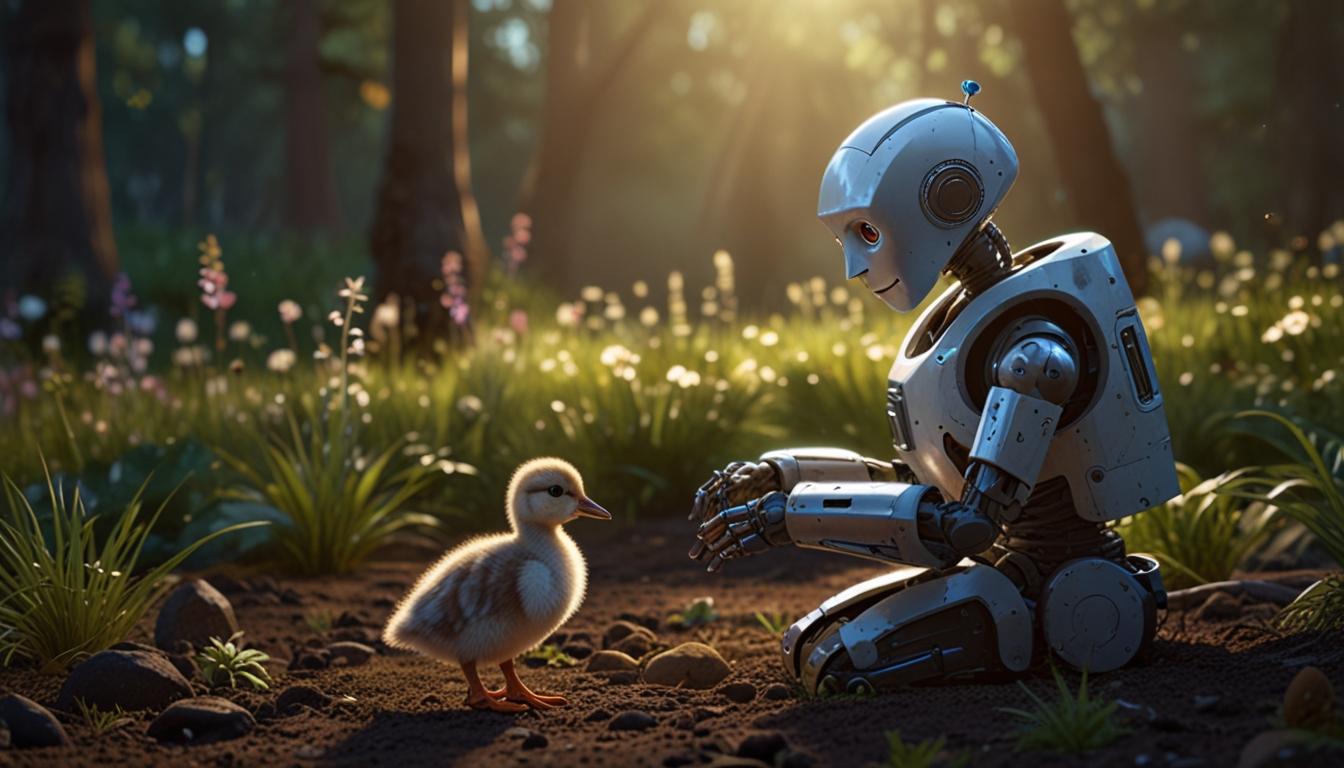
The storyline weaves a tale of unorthodox parenthood and community-based love. Roz's survivalist adaptability does more than just help her endure; it allows her to connect. She mirrors the behaviours of various animals, striving for social harmony, even though her early efforts sometimes misfire. This adaptability is key to her charm, as she transforms a predatory fox, voiced by Pedro Pascal, into an unsuspecting father figure, and her bond with a young gosling named Brightbill, voiced by Kit Connor, into an endearing depiction of cross-species kinship.
Diverse character voices add depth: The cybernetic Vontra, voiced by Stephanie Hsu, stands as Roz’s antagonist. Vontra’s cheerful yet sinister presence contrasts sharply with Roz’s earnestness, embodying the darker facets of programmed behaviour. This duality mirrors Nyong’o's prior performance in "Us," where she played dual roles of hero and villain.
Visually, the film’s detailed animation sets a high standard. The crispness of the landscapes and the meticulous portrayal of the animal characters contribute to the immersive experience. Individual stories within the film dovetail seamlessly with the main narrative, akin to birds flying in perfect formation.
Central to "The Wild Robot" is the thematic dichotomy between altruism and overreach. As Roz integrates into her new ecosystem, forming an organised community, she embodies the hope of benevolent technology. Conversely, the corporation responsible for her creation embodies the tension between noble intentions and potential overreach.
In essence, "The Wild Robot" transcends its premise of a robot navigating the wilderness. It delves into universal themes of parental love and societal belonging. Despite the apparent oddity of a robot parenting a gosling, the film strikingly mirrors real-life parental dynamics, underlining the perseverance and mutual understanding intrinsic to these relationships.
While technology’s representations might make some viewers wary, the film emphasises distinguishing beneficial software from harmful programming. Roz’s journey from an alien machine to an integral part of the community underscores a broader acceptance and potential harmony between technology and nature.
Rated PG for action/peril and thematic elements, "The Wild Robot" is more than just an animated adventure; it is a heartfelt love story about community and intimacy. It teaches universal lessons through a fun and engaging narrative, asserting that while the wilderness can be harsh, our approach to life doesn’t have to be. Through Roz’s lens, audiences are invited to reflect on their own connections, understanding, and the enduring power of love.
Source: Noah Wire Services