Ukrainian Forces Leverage Drone Technology in War Against Russia
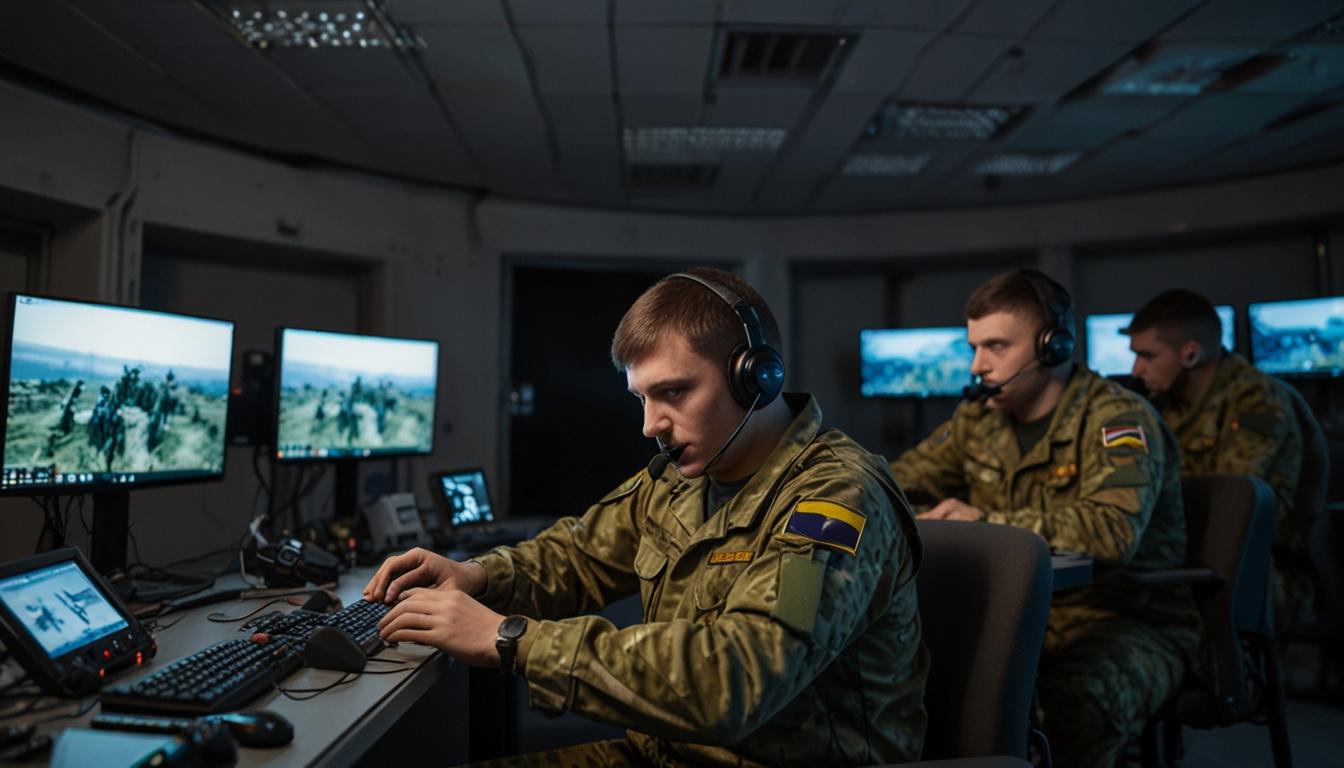
SLOVIANSK, UKRAINE — A modest house in the eastern Ukrainian city of Sloviansk has been transformed into a cutting-edge command center, a hub of activity for a new Ukrainian military unit named "Heavenly Punishment". In this concealed location, soldiers clad in fatigues monitor feeds from approximately three dozen first-person-view (FPV) drones soaring over the front line, just 15 miles away.
The feed, displayed across six large flat-screen TVs, is devoid of overt military activities as both Ukrainian and Russian forces have learned to conceal such movements from the ever-present drones. Instead, Heavenly Punishment soldiers meticulously scour the images for subtle indicators of enemy presence hidden among trees and rocks. An additional screen provides an extensive animated map integrating the drone feeds, highlighting the positions and movements of both sides, featuring Russian tanks and surveillance drones.
Two and a half years into the war that started with Russia's invasion, drones have dramatically altered military engagements. Ukrainian forces rely on a range of these autonomous machines, from small FPV devices made with commercial components to sophisticated, long-range drones capable of striking targets up to 1,000 kilometres away. These drones have played pivotal roles, such as attacking airfields and oil refineries deep within Russia, showcasing their strategic impact.
The buzzing of drones is a constant feature on the battlefield, making it challenging for troops to remain unseen. To counteract this, soldiers have adapted their tactics, favouring covered foxholes over open trenches and utilising smaller, less conspicuous vehicles for movement.
Both Russian and Ukrainian forces are engaged in an accelerated race to innovate, with each side seeking to outpace the other and render enemy technology obsolete. Initially, Ukraine gained a significant advantage with its fixed-wing reconnaissance drones, but Russian countermeasures have since diminished their effectiveness. The use of commercial drones for kamikaze attacks provided Ukraine with another tactical edge, but ongoing advancements continue to be crucial as the arms race intensifies.
Russians hold a notable advantage in electronic warfare, capable of jamming and spoofing Ukrainian drone signals. This can lead to missed advances, wayward attack drones, and increased ground losses for Ukrainian forces. Some analysts suggest that Russian electronic measures could be neutralising over half of Ukraine's drones. Consequently, overcoming these electronic defences has become a central challenge.
Artificial intelligence (AI) is seen as a long-term solution to these electronic warfare issues. The development of AI-driven drones, capable of autonomous navigation and target engagement, is at the forefront of Ukraine's technological efforts. Companies like DroneControl exemplify this push, despite operating on limited budgets compared to their Russian counterparts. By adapting quickly and utilising ingenious engineering, Ukrainian firms continue to innovate efficiently.
DroneControl, part of a larger ecosystem of small Ukrainian tech firms and startups, focuses on overcoming electronic warfare challenges. Their engineers and programmers work closely with military personnel, rapidly iterating and improving drone technology based on battlefield feedback. This collaboration has led to breakthroughs like the aerial “repeater,” which extends the operational range of FPV drones by up to 30 miles, and software modifications to alter drone signal frequencies mid-flight, aiding in evasion from Russian jammers.
Despite these technological advancements, the competition in drone development remains fiercely competitive, with both sides claiming strengths in different areas. Russia's robust military-industrial complex supports large-scale, sophisticated drone production, while Ukraine excels in the ingenuity and deployment of short-range battlefield drones.
Sea drones represent a notable area where Ukraine has taken the lead, leveraging their capabilities to conduct sophisticated naval operations. Meanwhile, in electronic warfare, Ukraine has made significant strides, evidenced by their covert operations in Russian territory. However, the advent of AI-driven drones remains a crucial frontier, with Russia and Ukraine both investing heavily in the technology.
The Ukrainian struggle with limited heavy artillery supplies persists despite the promising advancements in drone technology. Commander "Horse" of Heavenly Punishment underscores the indispensability of traditional heavy weapons alongside drones, calling for continued support, especially from Western allies.
While high-level Ukrainian appeals to the United States for advanced military technology and funding persist, the sentiment in Ukraine reflects a determination to independently spearhead their drone ambitions. President Volodymyr Zelensky’s recent requests for Western aid signal a broader strategy of strengthening Ukraine's war effort through both self-reliance and international support.
As drone technology and AI development advance, Ukrainian firms like DroneControl are positioning themselves to play significant roles in global markets. However, the immediate focus remains on leveraging these innovations to shift the balance of power on the front lines near Sloviansk, where the reality of war demands every possible advantage.
Source: Noah Wire Services