Unveiling Europe's Oldest Battlefield: Excavations in Tollense Valley Reveal New Insights into Ancient Warfare
Tollense Valley, Germany – October 2023: New archaeological research has shed dramatic new light on a long-forgotten battle fought in around 1250 BC in northern Germany's Tollense Valley—a battle that is now considered the oldest known battlefield in Europe.
Archaeologists have been uncovering evidence that suggests significant conflicts took place not only in this region but across vast parts of Europe, the Mediterranean, North Africa, and the Middle East approximately 3,200 years ago. This period, marked by widespread social, political, and economic instability, is referred to as the Late Bronze Age Collapse.
Discovery and Excavation
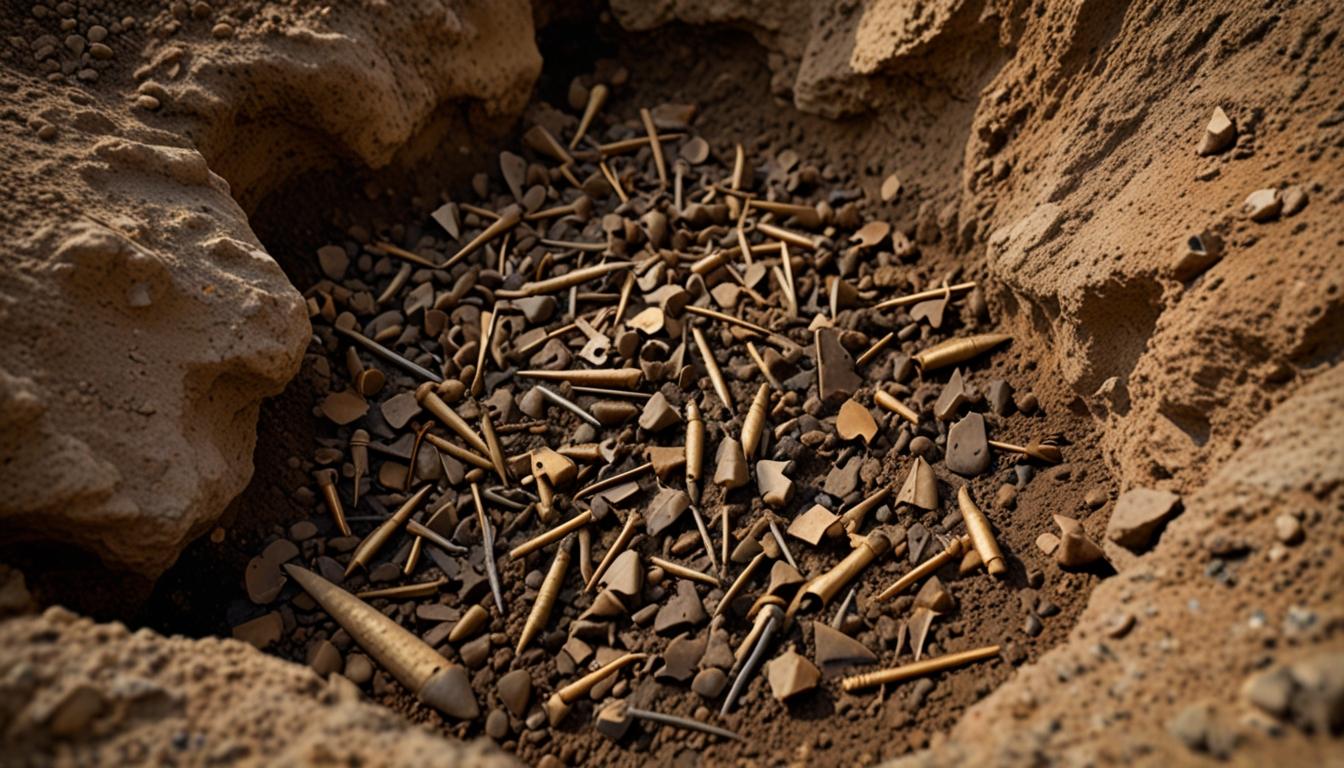
The first hint of this ancient conflict came in 1996 when an amateur archaeologist found a bone protruding from the riverbank. Systematic excavations began in 2008, revealing thousands of bones and hundreds of weapons preserved remarkably well due to the valley's undisturbed condition. This battle appears to have involved up to 2,000 warriors, a number significantly larger than previously believed, making it a crucial window into ancient warfare.
Key Findings
In a groundbreaking study published in the UK-based academic journal Antiquity, Professor Barry Molloy from University College Dublin and Leif Inselmann from Göttingen University outline the significant findings. Analyses of discovered bronze arrowheads reveal that they came in two distinct designs. These variations suggest that the confronting armies originated from geographically distant regions—one likely from what is now Bavaria or the Czech Republic, and the other from north-eastern Germany.
"This discovery indicates that European Bronze Age fighting forces were far more mobile than previously thought," said Inselmann.
The Bigger Picture
This battle, fought over a critical toll bridge in Tollense Valley, highlights the extent of inter-regional conflicts during this turbulent period. The bridge itself was part of a significant trade route linking southern Europe with the Baltic, facilitating the exchange of valuable commodities such as Mediterranean glass beads, copper, and Baltic amber. Control over such strategic points likely led to conflicts of this magnitude.
"Our study of this battlefield completely changes our understanding of Bronze Age society," noted Professor Thomas Terberger of the University of Göttingen. "We are beginning to see evidence of unexpected scale and levels of military and political organisation during that period."
Wider Implications
The Tollense Valley battle was just one of many during a time of significant upheaval. The era witnessed the collapse of great civilizations such as the Mycenaeans in Greece, the Hittites in the Middle East, and saw the decline of powers like Egypt and Babylon. Other regions like the Indus Valley, parts of Romania, Hungary, and Northern Serbia also experienced notable declines.
This widespread instability has largely been attributed to a combination of climatic changes, earthquakes, and potential disease pandemics. Moreover, the intricate trade networks and political alliances of the Bronze Age meant that crises in one region could trigger subsequent conflicts in others, similar to falling dominoes.
Lasting Mysteries
While substantial parts of the battlefield remain unexplored, the archaeological team continues to unearth more artifacts that will contribute to our understanding of this era. Currently, it’s unclear which side claimed victory in the Tollense Valley battle, although some evidence suggests the local north German population may have won a temporary triumph.
The discoveries in Germany are part of a broader range of research initiatives underway, aimed at understanding the complete scope and cause of the Late Bronze Age Collapse. Researchers anticipate that future excavations will offer even deeper insights into this complex and transformative period in world history.
As the investigation into this ancient battle progresses, one thing is clear: the Tollense Valley site holds crucial clues that could unlock many of the remaining secrets of the Late Bronze Age, contributing valuable knowledge about human society and warfare during one of history’s most enigmatic epochs.
Source: Noah Wire Services