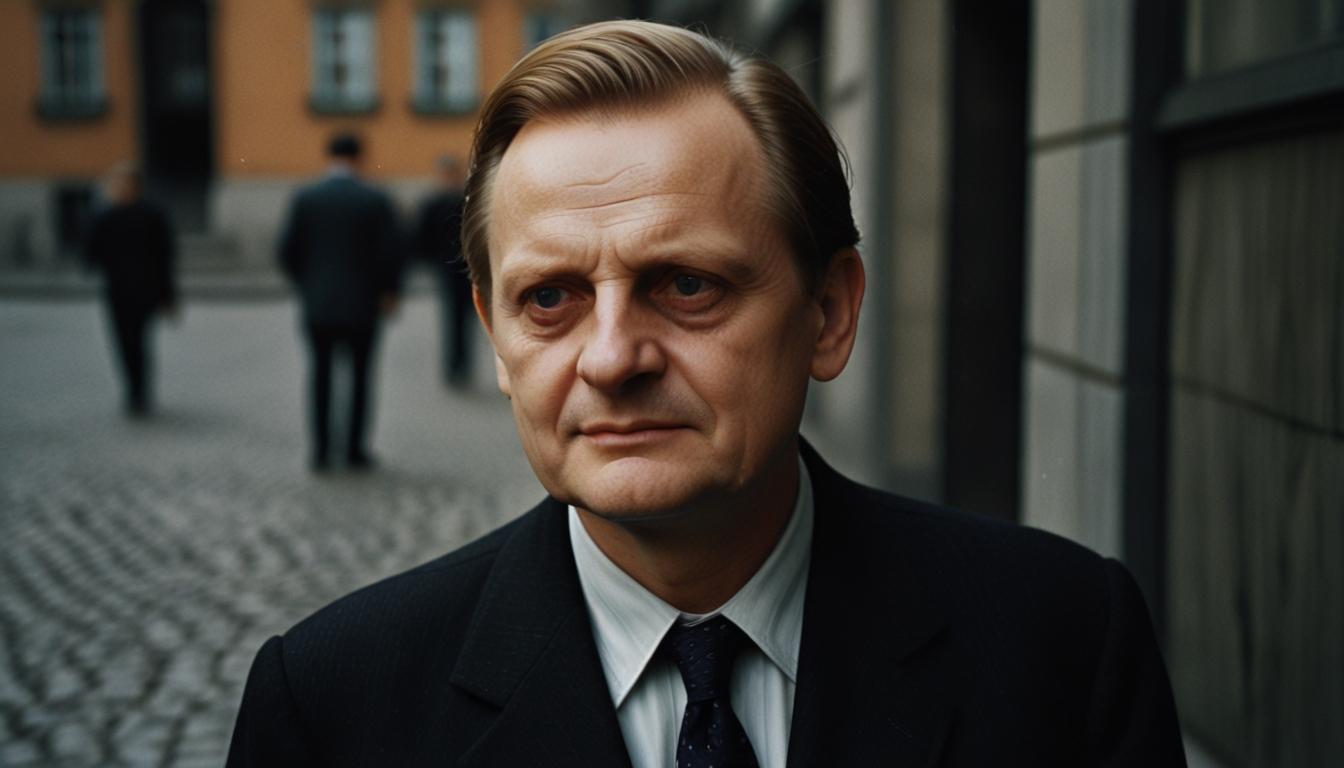
AI Analysis Revives Interest in 1986 Assassination of Swedish Prime Minister Olof Palme
In a dramatic turn of events, new AI technology has cast doubt on the longstanding conclusion of the 1986 assassination of Olof Palme, Sweden’s Prime Minister. The fresh analysis implicates a previously overlooked suspect, providing an unexpected twist to one of Sweden’s most notorious unsolved cases.
Olof Palme was killed on 28 February 1986 while walking home from a cinema in central Stockholm with his wife, Lisbet Palme. The attack, carried out at close range, left Sweden and the world in shock. Despite numerous theories and extensive investigations, the identity of the assassin remained a mystery. Speculations over the years pointed fingers at various entities, including foreign agents, arms dealers, and even the CIA.
In 2020, the Swedish police closed the investigation, naming Stig Engström, a graphic designer and initially treated as a witness, as the probable killer. Nevertheless, Engström's death in 2000 meant he could never be tried in court. The case seemed settled until a new AI-assisted photographic analysis reopened the debate by suggesting another person might be the perpetrator.
Jon Jordås, Director of Documentary at Filt production company, utilised AI to re-examine photographs of suspects and witness composites. His findings were startling. The AI matched Engström to the facial composite by only 18 percent, significantly lower than other suspects. Christer Pettersson, initially charged but later acquitted, matched by 25 percent. However, Christer Andersson emerged as the most accurate match.
Christer Andersson was a metro driver turned investor who lived close to the crime scene and owned a .357 Magnum, the type of revolver used in the assassination. He was questioned multiple times between 1995 and 1998 and had his gun licence revoked after allegedly shooting at his television during one of Palme’s appearances. Andersson claimed to have sold his revolver to pay off debts, making it the only registered .357 Magnum in Stockholm not tested by the authorities. Despite suspicious alibis and his ultimate suicide in 2008, the police ceased their inquiries into Andersson due to a shift in theory towards potential involvement of the Kurdish PKK movement.
Jordås' AI analysis and subsequent investigations highlight what he describes as a series of oversights by the Swedish police. He argues that the circumstances point towards a lone wolf attacker, specifically Andersson, who might have seen Palme enter the cinema and waited outside with his firearm.
This new angle on the Palme assassination comes to light in Jordås’ documentary work, "The Last Book on the Murder of Olof Palme," which re-examines dormant clues and casts doubt on the earlier conclusions of the case. The renewed focus has revived numerous theories ranging from sophisticated KGB operations to rogue right-wing Swedish police officers. These theories continue to fuel contentious debates, with new digital platforms perpetuating a plethora of anecdotal evidence worldwide.
Nevertheless, despite the innovative application of AI and the fresh perspectives offered, the assassination of Olof Palme remains officially unsolved. The enduring mystery continues to capture public imagination and international attention, suggesting that the quest for definitive answers is far from over.
Source: Noah Wire Services