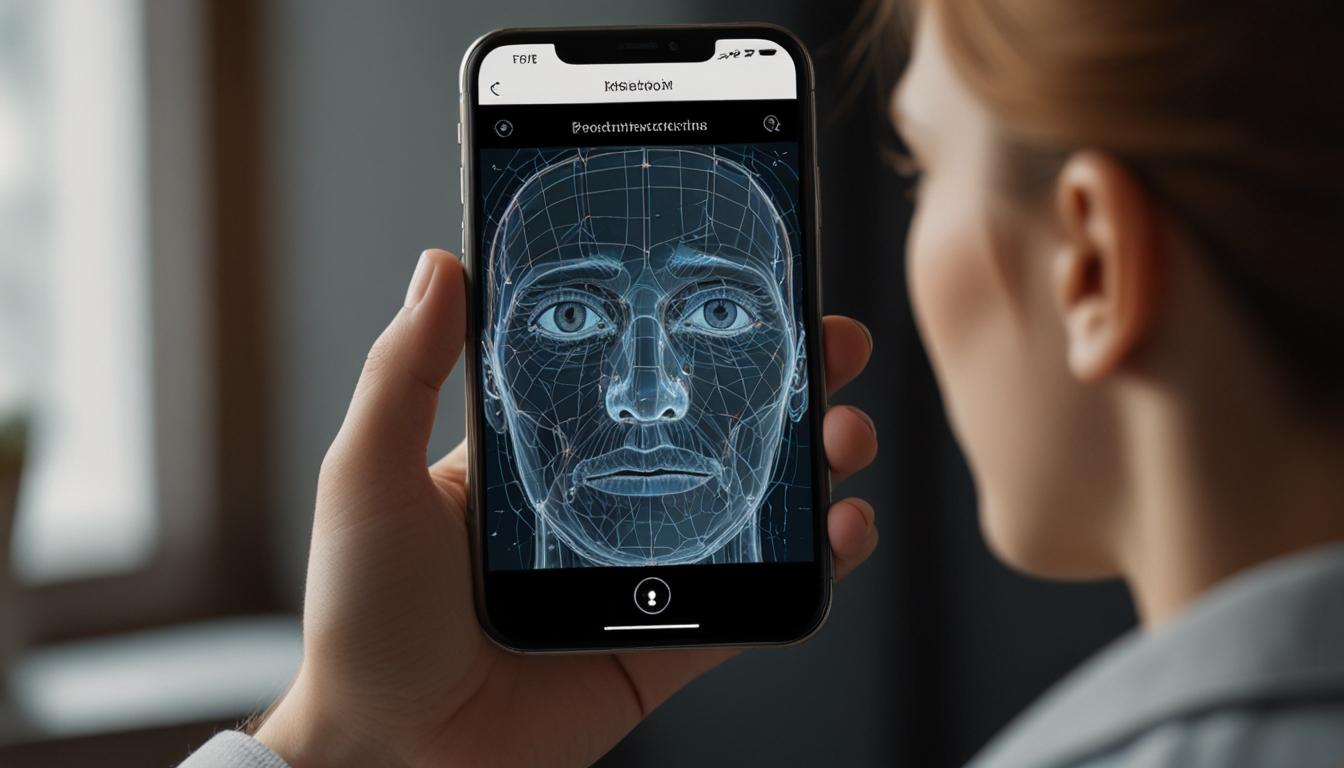
AI Innovations in Mental Health: Smartphone Systems Detecting Depression
In a groundbreaking advancement in mental health detection, researchers from Stevens Institute of Technology, led by Professor Sang Won Bae, have introduced AI-powered smartphone applications designed to identify signs of depression in users non-invasively. Given that nearly 300 million people globally suffer from some form of depression, this innovation holds significant promise.
Professor Bae’s initiative focuses on leveraging the ubiquity of smartphones, which are already integral to daily life for most individuals worldwide. This approach aims to create a convenient and accessible tool for depression detection. “Depression is a major challenge. We want to help,” Professor Bae stated, highlighting the potential utility of smartphones in mental health support.
PupilSense: Understanding Mood through Eye Analysis
One such system in development, named PupilSense, is a collaborative effort between Professor Bae and Stevens doctoral candidate Rahul Islam. PupilSense operates by continuously capturing and measuring the pupils of smartphone users. The idea stems from over three decades of research demonstrating a link between pupillary reflexes and depressive episodes.
The effectiveness of this system was demonstrated in a study published in the Proceedings of the ACM on Human-Computer Interaction. By taking 10-second "burst" photo streams while users engaged with their phones, PupilSense analysed pupil diameters relative to the irises. This data, collected from 25 volunteers over four weeks and involving around 16,000 phone interactions, was then cross-referenced with self-reported mood data from the participants.
After training its AI to distinguish between normal and abnormal responses, the system achieved a 76% accuracy rate in detecting depressive states, surpassing the current leading platform, AWARE. This proof-of-concept was presented at the International Conference on Activity and Behaviour Computing in Japan and the software has been made available open-source on GitHub.
FacePsy: Facial Expression Analysis
The second system, FacePsy, also developed by Bae and Islam, analyses facial expressions to gain insights into the user’s mood. Research indicates that depression can be signalled by nonverbal cues such as facial muscle movements and head gestures. FacePsy continuously captures and analyses facial snapshots each time a phone is used, immediately deleting the images post-analysis to maintain privacy.
Initial findings from the FacePsy pilot study suggested that some facial gestures correlated with self-reported depression. Interestingly, increased smiling, rather than indicating happiness, was associated with signs of a depressed mood. This surprising outcome could suggest a coping mechanism where individuals mask their true feelings. The study also noted fewer facial movements in the morning and specific eye and head movement patterns linked to depressive symptoms.
Additionally, the data revealed that certain expressions of alertness or happiness, such as more open eyes during morning and evening hours, could also mask underlying depressive feelings.
Future Prospects
These advancements in AI-driven depression detection, which do not require additional wearable devices, represent a significant step towards creating compact and user-friendly diagnostic tools. While more research is essential to refine these systems and confirm their findings, the innovations presented by Bae and Islam have opened new avenues for non-invasive mental health monitoring.
The results from the FacePsy study will be showcased at the ACM International Conference on Mobile Human-Computer Interaction (MobileHCI) in Australia in early October, further demonstrating the potential of these pioneering systems in a real-world context.
These developments underline a promising future where smartphones could play a pivotal role in the early detection and management of depression, potentially offering timely support for millions worldwide.
Source: Noah Wire Services