AI Tools Reveal Insights into Infant Development Through Movement Study
Researchers at Florida Atlantic University (FAU) have employed advanced computing and artificial intelligence (AI) to uncover how infants transition from seemingly random movements to purposeful actions. This study, conducted using the baby-mobile experiment, leverages machine learning techniques to analyse how infants begin intentionally interacting with their environment.
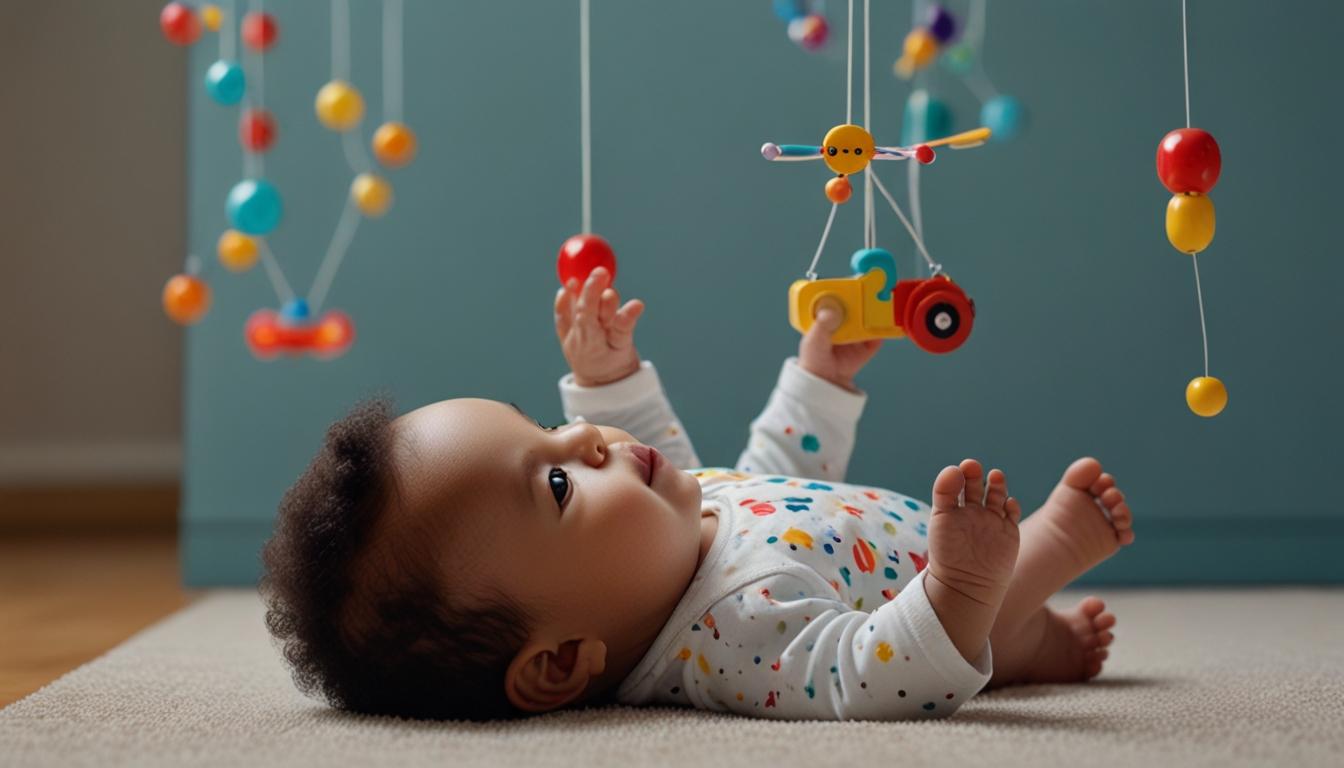
The baby-mobile experiment, used in developmental research since the 1960s, involves a colourful mobile tethered to an infant's foot. As the infant kicks, the mobile moves, establishing a clear connection between the infant's actions and the resulting movements. This setup aids researchers in understanding how infants start to control their movements and recognise their ability to influence their surroundings.
In the latest iteration of this experiment, FAU researchers deployed AI tools to detect complex patterns and changes in infant movements. Using a Vicon 3D motion capture system, the researchers recorded infant movements and classified them into spontaneous actions and reactions to the mobile's movements. They applied various AI techniques to determine which methods were most effective at capturing the nuances of infant behaviour, and to understand how these movements evolved over time.
Published in the journal Scientific Reports, the study highlights AI's potential as a powerful tool for understanding early infant development. The researchers found that deep learning methods, particularly the 2D-CapsNet model, were highly effective in classifying infant movements observed in five-second clips. The 2D-CapsNet model, without prior knowledge of the experimental setup, achieved an accuracy rate of 86% when analysing foot movements. This model performed significantly better than others, notably demonstrating that feet movements were most indicative of interaction with the mobile, achieving accuracy rates approximately 20% higher than movements of other body parts such as the hands or knees.
"This finding is significant because the AI systems were not told anything about the experiment or which part of the infant's body was connected to the mobile," explained Scott Kelso, Ph.D., co-author and Glenwood and Martha Creech Eminent Scholar in Science at FAU's Charles E. Schmidt College of Science. "What this shows is that the feet -- as end effectors -- are the most affected by the interaction with the mobile."
The study revealed that infants showed increased exploratory movements after being disconnected from the mobile, compared to their behaviour before they were able to control it. "It seems that losing the ability to control the mobile made them more eager to interact with the world to find a means of reconnecting," said Aliza Sloan, Ph.D., co-author and a postdoctoral research scientist at the FAU's Center for Complex Systems and Brain Sciences. However, some infants maintained their movement patterns even when disconnected, indicating a possible understanding that their actions previously influenced the mobile.
Nancy Aaron Jones, Ph.D., co-author, professor in FAU's Department of Psychology, and director of the FAU WAVES Lab, underscored the complexity of studying infants who cannot communicate verbally. "That's where AI can help. AI can assist researchers in analysing subtle changes in infant movements, and even their stillness, providing insights into how they think and learn, even before they can speak."
The findings hold promise for developing better assessments of infant behaviour tailored to specific contexts and could enhance early identification and treatment of developmental disorders. Scott Kelso noted that combining theory-based experiments with AI-enabled a deeper understanding of infant interactions, compared to traditional methods focused on spontaneous movements.
The research team included Massoud Khodadadzadeh, Ph.D., now at the University of Bedfordshire, UK, and Damien Coyle, Ph.D., at the University of Bath, UK. The study received support from several organisations, including the Northern Ireland High-Performance Computing facility, the UK Research and Innovation Turing AI Fellowship, and the United States National Institutes of Health.
Source: Noah Wire Services