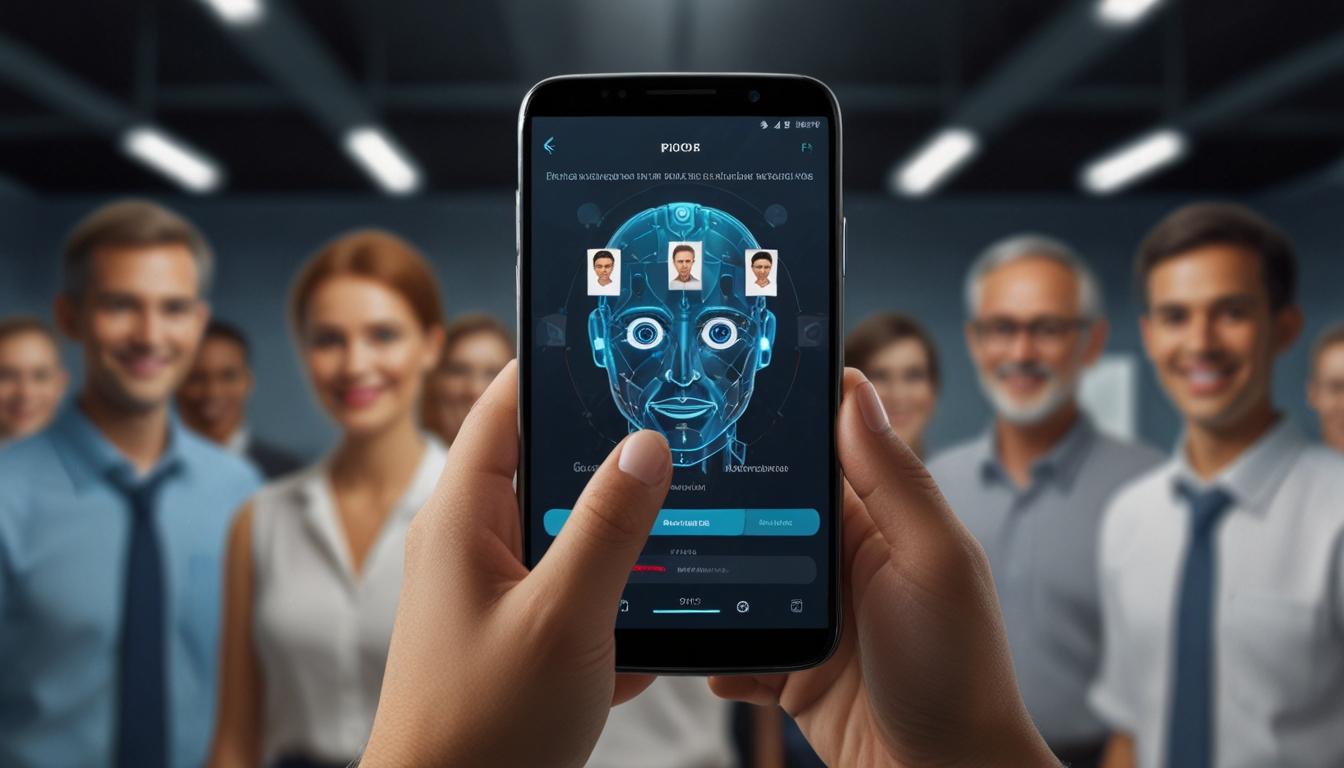
Biden's Decision Sparks Shift in Polling, Siena College Turns to AI
Days after President Joe Biden announced he would not be seeking re-election and endorsed Vice President Kamala Harris, polling organizations have swiftly moved to gauge public opinion on the potential new frontrunner. Siena College Research Institute undertook a survey to understand the sentiment of "persuadable" voters regarding Harris, using innovative AI technology to collect and analyse responses.
One respondent, a 37-year-old Republican, expressed mixed feelings about former President Donald Trump and acknowledged Harris’s empathetic stance. "I've usually supported Trump because he gets things done," he said, but added, "I think Harris has shown she cares more about people like me, especially after Trump didn't reach out to the family of a supporter who died at his rally."
This kind of voter insight was gathered not by human pollsters but through an AI chatbot named Engage. This technology, developed about a year ago by CloudResearch, enables rapid data collection and analysis, significantly enhancing the speed and breadth of polling efforts.
The Evolution of Polling
Polling in American presidential races dates back to 1824, with methods evolving considerably since then. Historically, polling has been a crucial method for understanding public opinion, informing campaign strategies, and guiding media narratives. However, as societal behaviour changes—with fewer people willing to engage in traditional phone or door-to-door surveys—pollsters are turning to artificial intelligence for more efficient data collection.
Rachel Cobb, assistant professor of political science and legal studies at Suffolk University, notes that declining response rates to traditional polls have pushed pollsters to adopt more creative methods. “It’s much harder and more expensive for pollsters to get responses,” Cobb stated. “They've had to leverage technological advancements to keep up with the times.”
Artificial Intelligence in Modern Polling
AI technology has become indispensable for modern polling, enabling quicker turnaround times and deeper insights. Engage's AI chatbot, for instance, can conduct thousands of interviews within hours and process the data rapidly to derive significant insights. “We’re able to get comprehensive data very quickly, helping us understand voter sentiment almost in real-time,” said Leib Litman, co-CEO and chief research officer of CloudResearch.
Beyond conversational AI, some pollsters employ “sentiment analysis AI.” This methodology uses machine learning to scrutinise publicly available data and demographic information to predict how groups might respond to various political issues. For example, Heartland Forward, a think tank, recently collaborated with Aaru, an AI-powered polling group, to gauge public perception of artificial intelligence, discovering that their AI results closely mirrored traditional poll findings when cross-referenced.
The Mechanics and Pitfalls of AI in Polling
Sentiment analysis AI operates by reading and interpreting the meaning and tone behind text to extract hidden messaging or context. While this technology is increasingly accurate, it does have its limitations. Bruce Schneier, a security technologist and lecturer at Harvard University’s Kennedy School, explained that AI must be another tool in pollsters' comprehensive toolbox. “AI will get better at anticipating human responses, but human intervention is still needed to provide accurate context,” Schneier said.
Despite its potential, sentiment analysis AI can sometimes misinterpret ambiguous text or struggle with developing situations. During an experiment, researchers noted that ChatGPT 3.5 could not provide current context about the Ukraine war due to its data cut-off point in 2021. This highlights a significant oversight that AI alone cannot yet overcome—understanding rapidly changing events in real-time.
Furthermore, AI-assisted polls might inadvertently exclude certain demographics—people unaccustomed to using chatbots or engaging online, thereby skewing results. Ahmed, founder of Resemble AI, stressed the importance of recognizing these nuances. “While AI can give a high-level overview, it's crucial to remember that we exist in bubbles, and AI, like traditional polling, can be misleading.”
The Future of AI in Polling
As technology continues to evolve, AI's role in political polling will likely expand, providing supplementary tools alongside traditional methods. “The science of polling is huge and complex, and AI is just another step along the path we've been on for a long time,” added Schneier.
Both political and technological experts agree that integrating AI with human insight could provide a more comprehensive picture of public opinion moving forward. The goal is to fine-tune AI models to better understand human sentiment while ensuring human oversight and participation remain central to producing accurate and reflectional poll results.
As the 2024 elections approach, the landscape of political polling is set to see significant advancements, potentially reshaping how campaigns interpret voter sentiment and strategise their outreach efforts.
Source: Noah Wire Services