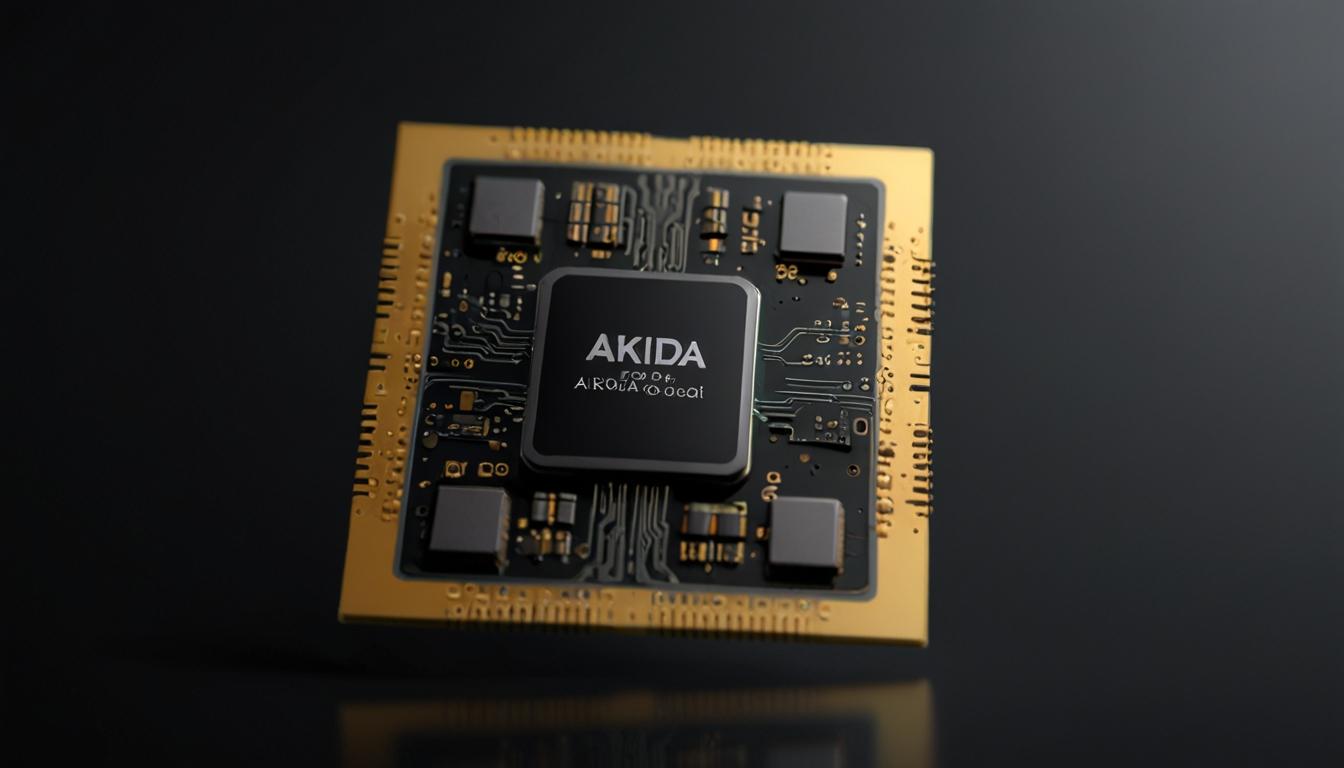
BrainChip Holdings Introduces Akida Pico: Ultra-Low Power AI Acceleration Co-Processor
BrainChip Holdings has announced the release of its latest innovation, the Akida Pico, which is being heralded as the lowest power acceleration co-processor available in the market. Designed specifically to meet the demands of low-power, portable, and intelligent device applications, Akida Pico is poised to make significant strides in the domains of consumer electronics, healthcare, IoT (Internet of Things), defence, and a variety of wake-up applications.
Akida Pico is engineered to accelerate specialised neural network models that are use-case specific, providing a digital architecture that maximises energy efficiency. The scope of its applications is broad, encompassing voice wake detection, keyword spotting, speech noise reduction, audio enhancement, presence detection, personal voice assistants, automatic doorbells, wearable AI, appliance voice interfaces, and more.
The new co-processor is constructed on the Akida2 event-based computing platform configuration engine, capable of operating with power consumption suitable for battery-powered devices, consuming less than a single milliwatt. This makes Akida Pico highly efficient and particularly well-suited for sensor hubs and systems that require continuous monitoring but only occasional additional processing from a host. The neural network-based architecture of Akida Pico is designed to filter out false alarms, ensuring that power consumption is preserved until a relevant event is detected.
A significant feature of the Akida Pico is its integration with BrainChip's MetaTF software flow. MetaTF allows developers to compile and optimise their Temporal-Enabled Neural Networks (TENNs) on the Akida Pico, supporting models created with popular frameworks such as TensorFlow/Keras and Pytorch. This interoperability means that users can develop and deploy AI applications for the edge without needing to learn new machine language frameworks.
Key benefits of Akida Pico include:
- A low power standalone Neural Processing Unit (NPU) core consuming less than 1 milliwatt of power.
- Support for power islands, greatly reducing standby power requirements.
- An industry-standard development environment to facilitate easier adoption.
- A small logic die area, optimising the overall die size with configurable data buffer and model parameter memory.
Commenting on the launch, Sean Hehir, CEO of BrainChip, stated, “Like all of our Edge AI enablement platforms, Akida Pico was developed to further push the limits of AI on-chip compute with low latency and low power required of neural applications. Whether you have limited AI expertise or are an expert at developing AI models and applications, Akida Pico and the Akida Development Platform provide users with the ability to create, train, and test the most power and memory-efficient temporal-event based neural networks quicker and more reliably.”
BrainChip’s Akida platform stands as a beacon for event-based compute solutions, offering early detection and low-latency without needing extensive compute resources. This is particularly advantageous for robotics, drones, automotive applications, and traditional sense-detect-classify-track solutions. The company offers a variety of software, hardware, and IP products that can be integrated into both existing and forthcoming designs, paving the way for the deployment of multi-modal AI models at the edge.
For those interested in engaging further with this development, comments can be shared on X: @IoTNow_, with additional information available on the IoT Now homepage.
Source: Noah Wire Services