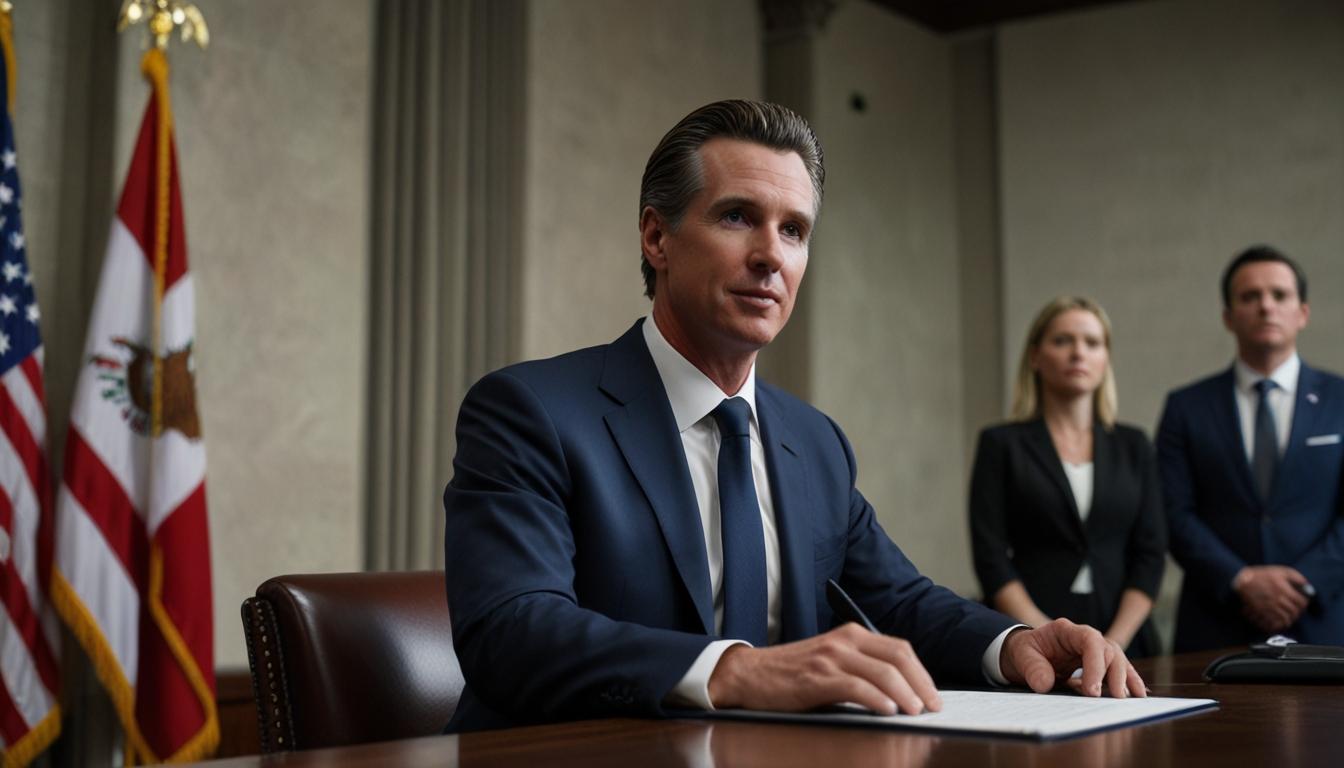
California Governor Gavin Newsom Vetoes Comprehensive AI Regulation but Signs 18 Key AI Bills
On September 29, California Governor Gavin Newsom made the notable decision to veto SB 1047, a wide-ranging bill that aimed to establish a comprehensive regulatory framework for artificial intelligence (AI) in the United States. Despite the spotlight being on SB 1047, the 18 other AI-related bills that Newsom signed this September are poised to have significant and far-reaching impacts.
Detailed Overview of the New Laws
Media and Entertainment
AB 2602 introduces stricter consent protocols for the use of 'digital replicas' in media and entertainment. Contracts must now include a "reasonably specific description" of the intended use, and actors must be represented by legal counsel or a labour union. Non-compliance renders the contracts unenforceable. Moreover, AB 1836 prohibits the unauthorised commercial exploitation of a deceased person's digital replica, imposing statutory damages of either $10,000 or the actual value of significant damages.
AI Training Data Disclosure
AB 2013, known as the Artificial Intelligence Training Data Transparency Act, mandates AI developers to disclose details about their training datasets on their websites by January 1, 2026. This includes a high-level summary of all the data utilised in developing their AI systems or services.
Watermarking and AI Detection
Under SB 942, the California AI Transparency Act requires significant AI developers to create AI detection tools which must be made freely accessible. The law also mandates that any content produced by AI systems should include watermarks, and this watermarking must be maintained by third-party licensees. Developers are obligated to terminate licences within 72 hours if a third-party disables this functionality.
AI Safety Measures
SB 896, the Generative Artificial Intelligence Accountability Act, necessitates the state to craft a report evaluating the benefits and hazards of Generative AI (GenAI) tools. Additionally, state agencies must disclose when GenAI is used in online customer interfaces or telephone communications.
Privacy Protections
AB 1008 amends the California Consumer Privacy Act to incorporate the usage of personal data in AI systems capable of outputting personal information.
Educational Standards
AB 2876 calls for the inclusion of AI literacy in state curriculum standards, while SB 1288 directs the state superintendent to form working groups addressing AI in public schools, aiming to formulate guidelines on AI use by January 1, 2026.
Health Care and Insurance
Two bills focus on integrating AI responsibly within healthcare. AB 3030 requires health providers to disclose when GenAI tools communicate with patients. SB 1120 mandates that licensed physicians supervise AI tools making decisions about healthcare services and insurance claims.
Telemarketing Accountability
AB 2905 stipulates that telemarketers must disclose when synthetic, AI-generated voices are utilised in calls.
Uniform Definition of AI
AB 2885 defines "artificial intelligence" as a machine-based system with varying levels of autonomy, which can infer from inputs to generate outputs influencing physical or virtual environments.
Deepfakes and Pornography
AB 1831 bans AI in the creation of child pornography. SB 926 sets criminal penalties for creating deepfake pornography, and SB 981 mandates social media platforms to provide mechanisms for reporting and promptly removing such content.
Election Integrity and Disinformation
The recent uptick in AI-generated election disinformation has led to the passage of three critical laws signed on September 17. AB 2355 requires political campaigns to disclose AI use in advertisements. AB 2839 prohibits the knowing distribution of materially deceptive AI-generated content about political candidates within 120 days of an election. AB 2655 requires large online platforms to remove or label deepfakes within 72 hours of receiving a user report.
In announcing the new legislation, Newsom underscored the importance of preserving election integrity and public trust in the face of evolving AI technologies, especially with the 2024 elections looming.
The Veto of SB 1047
Governor Newsom's veto of SB 1047 was a notable decision, with the proposed legislation aimed at imposing extensive requirements on AI developers to safeguard against risks associated with frontier AI models. While cited as necessary by some for the future protection and regulation of AI, others expressed concerns that such stringent regulation could stifle innovation.
Broader Implications
The signing of these 18 bills represents one of the most comprehensive efforts to regulate various aspects of AI by any US state. Each piece of legislation addresses specific concerns ranging from media manipulation and consumer data privacy to education and health care. These laws are designed to lay a groundwork for responsible AI use while addressing emerging challenges posed by the rapid integration of AI into different facets of society.
Source: Noah Wire Services