Colorado Advances Wildfire Prediction Bill Leveraging AI Technology
Denver, CO—A legislative committee in Colorado has advanced a bill geared towards enhancing wildfire prevention and mitigation through the development of artificial intelligence (AI) services. This initiative comes with an estimated cost of $7.5 million, which will be allocated to the state's Division of Fire Prevention and Control (DFPC). The funding aims to continue a partnership with Lockheed Martin, which has been pioneering AI-driven wildfire management applications.
The committee's endorsement of the bill underscores the urgency to extend a pilot program set to expire. Initiated in collaboration with Lockheed Martin, the pilot has seen the development of sophisticated AI services specifically focused on wildfire prediction and control. The technology, rolled out over the past two years, has been provided to the state free of charge.
Senator Mark Baisley, a Republican from Sedalia, highlighted the critical importance of the technology during the committee's most recent meeting. "They have Version 1 developed, and they’re exercising that pilot software now in parallel to all the other things that are happening with firefighting," Baisley noted. He also expressed concern over the expiration of internal funding, which threatens to disband the developers, jeopardising further advancements unless new financing is secured.
Located in Littleton, Colorado, Lockheed Martin's space division has created four AI-driven wildfire prediction services as part of the pilot. These services map combustible materials, predict lightning strikes likely to ignite fires, establish fire perimeters via satellite imagery, and predict wildfire spread. Tim Burdick, chief engineer at Lockheed Martin, informed the committee in August that these AI services dramatically improve the speed and accuracy of information available to firefighters and public safety officers.
The technology demonstrated remarkable utility during the Oak Ridge Fire in southern Colorado earlier this summer, identifying a high-risk lightning event 42 hours before the fire started. It also provided an accurate spread prediction for the Alexander Martin Fire in Larimer County within 80 minutes of the blaze being reported, and continued to deliver daily spread forecasts during the incident.
Despite the promising results, Rep. Andrew Boesenecker, a Democrat from Fort Collins, emphasised the financial challenges posed by the $7.5 million price tag. "I share the sentiment that predictive technology could be a cost saver, ultimately, for the state," Boesenecker said. "But a $7.5 million fiscal note is a real hurdle to consider in light of our current budgetary constraints." He suggested the inclusion of an amendment that would allow the state to act as a financial backstop, should grants or federal funding become available.
The development of this technology represents a significant investment, with the potential to prevent billions of dollars of damage from uncontrolled wildfires. Lockheed Martin is aiming to make the technology operational at a federal level by 2025, targeting customers like the U.S. Forest Service. The current state investment would cover another year of the pilot, bridging the gap until federal adoption.
The advancement of the bill by the interim committee is just the first step. It requires approval by the Legislative Council before it can be introduced in the regular legislative session starting in January. It will then embark on the standard legislative journey toward potential enactment.
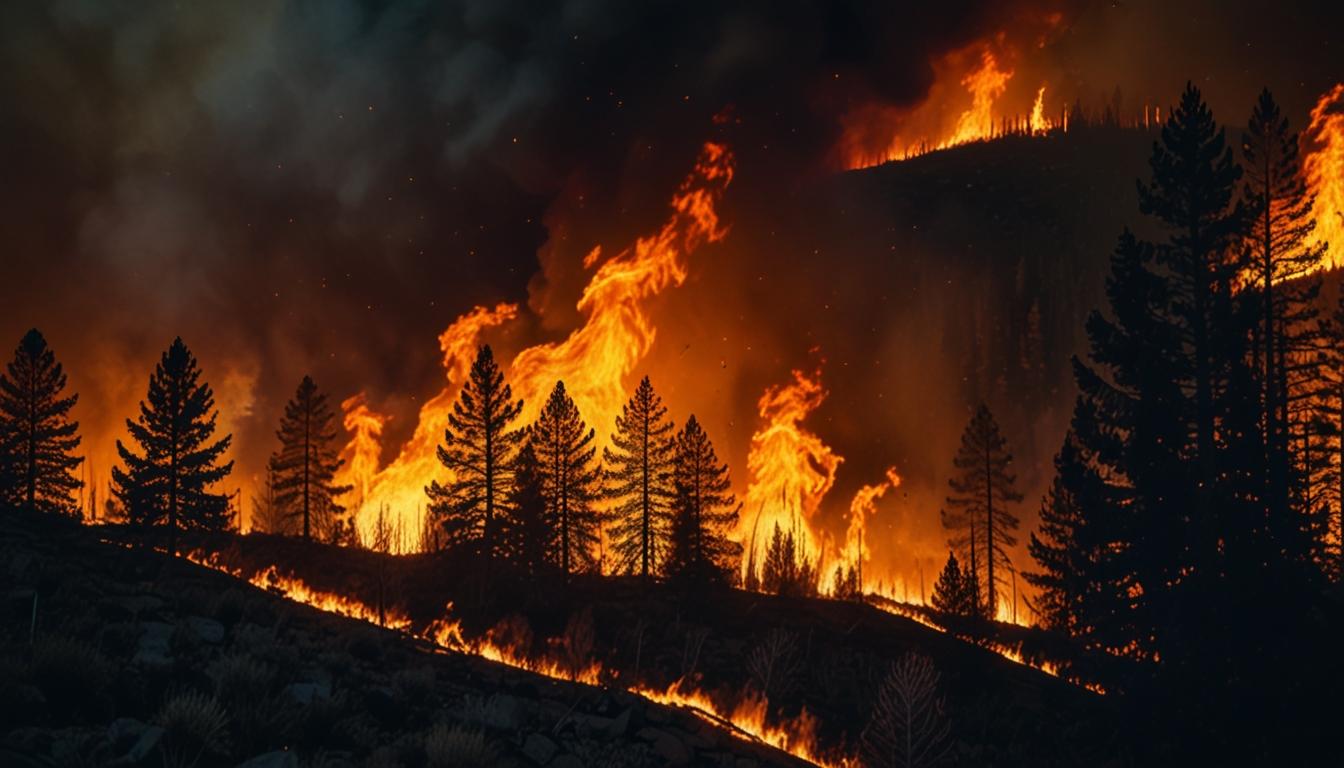
As Colorado continues to battle wildfires, the integration of AI technology into wildfire prevention and control could mark a pivotal advancement in the state's approach to handling these devastating natural disasters.
Source: Noah Wire Services