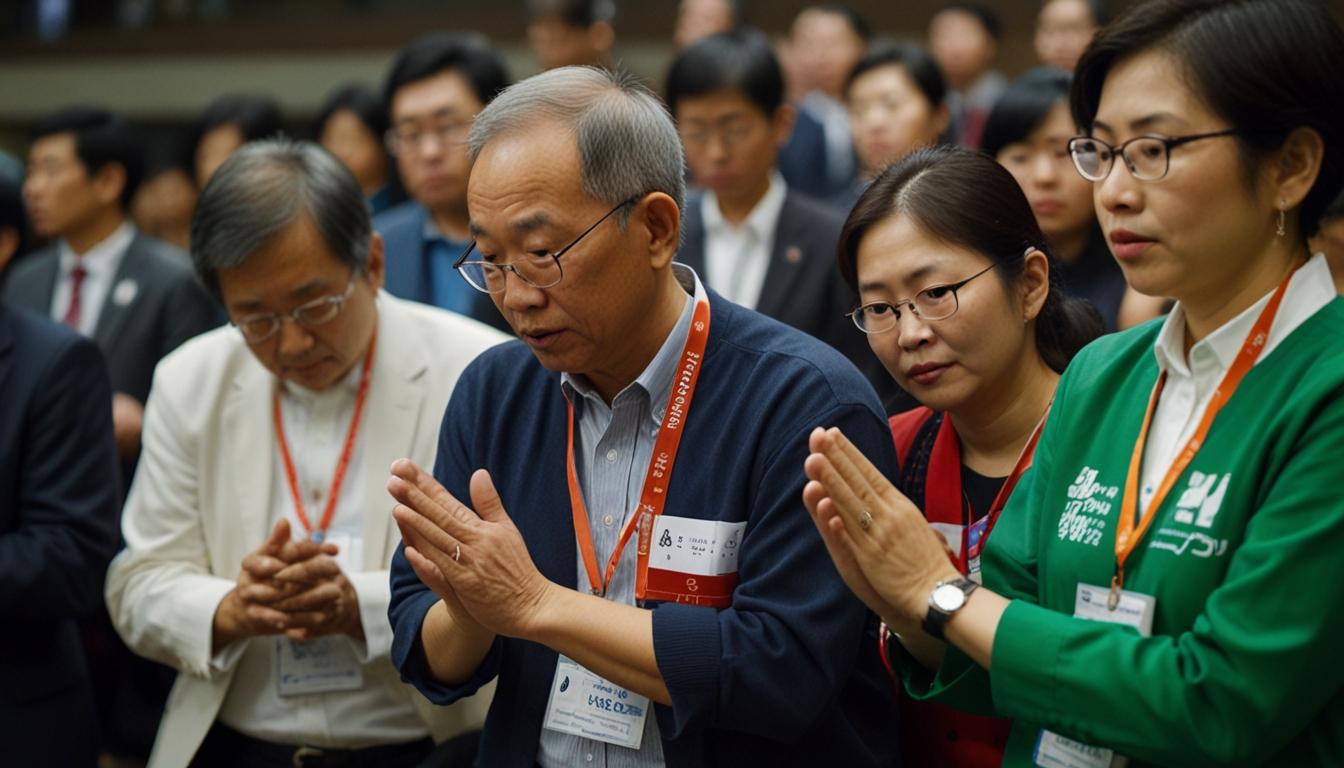
Global Faith Community Gathers in Incheon for Fourth Lausanne Congress
Earlier this month, the city of Incheon, South Korea played host to the fourth Lausanne Congress, a significant event in the Christian calendar that saw a gathering of 5,000 delegates from various corners of the globe. The congress, which spanned six days, provided an opportunity for attendees to engage in discussions, prayer, and learning about diverse experiences within the global Christian community.
The participants, often referred to as brothers and sisters in faith, spent their time attentively listening to different viewpoints, praying together, and drawing insights from each other’s unique ministries and contexts. These exchanges were a testament to the rich tapestry of perspectives present within the global church body.
The congress featured a series of sessions that ran from morning till evening, showcasing a broad spectrum of theological and practical insights. This diversity was seen as a cornerstone of the event, offering delegates a platform to express both aligned and differing views. While some of the perspectives shared during the sessions resonated deeply with attendees, others, particularly those stemming from differing theological backgrounds, prompted introspection and thoughtful dialogue.
One attendee, a neuroscientist and psychologist dedicated to serving the Church, reflected on the importance of understanding the underlying narratives expressed by the various speakers. They highlighted the significance of discerning whether these narratives aligned with the core principles of the Kingdom and the Good News fundamental to Christian belief.
On the final day of the congress, a session focusing on collaboration sparked notable discussion. The presenters used a metaphor involving a robot and a computer program, contrasting a simplistic robot capable of shooting one dot of paint at a time with a more sophisticated robot equipped with numerous cannons and advanced calculations, able to paint a picture much faster. This illustration was used to underscore the benefits of coordinated efforts and advanced technology in ministry work.
One of the proposed outcomes of the congress was the establishment of a technology hub. This hub aims to facilitate sharing among different ministries and Kingdom work initiatives, potentially harnessing the power of artificial intelligence (AI) to suggest collaborations. The specifics of this proposal, including whether it would function similarly to a matching algorithm or take on a different form, remain somewhat unclear. However, the concept of relying on AI for strategic direction in evangelism and discipleship raised concerns among some delegates.
In particular, the attendee from the neuro-scientific and psychological field found the prospect unsettling. While acknowledging the potential benefits of using AI for data analysis and summarization, they expressed reservations about its application in strategizing Church evangelism and discipleship. This concern stemmed from a perceived underlying narrative suggesting that the global church’s efforts thus far have been inadequately coordinated and inefficient, implying that AI-generated strategies might better organise and direct their mission.
As a Pentecostal, this attendee echoed the sentiments of others who questioned the assumptions embedded within this narrative. Their concerns highlighted the importance of maintaining theological integrity and trust in spiritual discernment over technological solutions in guiding the Church's mission.
The Lausanne Congress continues to be a pivotal event for global Christian dialogue and collaboration, prompting reflection on both common goals and the diverse approaches within the global faith community. The discussions and outcomes from this year's gathering in Incheon are likely to influence ongoing conversations and initiatives in the realm of global ministry and evangelism.
Source: Noah Wire Services