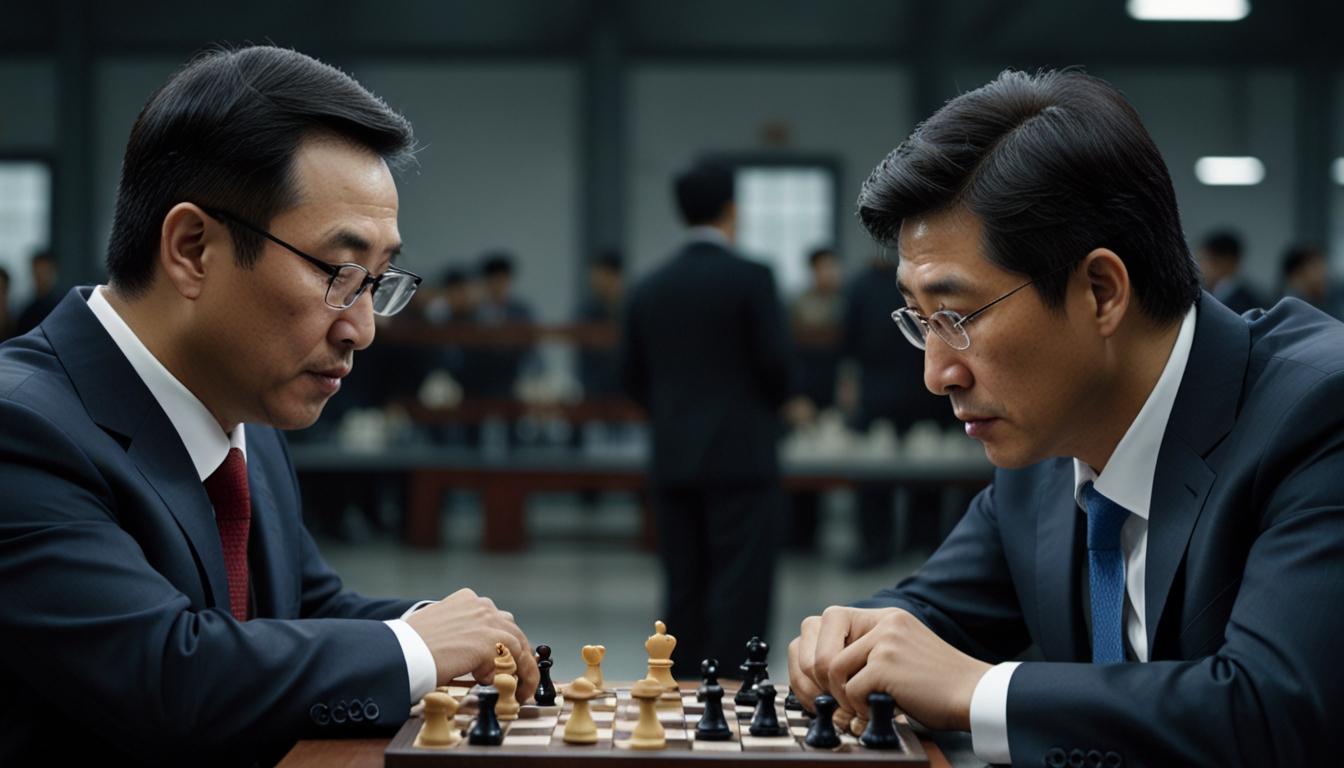
High-Stakes Battle for Control of World's Largest Zinc Smelter Unfolds
Seoul, South Korea – A contentious power struggle has erupted over Korea Zinc, the world’s largest zinc smelter by annual output, igniting a fierce contest between South Korea’s leading private equity firm, MBK Partners, and prominent industrial groups. The protracted conflict has substantial implications for both Korea’s corporate environment and the global mining sector.
The primary combatants in this unfolding corporate drama are Michael ByungJu Kim, dubbed the “godfather of Asian private equity,” and Choi Yun-beom, the incumbent chairman of Korea Zinc. Kim, spearheading the campaign via his Seoul-based firm MBK Partners, aims to wrest control from Choi, accusing him of diminishing the firm’s profitability during his tenure since 2019.
Korea Zinc has a towering stature with a market capitalisation of $11 billion and is integral to the global supply chain for zinc, lead, and silver. It's also at the forefront of producing battery materials essential for Western attempts to establish a non-Chinese electric vehicle supply chain. Choi’s stewardship, however, has come under intense scrutiny from various quarters, including the co-founding Jang family and MBK Partners.
Korea Zinc's management describes the situation as a hostile takeover attempt by “corporate raiders” allegedly backed by foreign interests intent on selling the firm’s advanced technology to China. Vice-chair Lee Je-jung has publicly rebuked the move, stressing the stakes involved. “For the sake of our nation, our people and our shareholders we have to prevent our technology from being sold to China,” he remarked during a press conference.
Nevertheless, Park Yoo-kyung of APG Asset Management has described Korea Zinc’s rhetoric as “dirty public propaganda,” leveraging nationalistic fears of Chinese industrial competition. MBK Partners has countered, asserting their commitment not to sell to any bidder unacceptable to the South Korean government or to a Chinese entity.
MBK’s offensive escalated last month when it secured a 33.1% stake in Korea Zinc from the Jang family, thereby aligning itself with a significant faction within the company. Their joint tender offer aims to amass a near 50% controlling interest, challenging Choi’s leadership directly, considering that the Choi family holds a mere 15.6% of the shares.
Key players in the industry, including shareholders affiliated with major South Korean conglomerates like LG, Hanwha, Hyundai, and Swiss trading house Trafigura, are observing the turbulence with apprehension. They express concerns over how a prolonged dispute might destabilise long-term strategic partnerships and planned investments, particularly pivotal projects such as the nickel smelter in Ulsan.
Trafigura, a 1.5% stakeholder in Korea Zinc, lauded the company’s diversification into battery metals but also underscored the importance of maintaining stability. “As shareholders, we are monitoring any corporate actions that may disrupt the company’s operations or future prospects,” a Trafigura representative noted.
Facing mounting accusations, Choi has defended his actions, claiming that investments under scrutiny were legitimate and did not necessitate board approval. His critic, however, contends these moves exemplify poor corporate governance.
Namuh Rhee of the Korean Corporate Governance Forum argues that the concerns are overstated, suggesting that professional managers appointed by MBK could better oversee Korea Zinc than an “unproven” third-generation heir.
The timing of this corporate conflict is particularly critical, as global zinc smelters struggle with reduced input material supply. Delays in annual zinc supply contract negotiations, traditionally benchmarked by Korea Zinc, could send ripples throughout the global mining sector. Colin Hamilton, commodities analyst at BMO Capital Markets, highlighted that the internal strife could potentially defer the first round of annual zinc treatment charge negotiations.
In a recent maneuver, MBK increased its tender offer from Won660,000 to Won750,000 ($568) per share, leading to a notable 25% rise in Korea Zinc’s share price, which stood at Won688,000 at the end of trading on Monday. Despite this hike, Korea Zinc’s management plans a counter-tender offer, seeking support from investors both local and foreign.
As the Friday deadline for the tender offer approaches, the outcome remains uncertain, with significant stakes for all involved parties and the broader economy.
Iran-Israel Escalation Threatens Middle East Stability
Middle East – Tensions between Iran and Israel have soared dangerously after Iran launched a substantial missile offensive on Israel, initiating what could spiral into a comprehensive regional conflict.
The barrage of approximately 180 missiles struck Israel late in the evening, shortly after Israeli forces initiated a ground offensive targeting Hizbollah positions in southern Lebanon. Daniel Hagari, spokesperson for the Israeli military, reported successful interceptions by Israel’s air defences but noted several impacts in central and southern regions without immediate casualties.
Israeli Prime Minister Benjamin Netanyahu, addressing a political security assembly, declared, “Iran made a big mistake tonight — and it will pay for it," signalling potential retaliatory measures.
The hostilities have significant ramifications for the geopolitical landscape and global markets, with Brent crude prices surging by 5% in response.
While the world watches apprehensively, the region braces for the possibility of intensified conflict, adding to the already volatile Middle Eastern milieu.
Leading Stories Across Other Industries
India Cracks Down on Derivative Trading: Indian authorities have introduced stringent rules on derivatives trading to curb the fever among young retail investors indulging in high-risk market behaviour.
Swiss Authority Targets Indonesian President-Elect's Family: Switzerland has ramped up actions against the family of Indonesia’s incoming president Prabowo Subianto over unresolved tax dues linked to his brother, Hashim Djojohadikusumo.
Nike Faces Dwindling Sales: Nike has reported a sharper than expected decline in sales in its most recent quarter, coinciding with the upcoming retirement of CEO John Donahoe.
OpenAI's AI Ambitions: OpenAI is optimistic that AI-powered assistants will mainstream by next year as major tech firms battle to lead the artificial intelligence domain.
Pink Floyd Sells Music Rights to Sony: The iconic British band Pink Floyd has sold its music catalogue rights to Sony for approximately $400 million, finalising a major asset sale amid a boom in vintage music acquisitions.
Conclusion
As these events continue to unfold, they highlight pivotal issues in global markets and geopolitical landscapes. Whether it’s the fierce corporate takeover battle in South Korea, escalating military tensions in the Middle East, or shifts in trading regulations and market behaviours, each story encapsulates significant change and consequence, drawing the attention of stakeholders worldwide.
Source: Noah Wire Services