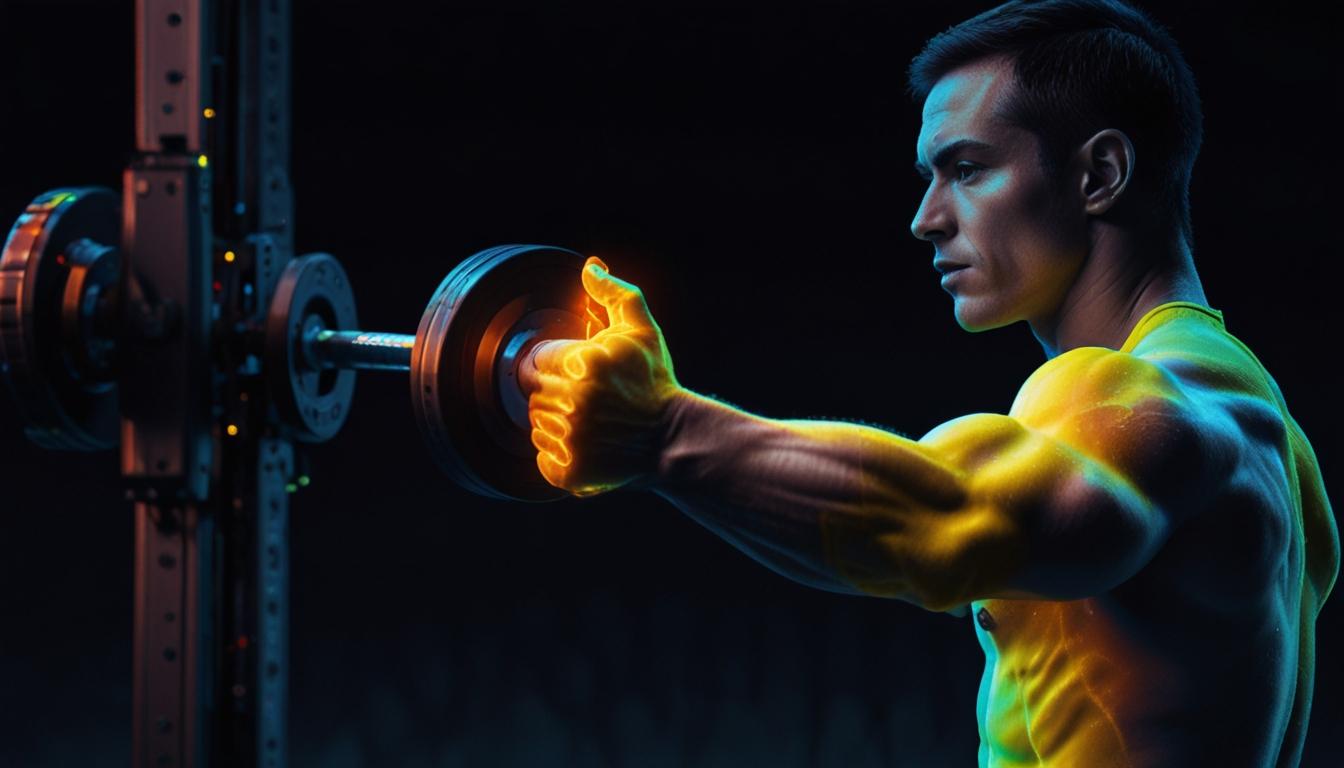
Innovative Thermal Imaging Method Enhanced by AI Set to Revolutionise Weightlifting Training
Concepción, Chile—An advanced method combining thermal imaging technology and AI-based digital processing has been developed by researchers aiming to innovate weightlifting training and potentially other sports disciplines. This new approach, which was conceptualised and refined at Universidad de Concepción, leverages the capabilities of thermal cameras along with artificial intelligence to provide real-time insights that could optimise training routines, enhance performance, and ensure safety.
Thermal or infrared images are particularly useful in sports and health sectors as they can track muscle activation and highlight areas of strain or fatigue. Typically, these images have been used as before-and-after snapshots, limiting their capacity to offer a comprehensive view of the physiological changes occurring throughout a workout. The research team, led by Laura Viafora, sought to address this limitation by developing a method that analyses continuous thermal video recordings, thus monitoring muscle exertion and physical responses in real time.
AI-Enhanced Analysis for Real-Time Insights
The study, published in the journal Applied Optics under the title "An infrared imaging technique for weightlifting exercise assessment," describes how the researchers utilised both inexpensive thermal cameras attached to smartphones and high-end thermal devices. This dual-approach offers flexibility and accessibility, making the technology suitable for different training needs and budgets.
The core of this innovative method lies in sophisticated data processing algorithms, incorporating Google MediaPipe artificial intelligence software. This software autonomously identifies individuals and their body parts within the thermal images, extracting critical information such as temperature variations and joint angles throughout the exercise. Additionally, the movement of the barbell is tracked by detecting the weight plates and recording their positions in each frame.
Empirical Validation and Results
Initial tests were conducted using a range of camera types, including low-end thermal cameras on smartphones, high-end standalone thermal cameras, and conventional cameras. These comparative tests aimed to evaluate the effectiveness of body detection and angle estimation across different equipment. The results demonstrated that the method could successfully produce sequences of thermal images, colour-labelled for clarity, from multiple camera types. This capability could guide athletes towards adopting safer and more efficient training techniques.
However, certain limitations were noted. For instance, differentiating the athlete's body from the background proved easier with thermal cameras than conventional ones. The precision required also varied with the camera's quality, necessitating a balance between equipment suitability and the desired accuracy. Movements where the athlete's body was curled or partially occluded by weights posed detection challenges.
Broadening Applications and Future Work
Beyond weightlifting, the researchers are keen to extend the application of their method to various sports, including conventional and Paralympic disciplines. This widened scope could further substantiate the method's efficacy across different physical activities and enhance its versatility.
Laura Viafora highlighted the potential medical applications of this technology, suggesting its utility in healthcare fields, particularly in rehabilitation post-injury or illness. By providing specialists with detailed thermal data and positional information, the method could contribute to more targeted and effective recovery protocols.
The team is also working to enhance their algorithm, aiming to offer actionable feedback directly to users. For example, it could provide real-time adjustments during exercises, ensuring movements are performed correctly to prevent injuries and maximise efficiency.
This pioneering work represents a significant advance in the intersection of sports science and artificial intelligence, holding promise for both athletic performance enhancement and broader applications in health and rehabilitation.
For further details, readers are referred to the publication by Laura A. Viafora et al., in "Applied Optics" entitled "Infrared imaging technique for weightlifting exercise assessment."
Source: Noah Wire Services