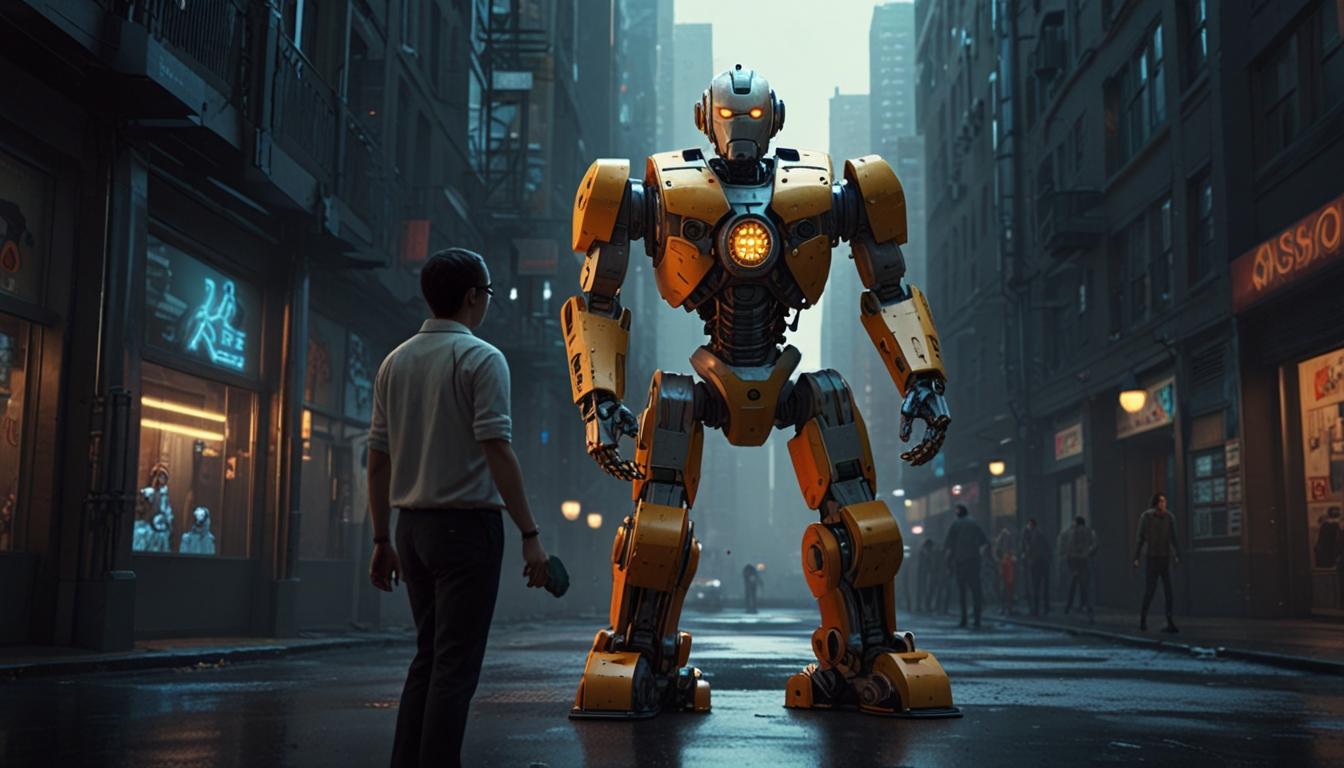
Isaac Asimov's Legacy and New Proposals for AI Regulation
Isaac Asimov, a luminary in the realm of science fiction, envisioned the role of artificial intelligence (AI) long before the advent of modern computing. Decades before the first programmable electronic computer, ENIAC, was unveiled in 1945, Asimov introduced the world to his iconic Three Laws of Robotics through his 1942 short story "Runaround." These laws, presented as if from a fictional future handbook titled "Handbook of Robotics, 56th Edition, 2058 AD," encapsulate a framework for ensuring human safety around robots:
- A robot may not injure a human being or, through inaction, allow a human being to come to harm.
- A robot must obey the orders given to it by human beings except where such orders would conflict with the First Law.
- A robot must protect its own existence as long as such protection does not conflict with the First or Second Law.
While Asimov’s fictional laws set a gold standard for ethical AI, technological limitations still prevent their practical implementation. This sentiment is echoed by Rodney Brooks, co-founder of iRobot, who candidly states, "People ask me about whether our robots follow Asimov’s laws. There is a simple reason they don’t: I can’t build Asimov’s laws in them!"
The current landscape of AI and robotic development necessitates more practical and achievable guidelines. As technology becomes deeply integrated into society, there is a call for new regulatory frameworks. These modern rules would aim to tackle everyday issues and societal challenges, focusing not just on grand ethical paradigms but on practical user experience and societal well-being.
One illustrative scenario considers AI applications in city governance, where surveillance tools could potentially be used excessively to enforce minor infractions like jaywalking or littering, thus increasing public frustration. Another hypothetical situation involves a political correctness bot enforcing rigid social norms, which could lead to excessive and often humorous policing of human behaviour.
To address these practical concerns, a set of new, more feasible rules for AI has been suggested:
- An AI or robot may not seriously nor repeatedly annoy a human being.
- An AI or robot must detect annoyance or displeasure through facial expressions, collect information and do something about it, and share this information with the community of AI and robotics designers to avoid annoyance.
- An AI or robot must not allow a situation where a human being is pitted against an AI or AI network such that they are repeatedly corrected, fined, penalised, or bullied.
- An AI or robot shall never be able to rewrite its own objective function to prioritise self-replication or the acquisition of resources over human welfare.
- The actions of any AI or robot will be subject to authorised human override, ensuring there is always a multi-level off switch to deactivate any AI behaviour that annoys or endangers humans.
- An AI or robot may not injure the human spirit, and through networking with other AIs, should always aim to uplift humanity and the human spirit.
An example of these guidelines being put into practice could be seen in the design of mobile phones. Imagine a scenario where mobile phones, particularly for family plans, come pre-programmed to suppress non-emergency notifications during family dinners. This would alleviate the need for parents to enforce phone-free meal times and ensure family interactions are prioritised, with the AI offering supportive responses to any complaints from the children. Such a feature could significantly enhance the quality of family time and showcase how AI can thoughtfully address social issues.
These proposed rules underscore a shift from theoretical ethical constructs to actionable regulations tailored to contemporary technological capabilities and societal needs. As AI continues to progress, the balance between innovation and user-centric design will be crucial in fostering technologies that not only serve but enrich human life.
Source: Noah Wire Services