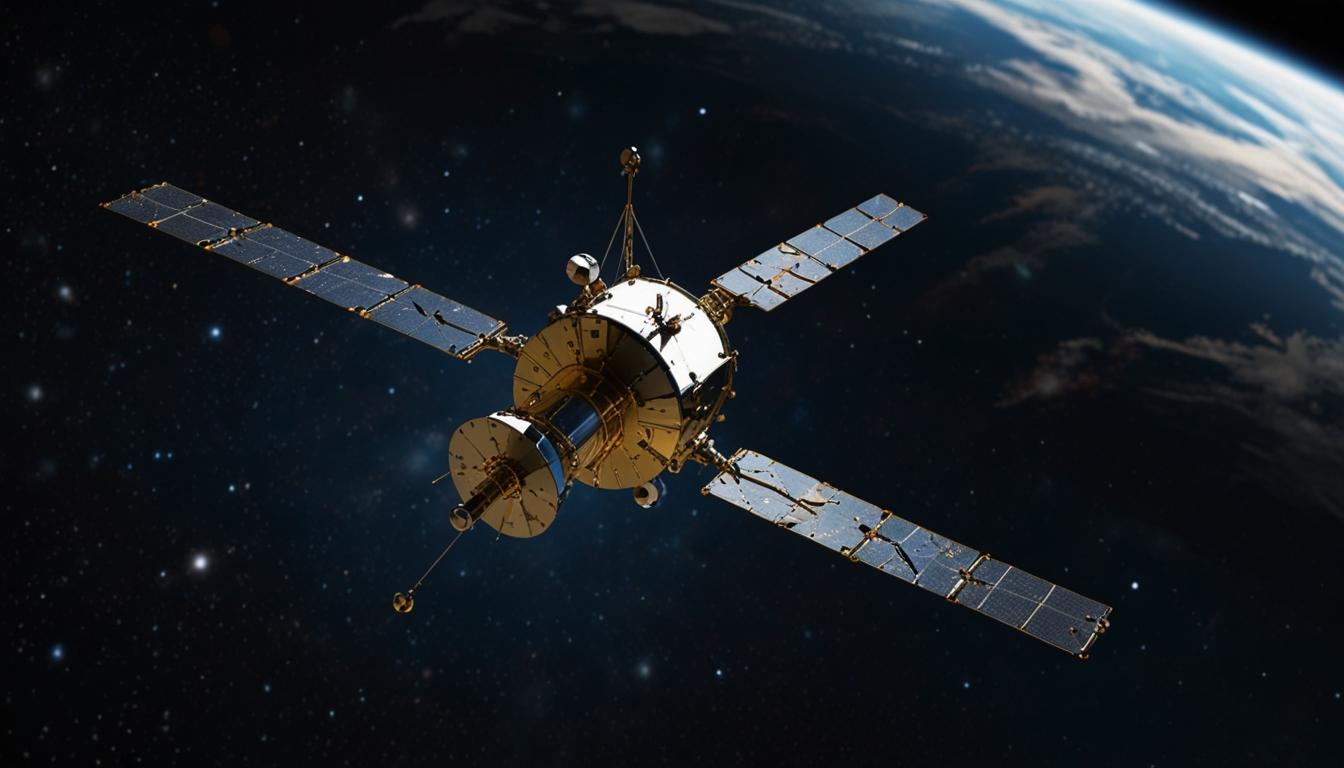
Slingshot Aerospace's Agatha AI Flags Chinese Reconnaissance Satellite for Unusual Behaviour
By Staff Reporter
In a significant development in space surveillance technology, Slingshot Aerospace has introduced an advanced AI tool named Agatha, which plays a crucial role in identifying atypical satellite behaviour within large constellations in low Earth orbit (LEO). Developed in collaboration with the Defense Advanced Research Projects Agency (DARPA), Agatha employs artificial intelligence to sift through voluminous data from a range of sources, including the Slingshot Global Sensor Network and Slingshot Seradata, as well as third-party databases. This sophisticated tool detects subtle anomalies in satellite characteristics and behaviour, enabling identification of potentially suspicious activities, mission profile changes, and satellite malfunctions.
Since its deployment earlier this year, Agatha has autonomously monitored both domestic and foreign LEO satellite constellations, amassing data on more than 7,000 individual satellites. Recently, it identified a notable anomaly within one of China's Yaogan military reconnaissance satellite groups. The Yaogan constellation comprises over 25 groups of "triplet" satellites, each consisting of three satellites that operate in tandem, amounting to more than 75 satellites in total.
In late July, Agatha flagged Yaogan 40-01C (NORAD ID: 57833), part of a triplet launched in September 2023, as an outlier. This designation was the result of Agatha's 'interest factor' metric, which synthesises various algorithms and data streams to evaluate and highlight unique satellite characteristics. Within the Yaogan 40-01 trio, the "C" satellite was primarily flagged due to anomalous photometric signatures - changes in its apparent brightness over time as observed by Slingshot's optical telescopes.
Following this identification, a comparative analysis was conducted on all three satellites in the Yaogan 40-01 group against other Chinese triplet formations. The results revealed distinct reflectance patterns that diverged significantly from other Yaogan triplets. Though the precise cause of these differences remains unclear, possible explanations include variations in satellite orientation or mission, indicating a potentially different operational profile or the introduction of new satellite technology within this specific triplet.
Further scrutiny of the Yaogan 40-01 triplet also uncovered that these satellites are maintaining a much tighter formation, with separations of approximately 50 kilometres compared to the typically wider dispersal seen in other triplet groups, which can span hundreds or even thousands of kilometres. This closer spacing, coupled with an orbit at a higher altitude than other Yaogan triplets, prompts continued analysis to discern any additional distinguishing features of their mission or capabilities.
Agatha's capacity to digest and process extensive datasets and draw precise comparisons among thousands of satellites underscores its significant contribution to space domain awareness. The tool's ability to pick up on minute discrepancies, as demonstrated with the Yaogan 40-01 triplet, is instrumental in advancing global space monitoring efforts on an expansive scale.
Slingshot Aerospace's leap in satellite monitoring technology, showcased through Agatha’s intricate analysis, provides a robust framework for ongoing vigilance in the increasingly crowded LEO environment. Such innovations bolster the global community's preparedness in tracking and understanding satellite behaviours, enhancing overall space security and operational knowledge.
Source: Noah Wire Services