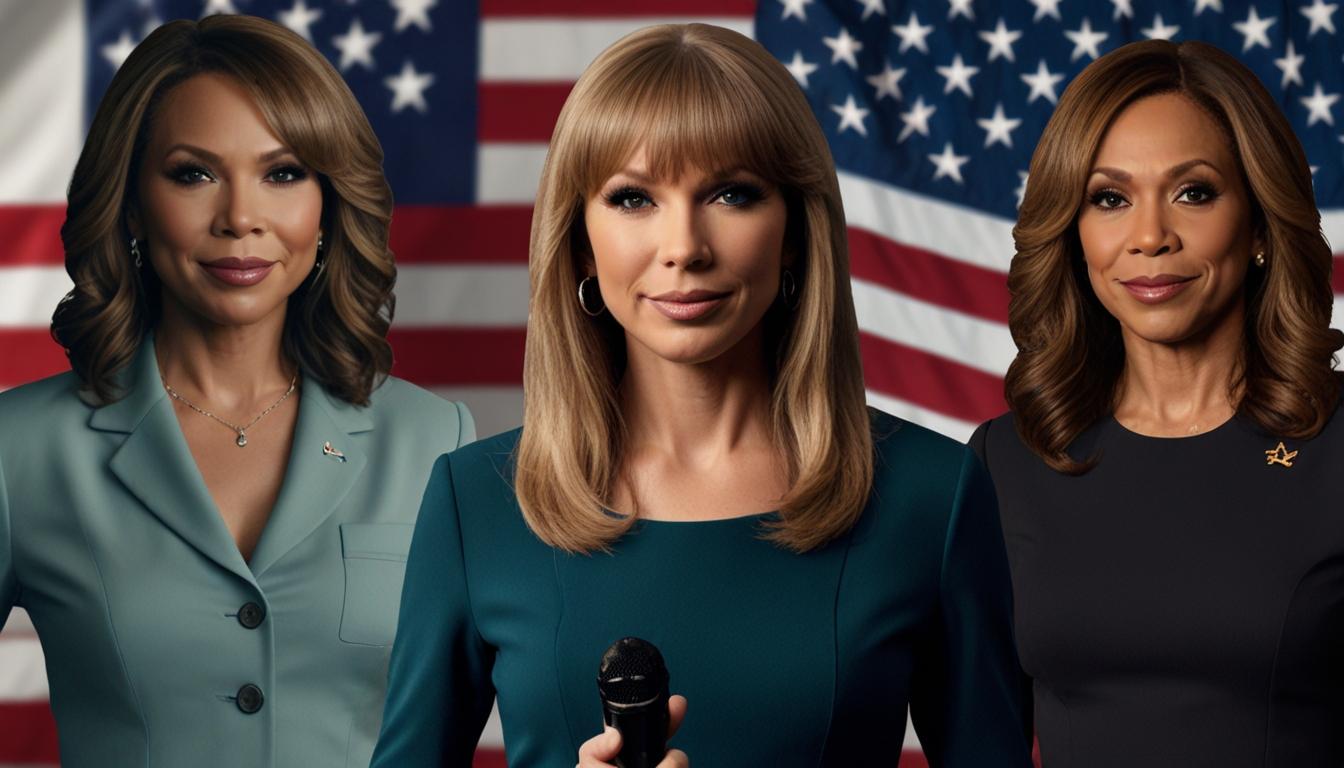
Taylor Swift Endorses Kamala Harris Amid AI Controversy
Washington, D.C. – The worlds of politics and technology converged dramatically on September 10th following the first presidential debate between Donald Trump and Vice President Kamala Harris. Mere minutes after the debate concluded, pop sensation Taylor Swift publicly endorsed Harris. This endorsement sent shockwaves through social media and traditional news outlets alike. While it is not unprecedented for celebrities to wade into political waters, the circumstances surrounding Swift's announcement are particularly noteworthy and raise significant legal and ethical questions about technology’s role in shaping public opinion.
Swift’s endorsement stemmed from an incident involving an AI-generated image. The image, which falsely depicted Swift endorsing Trump, was disseminated via Trump’s social media platform, Truth Social. Swift took to Instagram to clarify her political stance and explain her motivation for breaking her silence. “This image really conjured up my fears around AI, and the dangers of spreading misinformation,” she wrote, expressing her concerns about the potential for AI technology to create and spread misleading information.
The issue Taylor Swift raised regarding AI-generated content, colloquially known as "deepfakes," has garnered growing concern among lawmakers and legal experts. These hyper-realistic digital replicas can manipulate images, videos, and voices to create convincing yet fraudulent representations of individuals. This technology’s potential to influence public opinion, infringe on individuals' rights, and spread misinformation has prompted legislative action.
In response to these concerns, U.S. lawmakers have introduced the Nurture Originals, Foster Art, and Keep Entertainment Safe (NO FAKES) Act to Congress. This bipartisan bill aims to establish a federal framework addressing the unauthorized creation and distribution of AI-generated content. The Senate introduced the bill on July 31st, followed by a companion bill in the House on September 12th. Though still pending, the bill has sparked an essential dialogue about the necessity of regulatory measures to mitigate the risks associated with AI-generated content.
The proposed NO FAKES Act would create a national right of publicity, offering individuals control over the use of their name, image, and likeness, especially concerning AI-generated representations. Unlike the current patchwork of state laws, which vary significantly in their scope and applicability, this federal legislation aims to provide uniform protection. The Act proposes civil penalties for violations and lays out regulations to manage the use of digitally created replicas, even after an individual’s death.
Nevertheless, the legislation includes several exceptions and provisions that may dilute its effectiveness. State laws regarding digital replicas passed before January 2, 2025, will not face preemption, allowing for continued discrepancies among jurisdictions. Additionally, regulations on sexually explicit or election-related deepfakes will remain unaffected, and the Act carves out broad fair use exceptions for First Amendment-protected speech, such as news or public affairs broadcasts. These exceptions are designed to balance individual rights with free speech protections, but they also complicate legal interpretations, potentially leaving significant room for judicial discretion.
The urgency prompted by cases like Taylor Swift’s highlights the broader implications of deepfake technology. As AI continues to evolve, so too must the legal frameworks that govern its ethical and responsible use. While the NO FAKES Act represents a significant step towards establishing a cohesive national standard, it also underscores the intricate relationship between technology, individual rights, and free expression.
Legal professionals, particularly those representing clients in AI sectors or individuals with commercial identities, must remain vigilant. They need to stay abreast of both existing state laws and the developments concerning the NO FAKES Act. As societal reliance on AI technology grows, legal strategies must adapt to safeguard against misappropriation and the dissemination of falsehoods.
In conclusion, Swift's endorsement of Kamala Harris underlines the pressing need to address the proliferation of deepfake content. The public and policymakers alike must navigate the complex interplay between technological advancement and the protection of individual rights, ensuring that the law keeps pace with innovation in the digital age.
Source: Noah Wire Services